Standing on its hilltop estate in east Belfast, the Parliament Buildings at Stormont have served as the seat of Northern Ireland’s devolved government since 1932, a landmark of both architectural ambition and political history.
Overview
The Parliament Buildings sit within the 224-acre Stormont Estate, alongside Stormont House, Stormont Castle, and government offices. Devolved government in Northern Ireland dates to 1920, under the Government of Ireland Act, though the Parliament Buildings themselves weren’t completed until 1932 (the parliament initially sat at Belfast City Hall).
Architecture
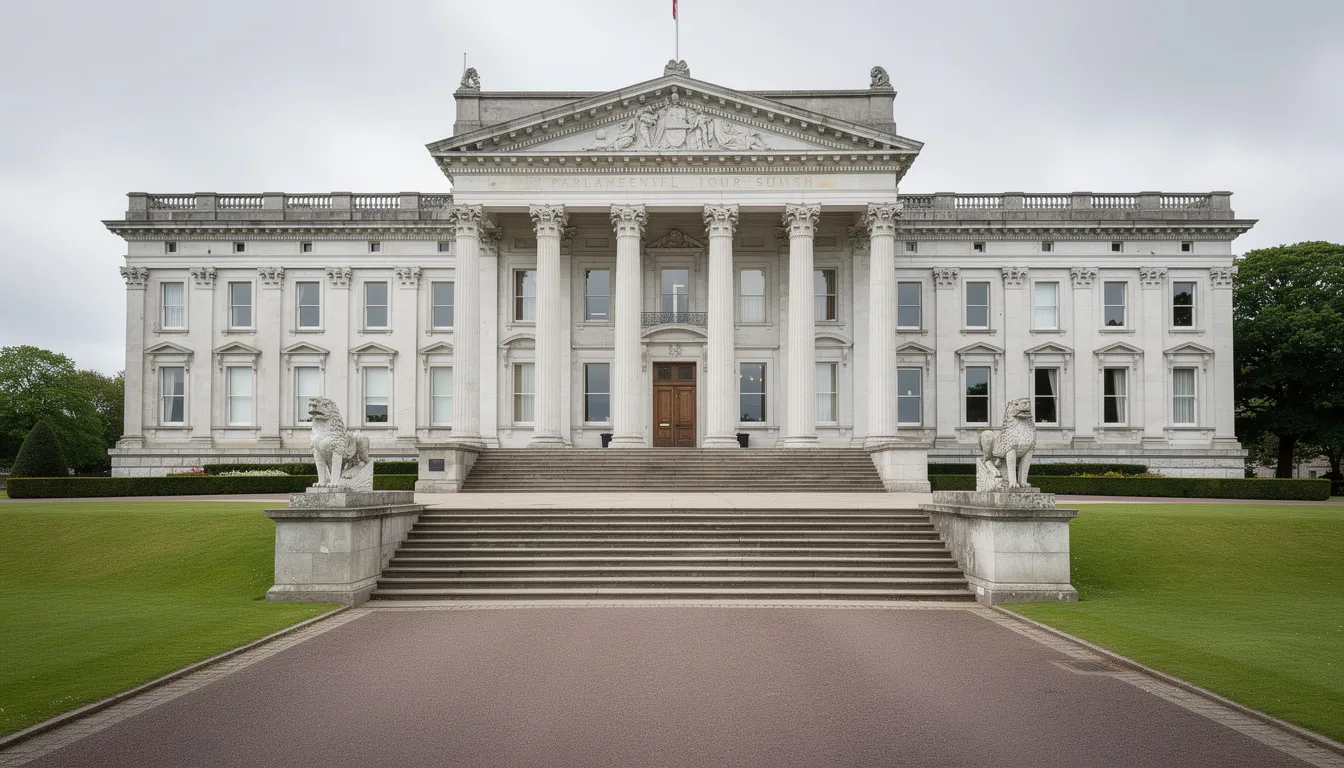
Designed by Liverpool architect Arnold Thornely, construction ran from 1928 to 1932, opening on 16 November 1932 in a ceremony presided over by the Prince of Wales (later, briefly, King Edward VIII), at a cost of around £1.7 million. The building’s 365-foot facade symbolically represents the days of the year, and its six entrance pillars represent Northern Ireland’s six counties. Built from English Portland stone on a granite base quarried in the Mourne Mountains, the building rises 92 feet and is topped by a dome inspired by Belfast City Hall’s (completed 1906). A near mile-long processional avenue, laid out under former Kew Gardens curator W. J. Bean, leads to a flight of 60 steps at the building’s entrance.
The central pediment carries sculpture that’s been interpreted two ways - either Northern Ireland presenting the flame of loyalty to Britain, or Britain passing the flame of liberty to Northern Ireland - a fittingly ambiguous piece of symbolism for a building at the centre of the region’s politics.
Political Functions
The Parliament Buildings house the Northern Ireland Assembly (90 MLAs across 18 constituencies) and the Northern Ireland Executive, operating under the power-sharing arrangements established by the Good Friday Agreement, which require cross-community support for major decisions. Government departments, including Infrastructure and Agriculture, Environment and Rural Affairs (DAERA), are based here alongside committee rooms used for legislative scrutiny.
Notable Interiors
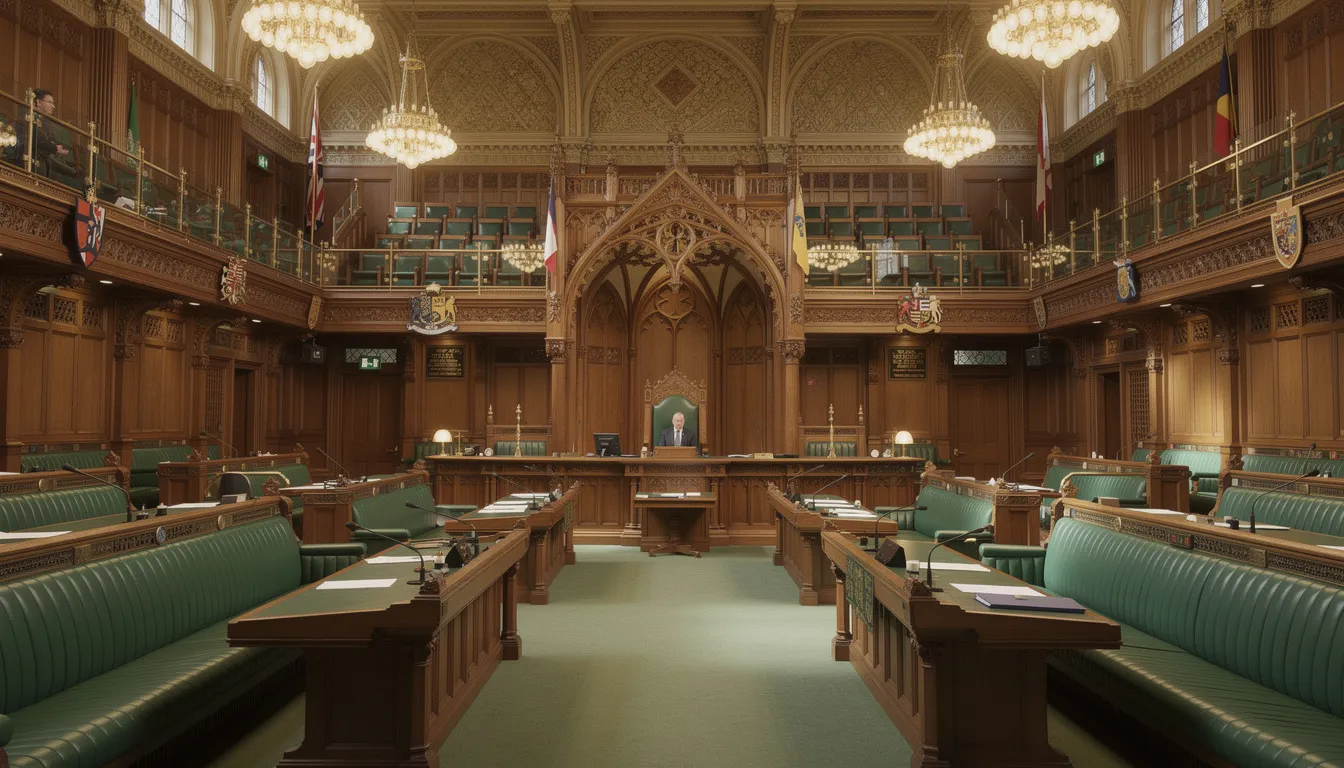
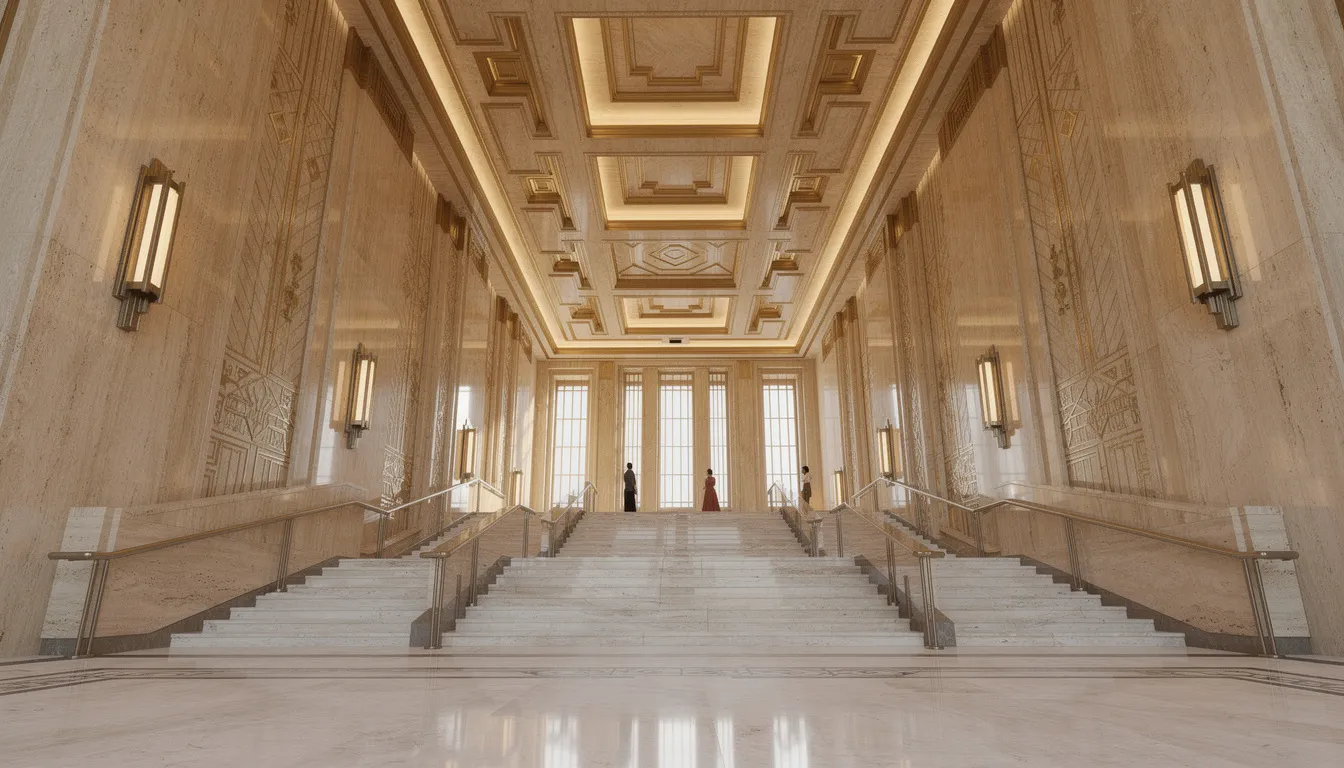
The Great Hall, an Art Deco showpiece finished in polished travertine marble, houses a statue of James Craig, Lord Craigavon - Northern Ireland’s first prime minister - unveiled in 1945, alongside a growing collection of portraits honouring former Assembly speakers. Past speakers commemorated include Lord Alderdice (the Assembly’s first presiding officer), Mitchel McLaughlin (2015-16), and Alex Maskey (2020-24) - the current speaker wasn’t independently re-confirmed this pass and should be checked before publishing.
Visiting
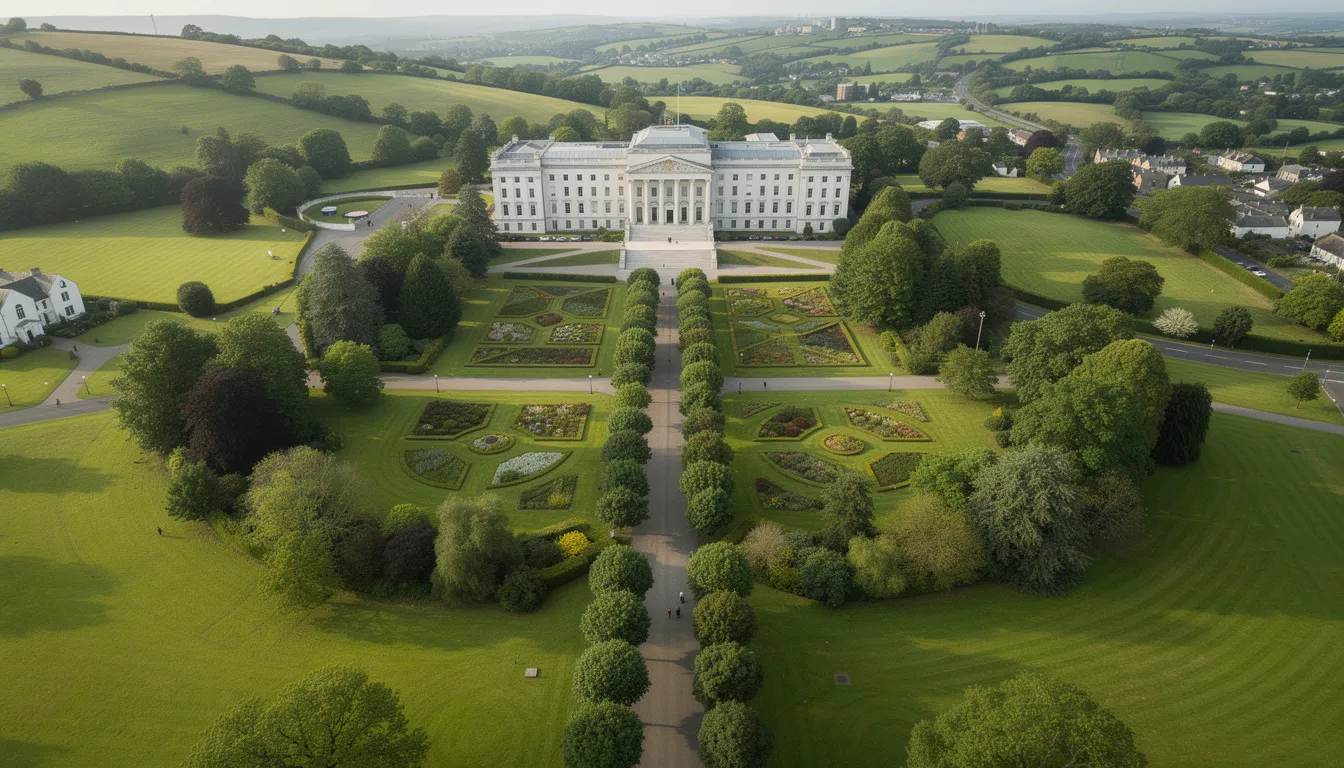
Public tours, including educational programmes for schools, are available on select dates when the Assembly isn’t in session - book well in advance through the Assembly’s education service, as demand is high and access is subject to security requirements. The site includes accessible entrances and facilities, on-site parking, and public transport links to central Belfast.