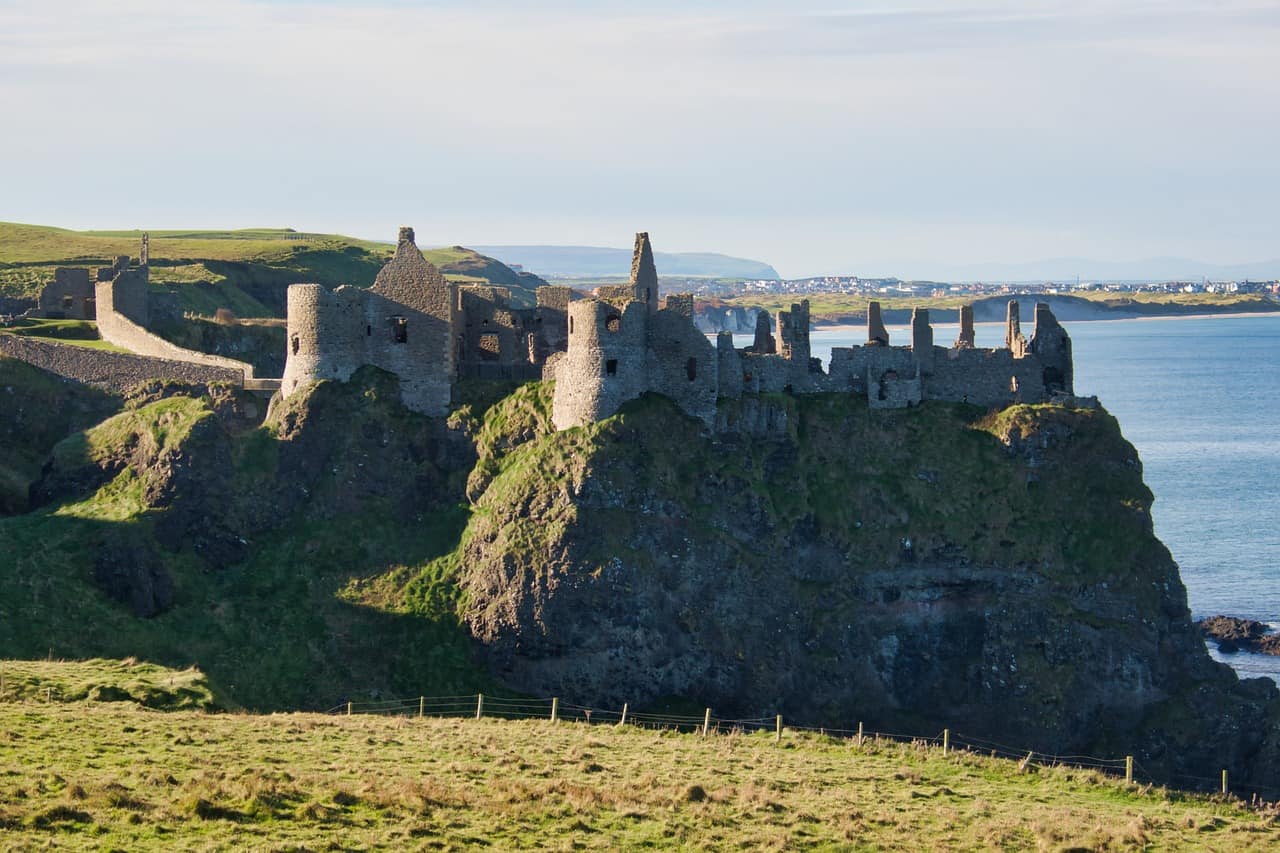
Nestled on the dramatic cliffs of Northern Ireland’s Causeway Coast, Dunluce Castle stands as a hauntingly beautiful testament to the country’s rich history - a must-see ruin on the north Antrim coast, with tales of war, romance, and tragedy attached to nearly every stone.
History of Dunluce Castle
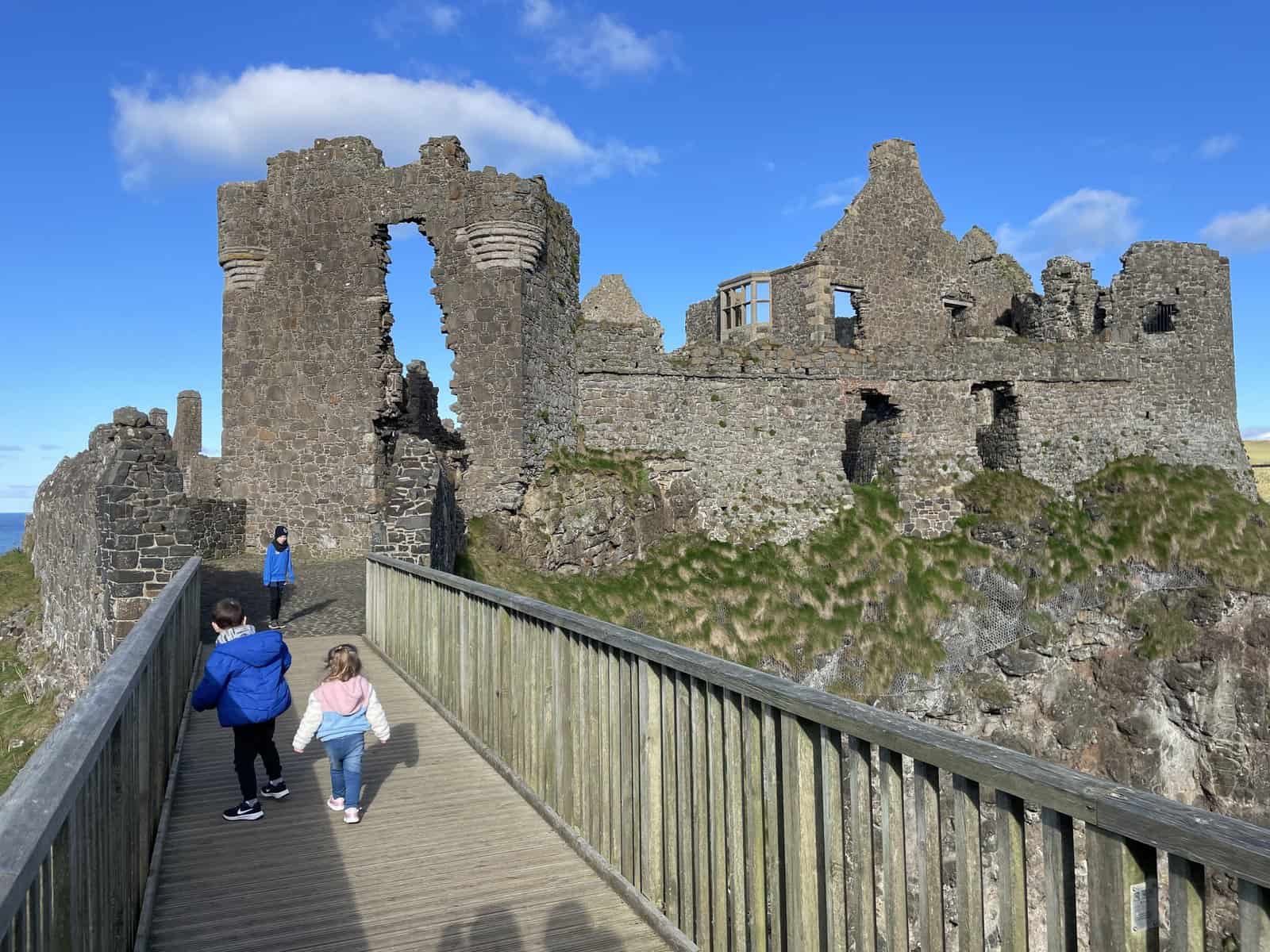
The earliest written record associated with Dunluce dates to the 13th century, when the first castle on the site is linked to Richard Óg de Burgh, 2nd Earl of Ulster, though the castle largely took the medieval shape visible today in the late 16th century. Built on a sheer basalt cliff, its walls combine local basalt with imported sandstone, and its layout includes two large drum towers connected by tunnels, footbridges, and cobbled streets.
The MacQuillan Clan
The MacQuillans (also spelled McQuillan), Gaelic lords known as the Lords of the Route, controlled much of north County Antrim and held Dunluce from around the 14th century. Their grip on the region loosened through the early 16th century as the rival MacDonnell clan, arriving from Scotland, grew in strength in the area.
The MacDonnell Dynasty
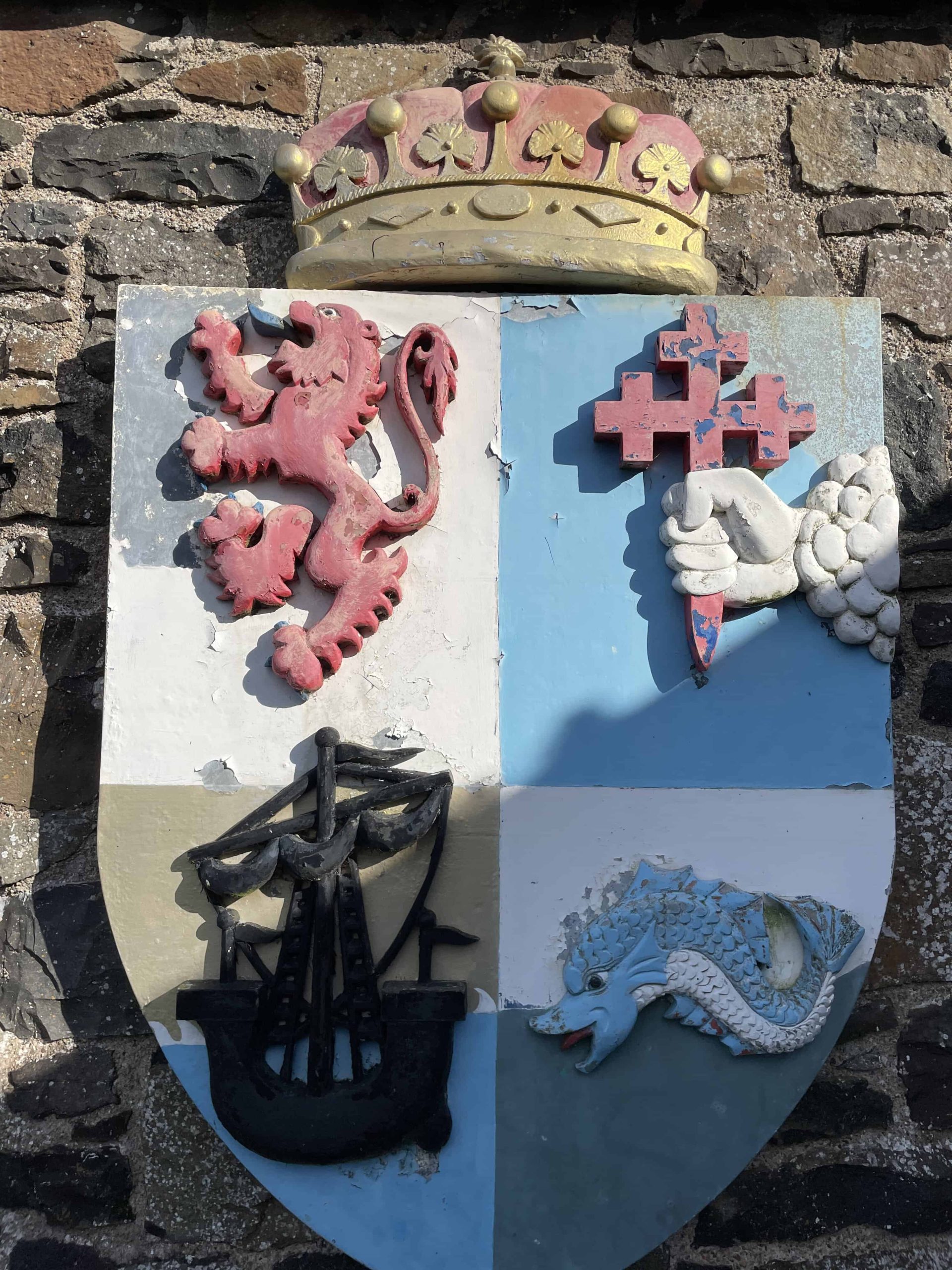
By the mid-16th century, the clan, led by the warrior chieftain Sorley Boy MacDonnell, had established themselves as the new Lords of the Route, making Dunluce their seat and expanding it with Scottish-style architectural features. The clan and the O’Neills of Tyrone - the dominant power in the wider region - clashed repeatedly for control of north Antrim through the 1560s; the best-documented of these clashes, the 1565 Battle of Glentaisie, ended badly for the MacDonnells, with Sorley Boy captured by Shane O’Neill. The clan nonetheless recovered and held Dunluce as their stronghold into the 17th century, adding carvings, decoration, and gardens whose traces remain visible today.
A 1641 siege of the castle is sometimes cited as marking the beginning of Dunluce’s decline as a political and military stronghold, though this account wasn’t independently confirmed this pass - the castle’s decay is more commonly linked to a 1639 storm said to have collapsed part of the kitchens into the sea (see below), and to the family’s later financial difficulties.
From Dunluce to the Earls of Antrim
The MacDonnells’ local power was formalised into a title still attached to this stretch of coast today: Randal MacDonnell, Sorley Boy’s son, was created Viscount Dunluce in 1618 by King James I and advanced to Earl of Antrim in 1620. The Earls of Antrim held Dunluce for centuries afterward, through the castle’s long decline. By the time of the Battle of the Boyne in 1690, Dunluce had long since ceased to be a residence, and the then Earl of Antrim eventually gifted the ruin to the Northern Ireland government in 1928 - which is how Dunluce ended up in public ownership and open to visitors today, rather than remaining a private family estate.
Architecture
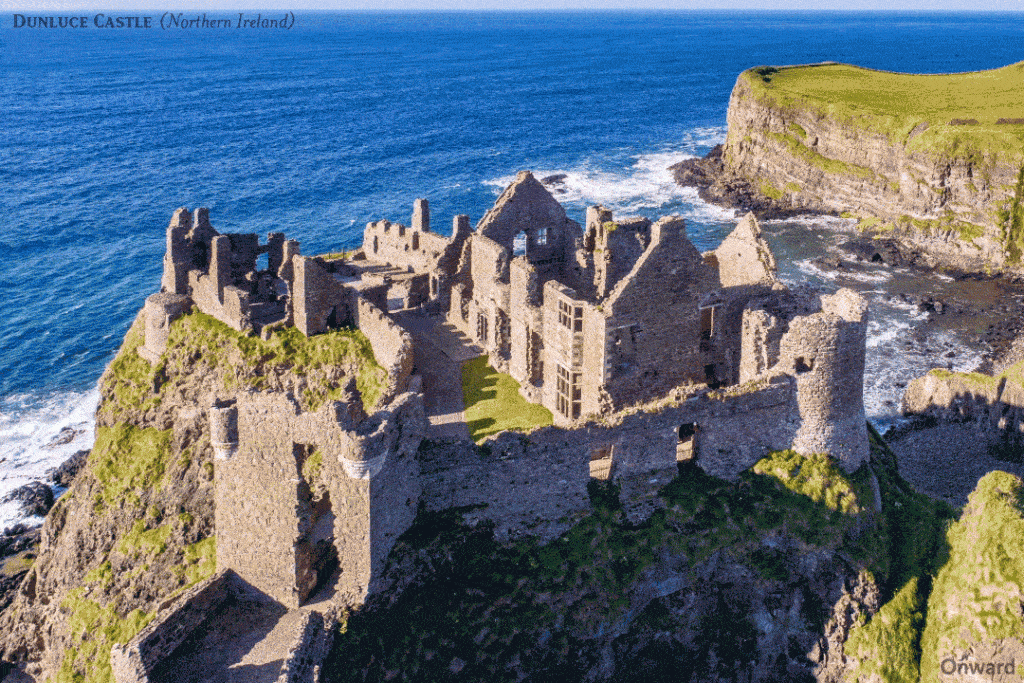
The castle’s Great Keep, rising some 30 metres, was built in the 16th century as a formidable defensive position, with thick walls, narrow staircases, and arrow slits. In the early 1600s a small planned settlement, Dunluce town, grew up around the castle, with houses, a church, and a courthouse laid out on a sophisticated grid - it thrived until 1642, when it burned down amid the conflict of the Irish Rebellion, and was never rebuilt.
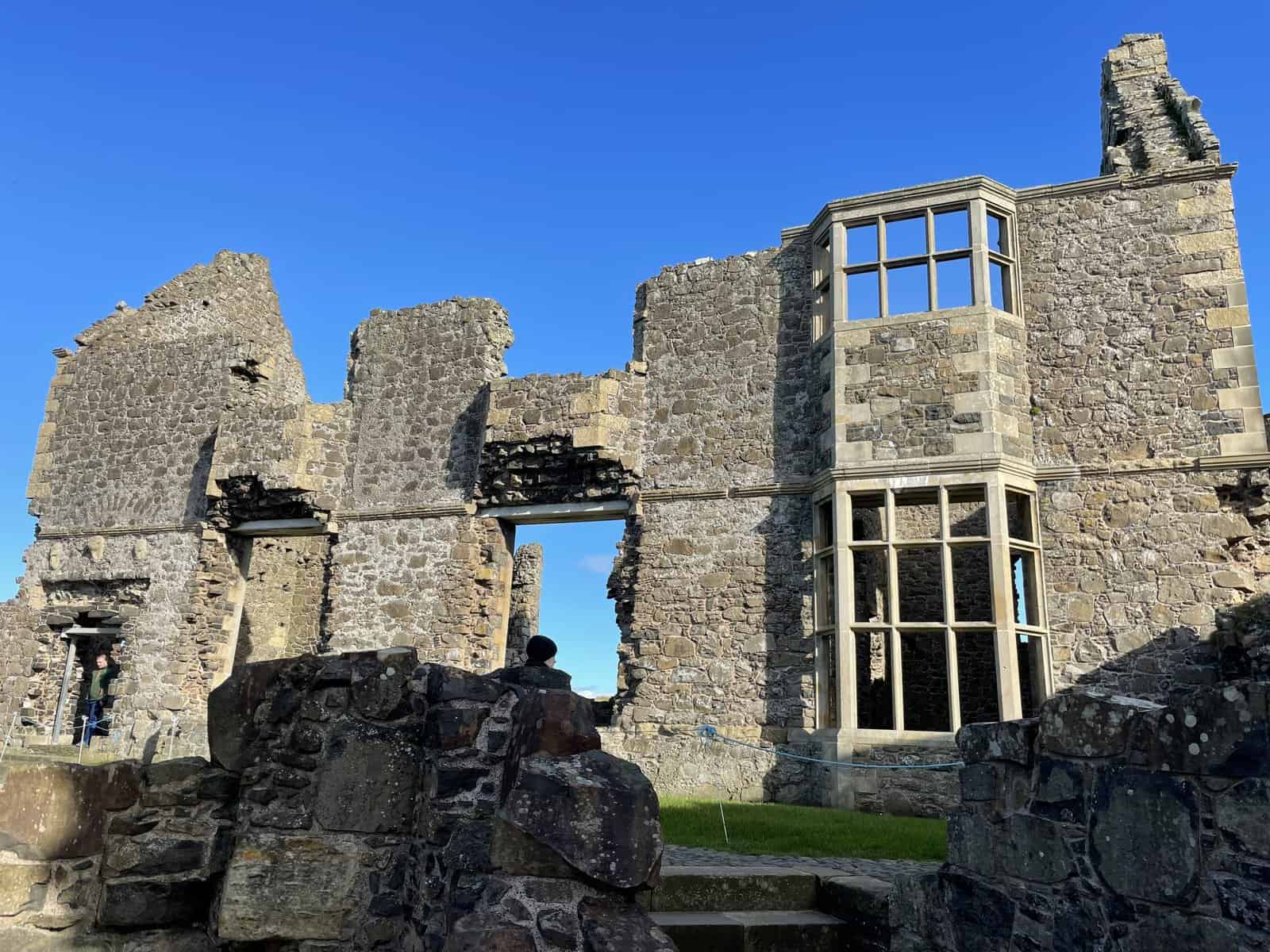
A five-year archaeological programme, led by Dr Colin Breen and funded by the Northern Ireland Environment Agency, began excavating the site in 2008 and turned up more than expected. Alongside the known 1608 town, diggers found evidence of an entirely separate, earlier settlement nobody had previously recorded: house footings, a well-preserved roadway, medieval pottery, and a stone fireplace scientifically dated to the late 15th century, suggesting people were living and working around Dunluce a full century before the planned town went up.
Legends
Local legend holds that part of the castle kitchens fell into the sea during a storm in 1639, supposedly during a dinner party, taking several servants with it - eight cooks, in the most commonly repeated version. Worth treating as legend rather than fact: paintings and written records from the 18th and 19th centuries appear to show the castle still substantially intact well after 1639, which has left historians skeptical that the collapse happened quite as dramatically, or exactly when, the story claims. The site is also associated with several other ghost stories - the tragic Lady Isobel Shaw and Maeve Roe among them - as well as the Mermaid’s Cave at the base of the cliffs, said to be home to a mermaid who occasionally helps struggling fishermen.
The Girona Shipwreck
The Spanish Armada ship Girona, carrying treasure and refugees from other wrecked Armada vessels, was lost near Dunluce in 1588. Many crew and passengers who made it ashore were captured; much of her cargo was recovered by divers in the 1960s (now displayed at the Ulster Museum), though some items are still thought to lie beneath the waves.
Dunluce Castle and Game of Thrones
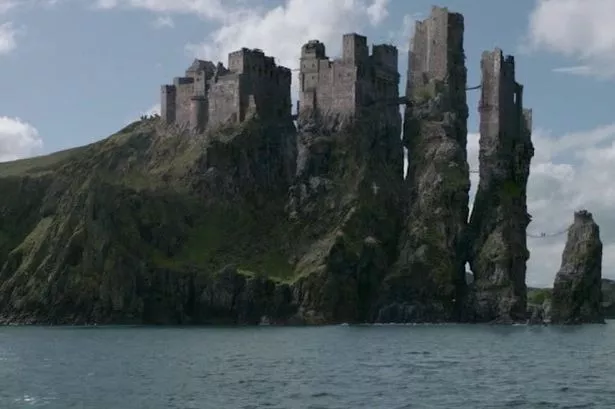
Dunluce Castle’s cliffside ruins inspired the design of, and were used for exterior filming of, Castle Greyjoy/Pyke in Game of Thrones, and the silhouette is also often said to have influenced C.S. Lewis’s Cair Paravel in The Chronicles of Narnia, though that connection is folklore rather than a documented fact.
Visiting
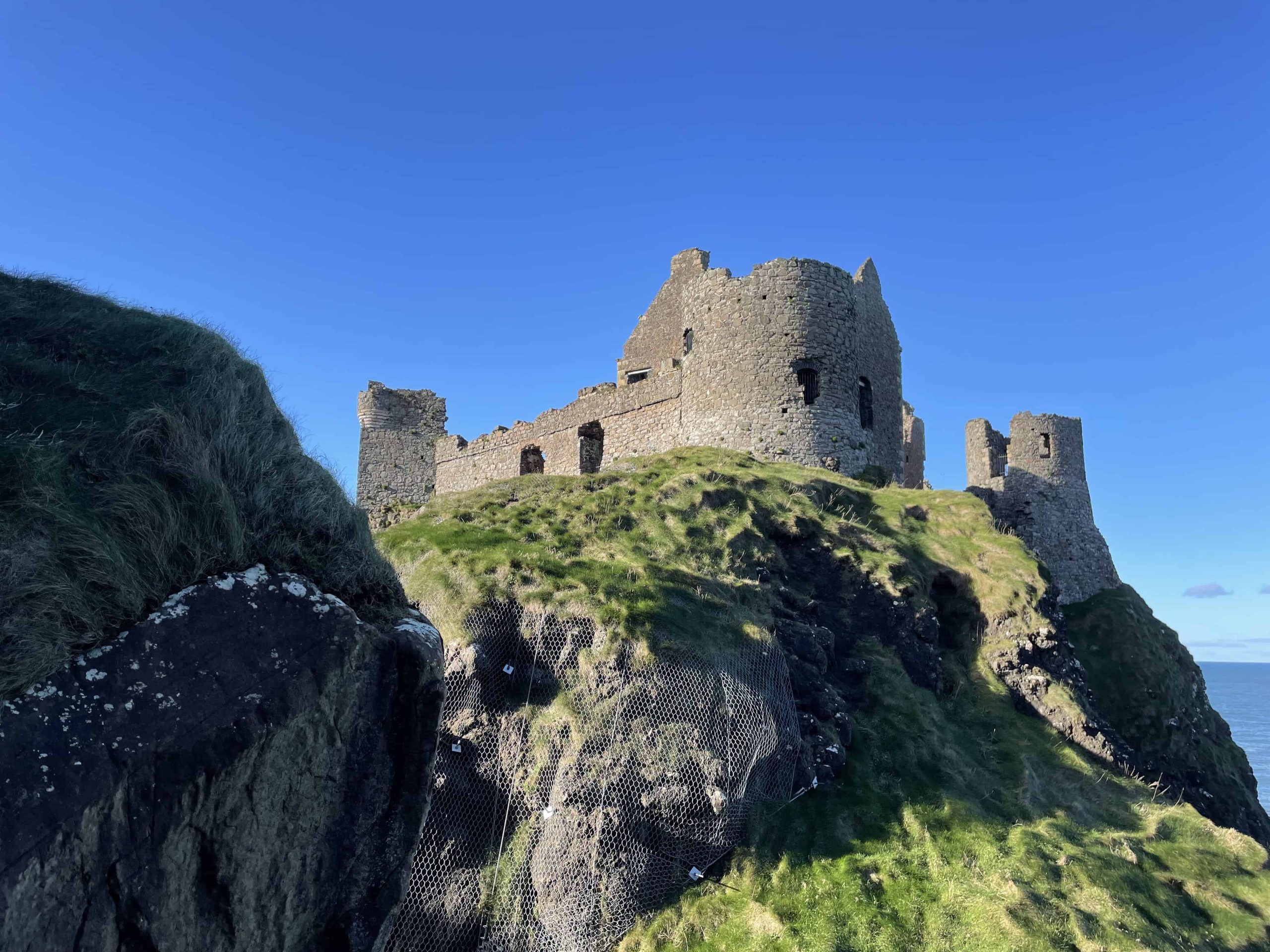
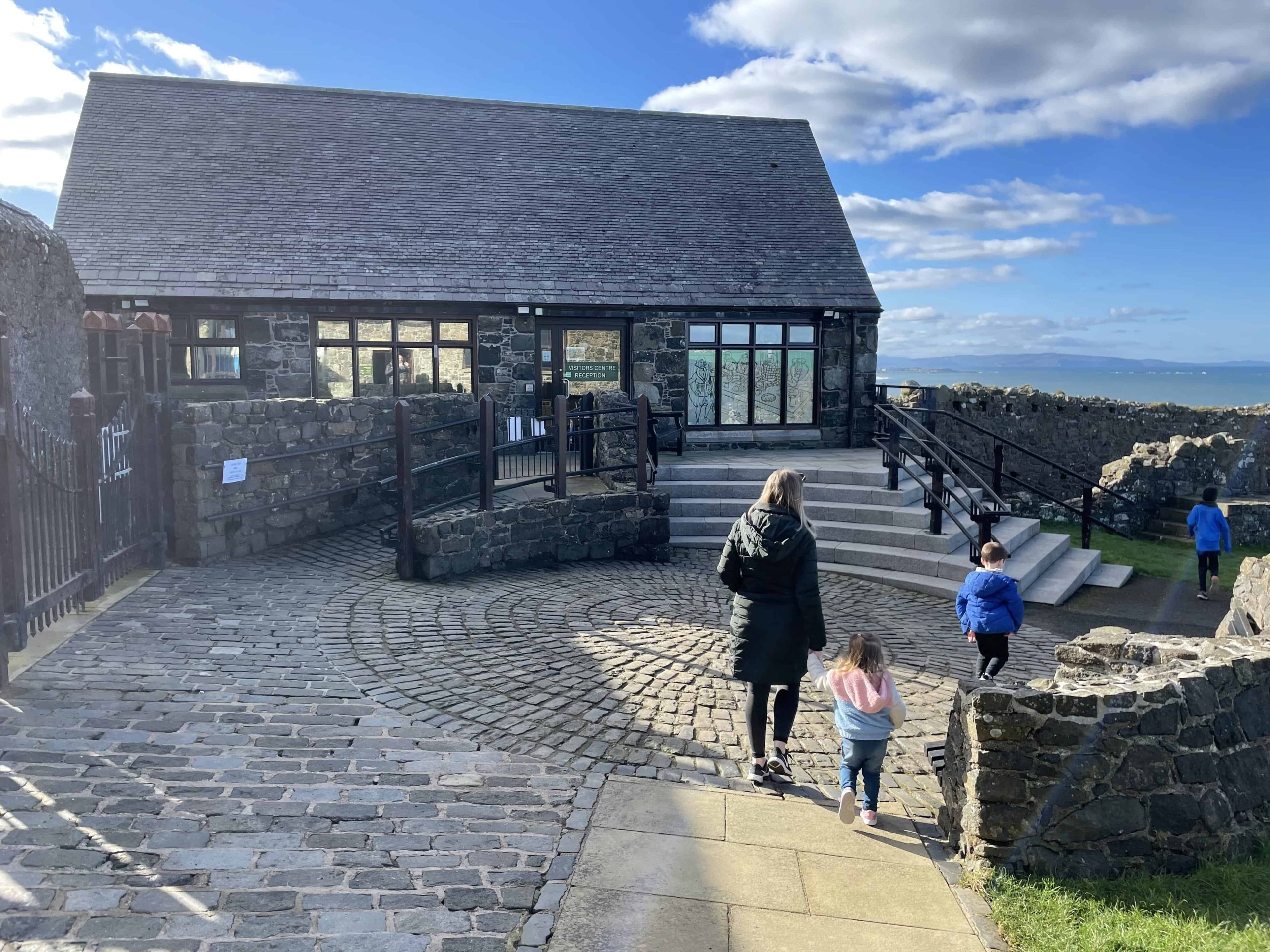
Dunluce Castle is managed by the Northern Ireland Environment Agency (not the National Trust, so National Trust membership doesn’t cover entry), and is open to the public with an admission fee. Guided tours aren’t offered, but information boards provide context throughout. The interior isn’t accessible to visitors for safety reasons, though the grounds and cliffside setting can be freely explored. Parking is available on site, with restaurants, cafés, and shops a short drive away in Bushmills.
Current admission: Adult £6, child (5-17) £4, student/over-65 £4.50, family ticket (up to five, including two children) £18, under-5s free. Open daily from 9:30am to 5pm, with last admission at 4:30pm - tickets are bought at the on-site ticket office rather than pre-booked online, so there’s no need to arrange anything in advance. Most visitors need 30-45 minutes to see the ruins properly.
Getting there: Dunluce sits on the coast road between Portrush and Bushmills, about 10 miles from Coleraine and 6 miles from the Giant’s Causeway - close enough to combine both in one trip along the Causeway Coastal Route. From Belfast, allow roughly an hour and a quarter by car.
Nearby Attractions
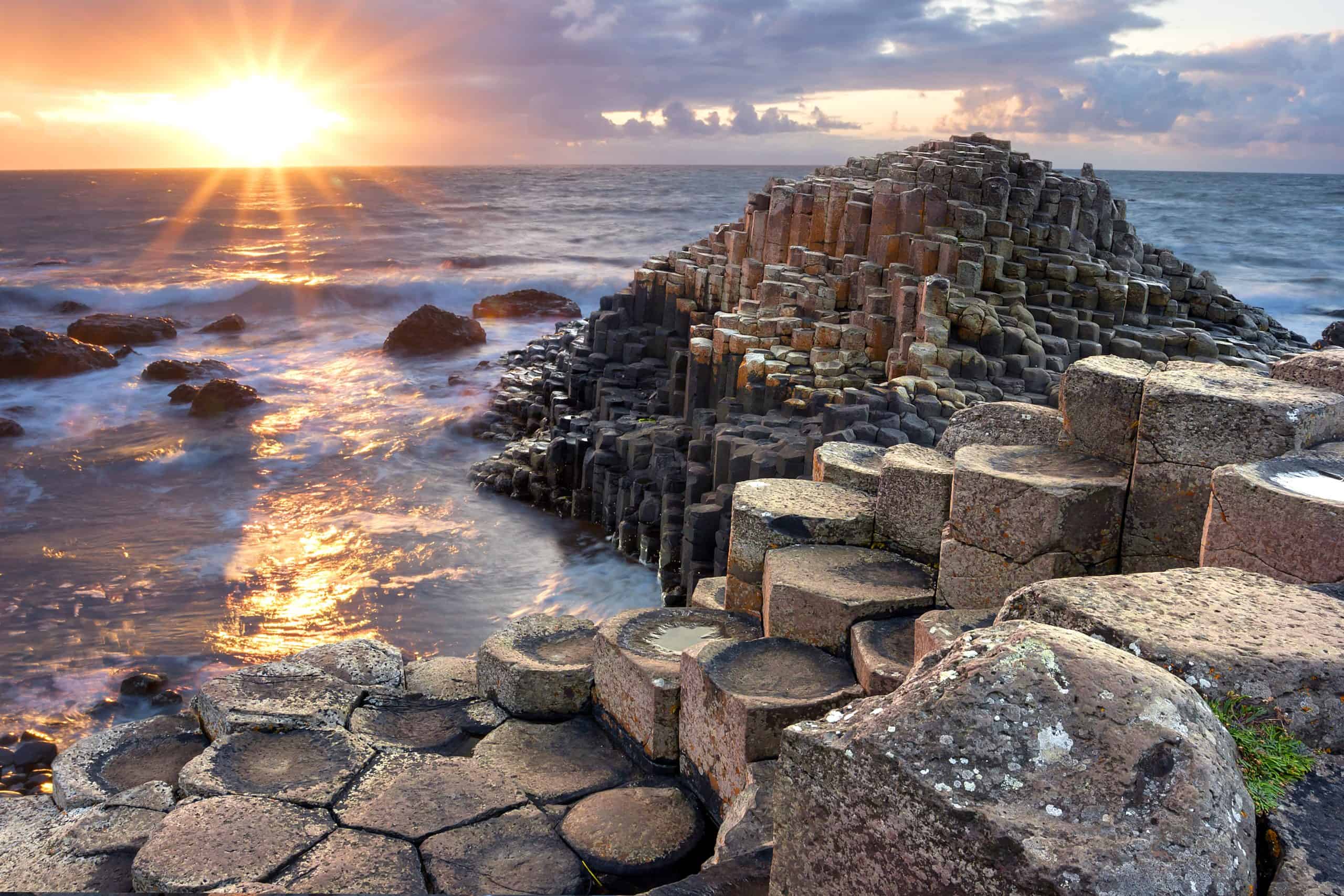
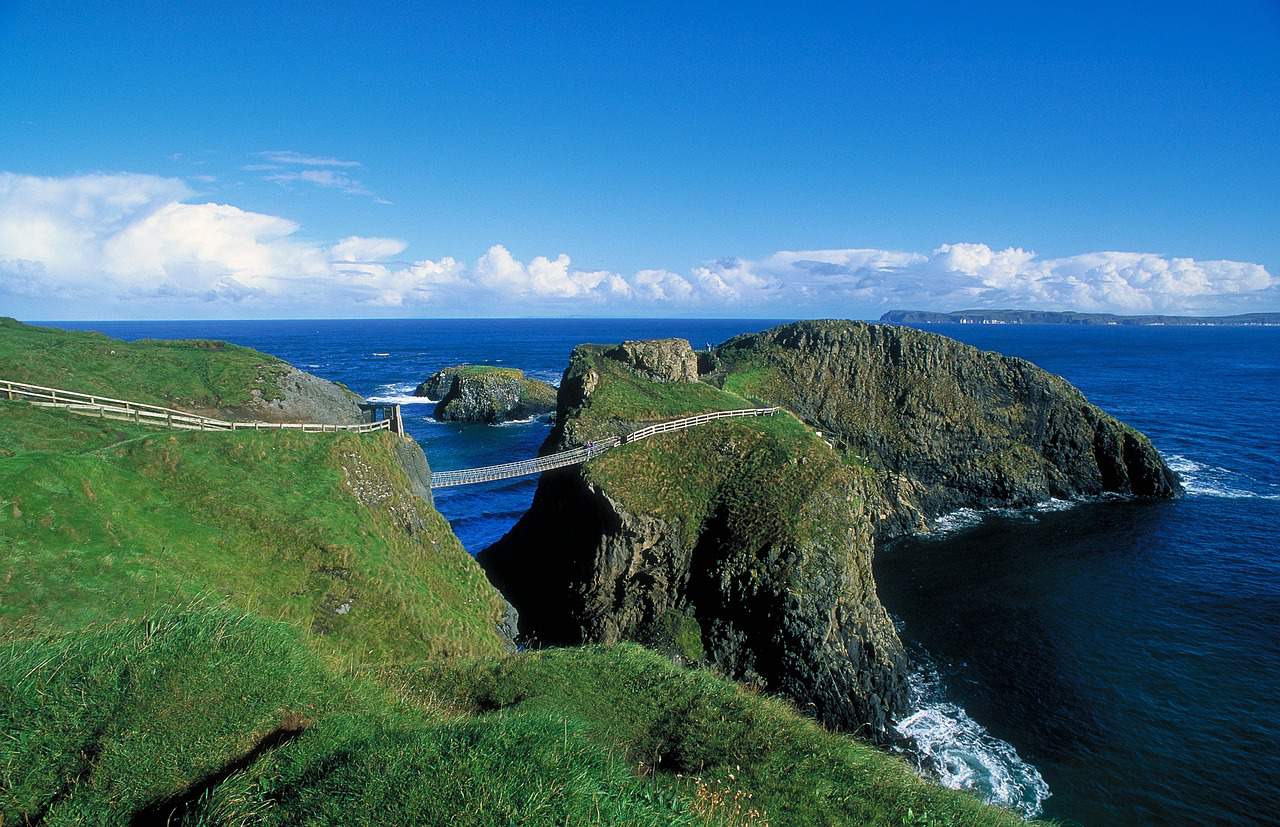
The Giant’s Causeway, Old Bushmills Distillery, Carrick-a-Rede Rope Bridge, Ballintoy Harbour, White Rocks Beach, Dunseverick Castle, Mussenden Temple and Downhill Demesne, the Binevenagh Area of Outstanding Natural Beauty, and Royal Portrush Golf Club are all within easy reach along the Causeway Coastal Route.