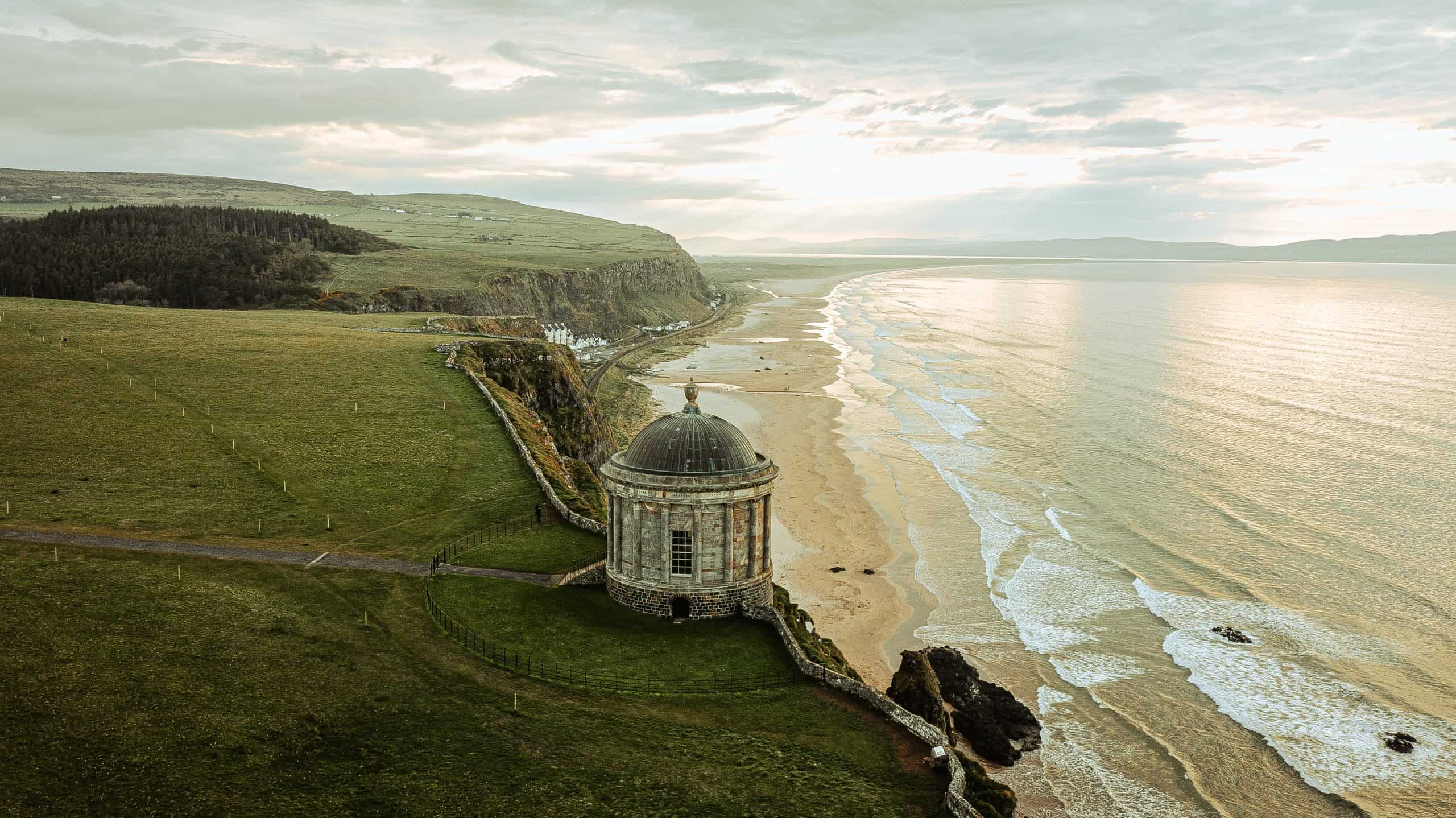
Mussenden Temple, perched dramatically on its clifftop above Downhill Strand, is one of the Causeway Coast’s most photographed landmarks - a small domed library building that looks like it shouldn’t be able to cling to the cliff edge the way it does.
Who Was Mussenden?
The Temple’s design, modelled on the Temple of Vesta in Tivoli near Rome, gets most of the attention, but its name has a real, slightly poignant story behind it. It’s named for Frideswide Mussenden, a cousin of Frederick Hervey, Bishop of Derry and Earl of Bristol (the “Earl Bishop” who built the whole estate) - and she died in the same year the Temple was completed, meaning what looks like a purely architectural folly is also, in effect, a memorial. Originally the building served as a summer library, with underfloor heating installed specifically to protect the books from the damp sea air - a genuinely clever, if extravagant, engineering solution for a clifftop building.
Mussenden Temple and Game of Thrones
Both the Temple and Downhill Strand below it are real Game of Thrones filming locations, standing in for Dragonstone, the ancestral seat of House Targaryen - the setting for the scene where Melisandre burns effigies of the Seven to the Lord of Light. If you’ve watched the show, the combination of clifftop building and wide, exposed beach will look immediately familiar.
Downhill House & the Estate
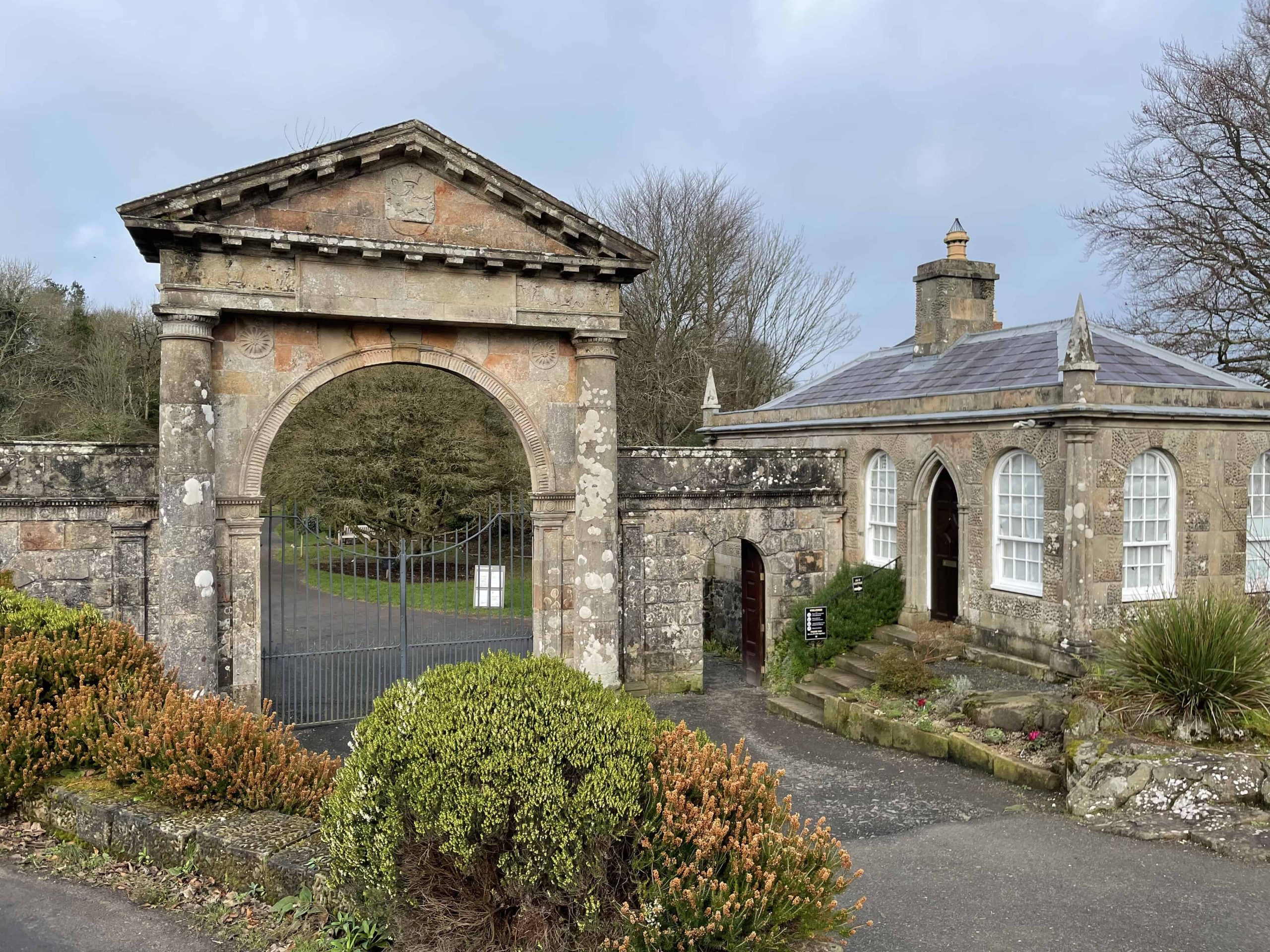
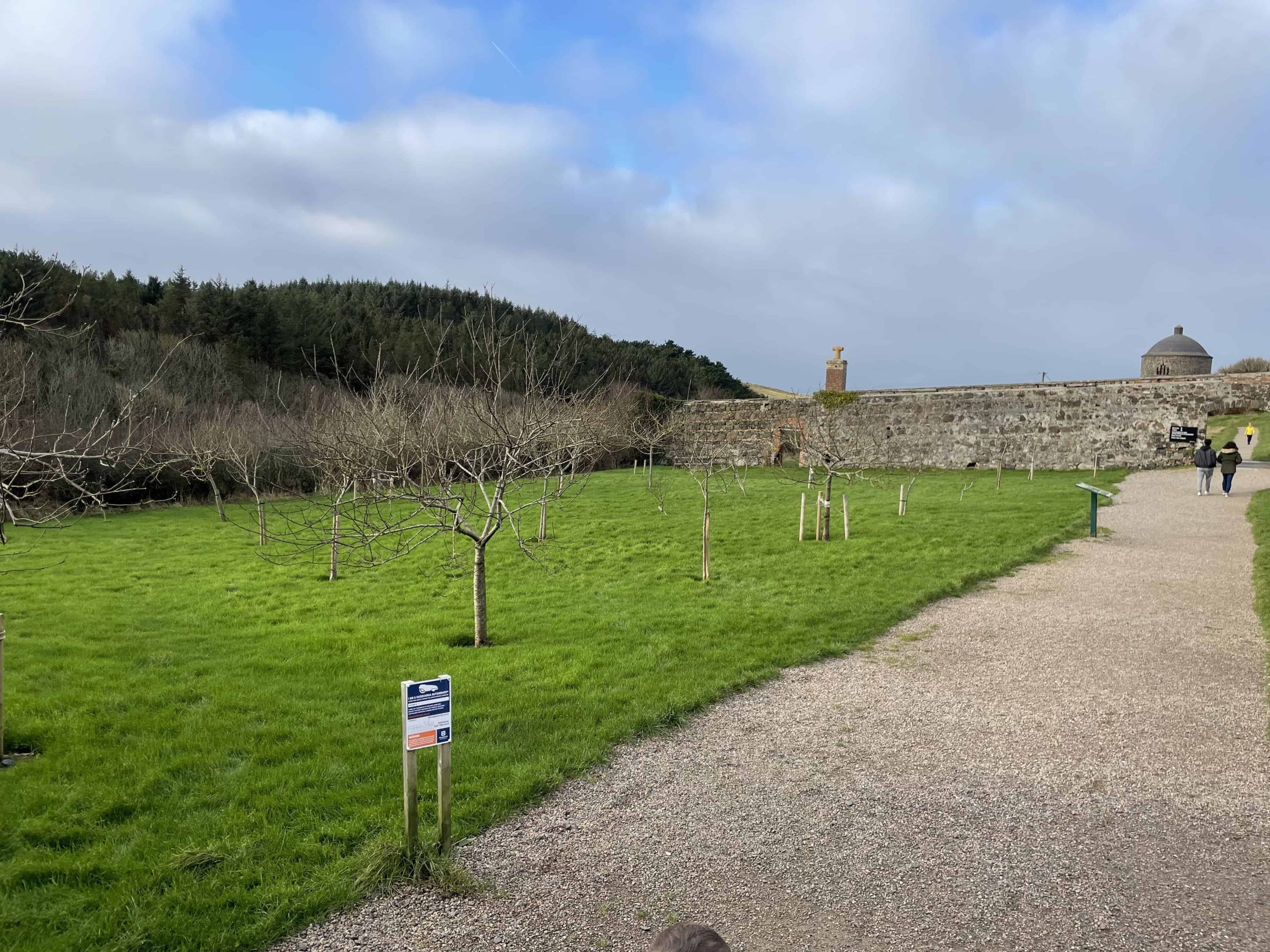
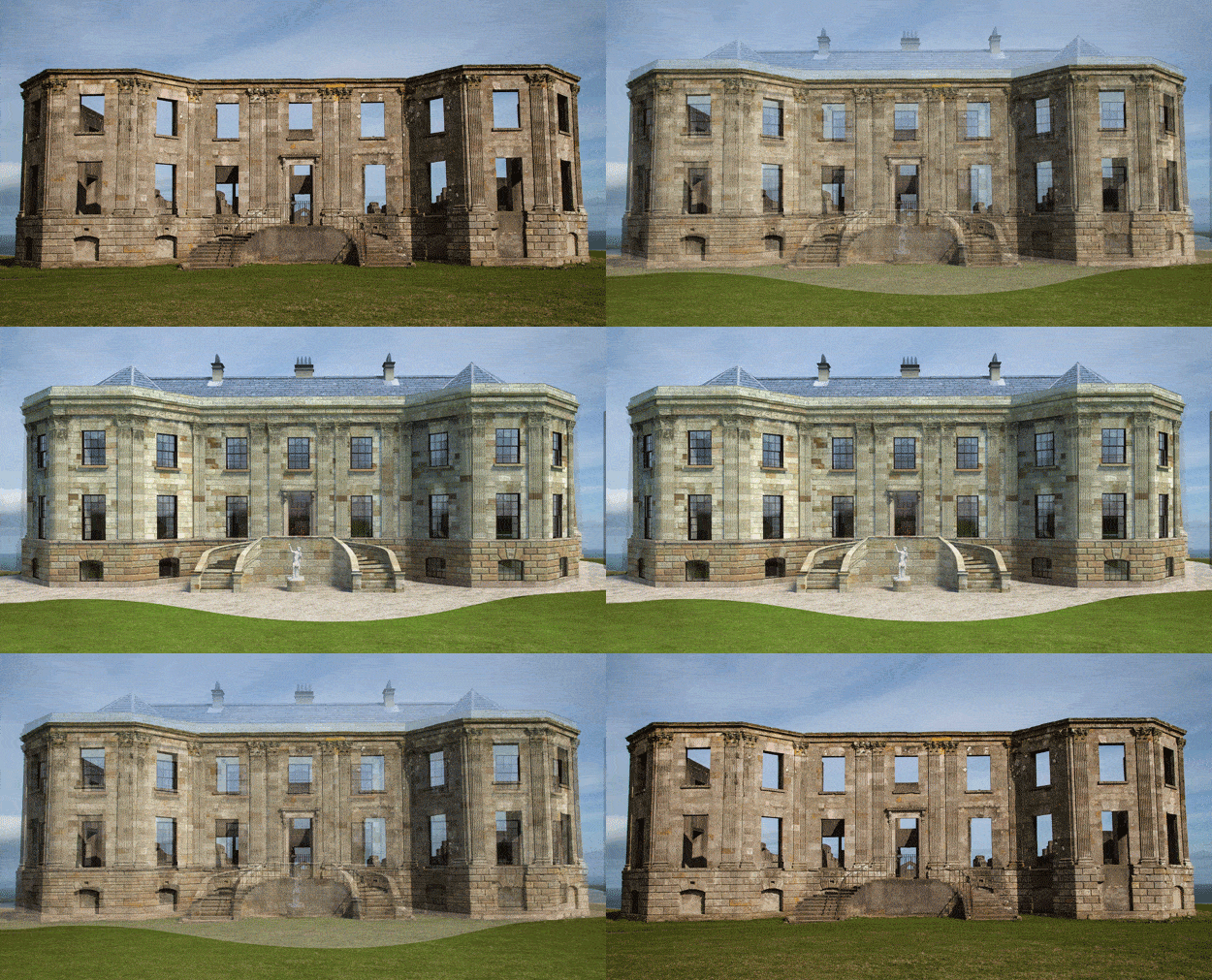
The wider Downhill Demesne estate includes the ruins of Downhill House, an English-style mansion designed by architect Michael Shanahan for Frederick Hervey. The National Trust owns and manages the whole estate, including the Demesne grounds and Hazlett House.
Admission
The specific current admission prices couldn’t be independently confirmed in this fact-check pass - every source found citing figures for adult/child/family admission traced back to this same article rather than an independent listing. Check directly with the National Trust before relying on a specific number. One real, honest note worth keeping from a previous visit: arriving off-season (February), the gate was sometimes unattended and free to enter - though the Temple itself was closed that day, meaning only the grounds were accessible. Don’t assume this applies outside quiet periods.
Parking
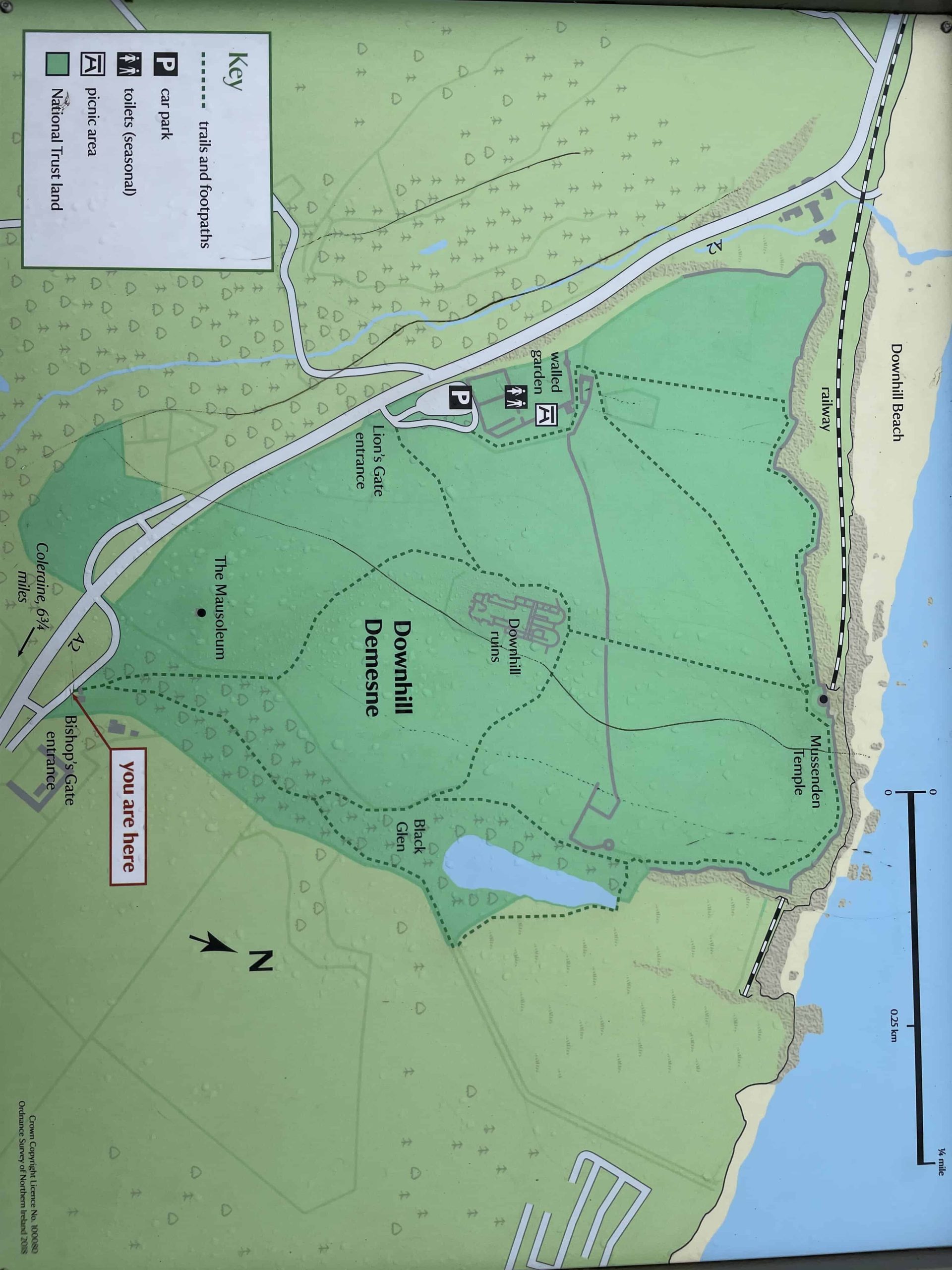
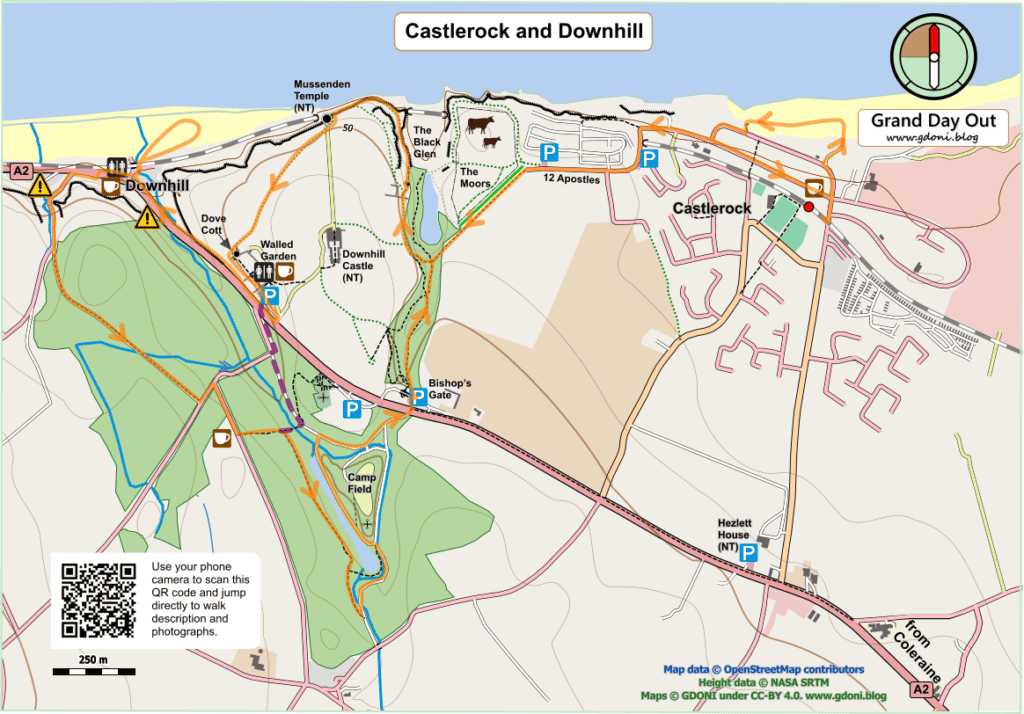
Two car park options, not just one. Lion’s Gate car park is close to the site amenities (toilets, picnic areas) and uses Pay by Phone parking - chargeable for non-members, free for National Trust members and Blue Badge holders. Bishop’s Gate car park is free for everyone, member or not - a genuinely useful budget alternative that wasn’t mentioned in earlier versions of this page, if you don’t mind a slightly longer walk in.
Getting There on Foot
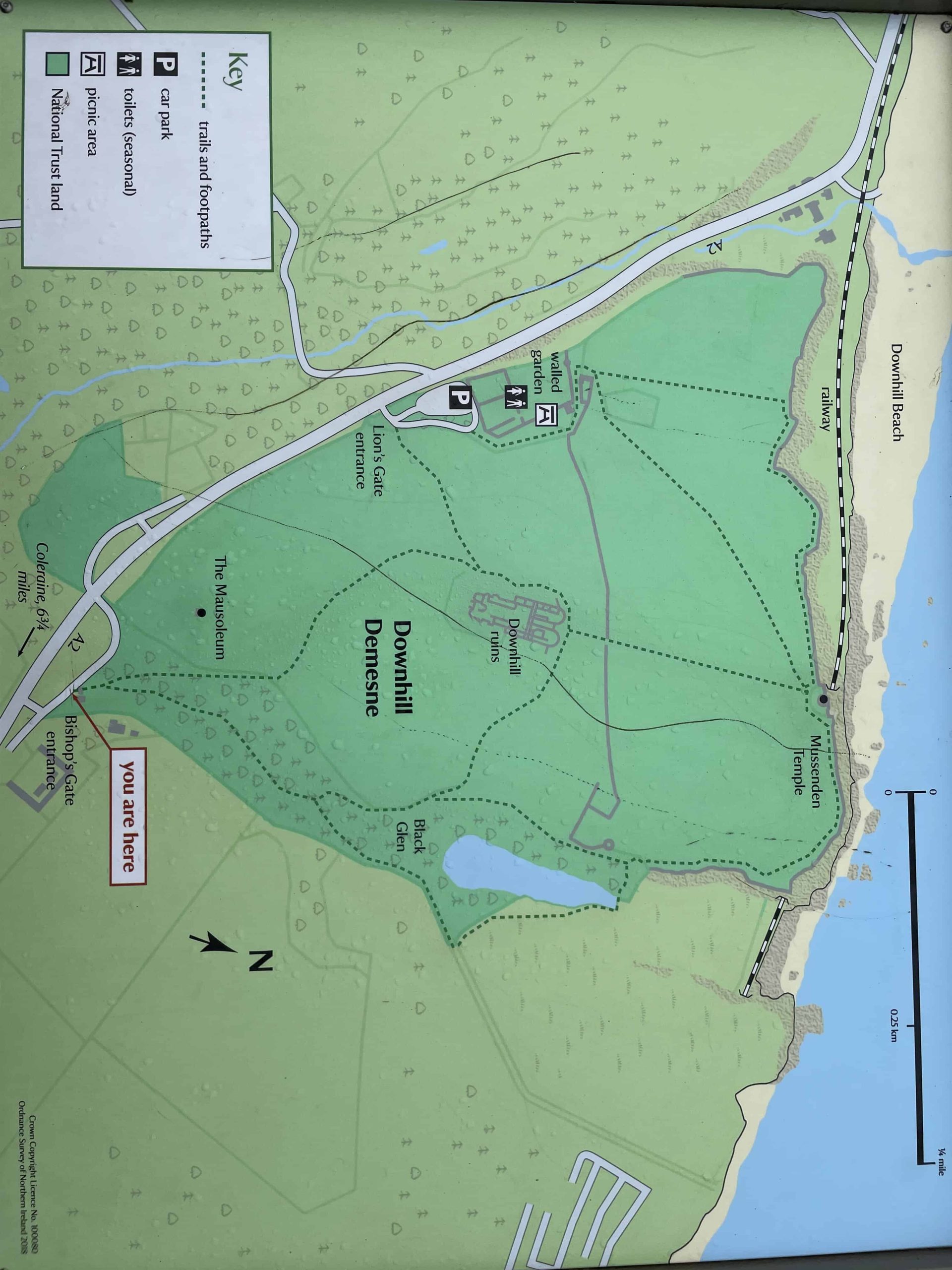
A real walking route exists from Castlerock: starting at a car park at the western end of Tunnel Brae, over a stone step-over stile, along the caravan park boundary, across the headland locals call “The Moor,” and onto a surfaced woodland path toward the temple and gardens - a genuinely scenic approach if you’d rather walk than drive in.
Getting There by Train
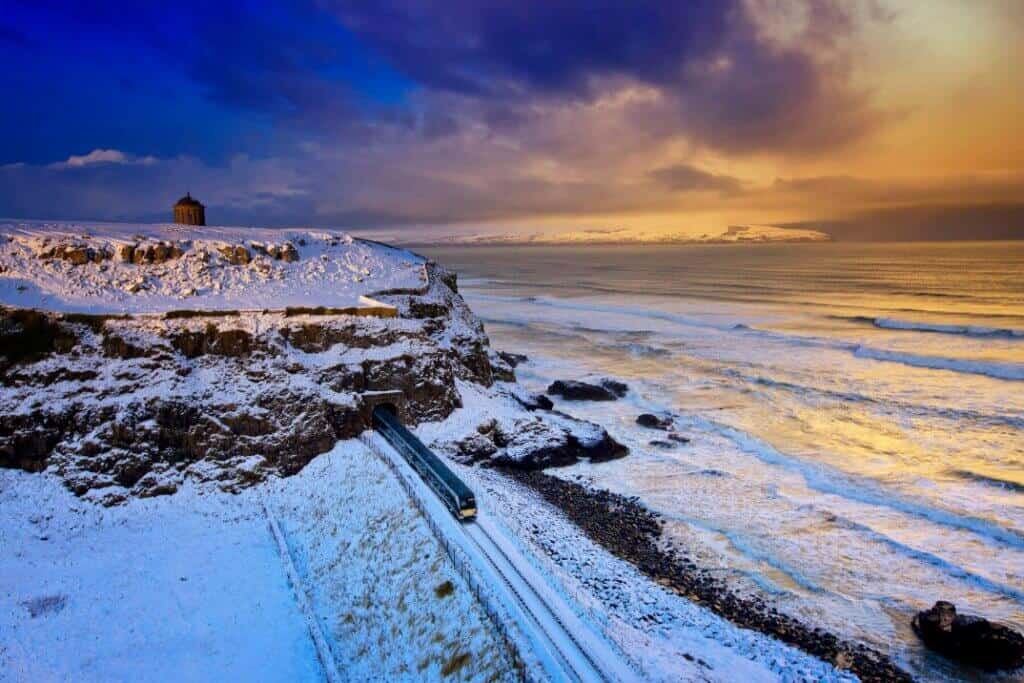 Photo courtesy of Translink NI
Take a train from Belfast to Castlerock, then it’s a 0.5-mile walk to Mussenden Temple.
Getting There by Bus
The Translink/Ulsterbus route 234 (Coleraine-Castlerock-Downhill-Londonderry) stops near the Downhill Demesne - ask the driver for the Downhill/Mussenden stop, then it’s around a 10-minute walk in.
History and Conservation
Mussenden Temple was built in 1783. By 1997, coastal erosion had eaten away more than 30 feet of the cliff beneath it, leaving the building perilously close to collapse. The World Monuments Fund placed it on its World Monuments Watch list, bringing funding for a stabilisation project: rock anchors, bolts, and dowels were driven into the cliff face, and its cavities and fissures filled with pigmented mortar and local basalt to blend with the natural rock. The Temple was declared secure in 1998, with markers left in place to monitor ongoing erosion.