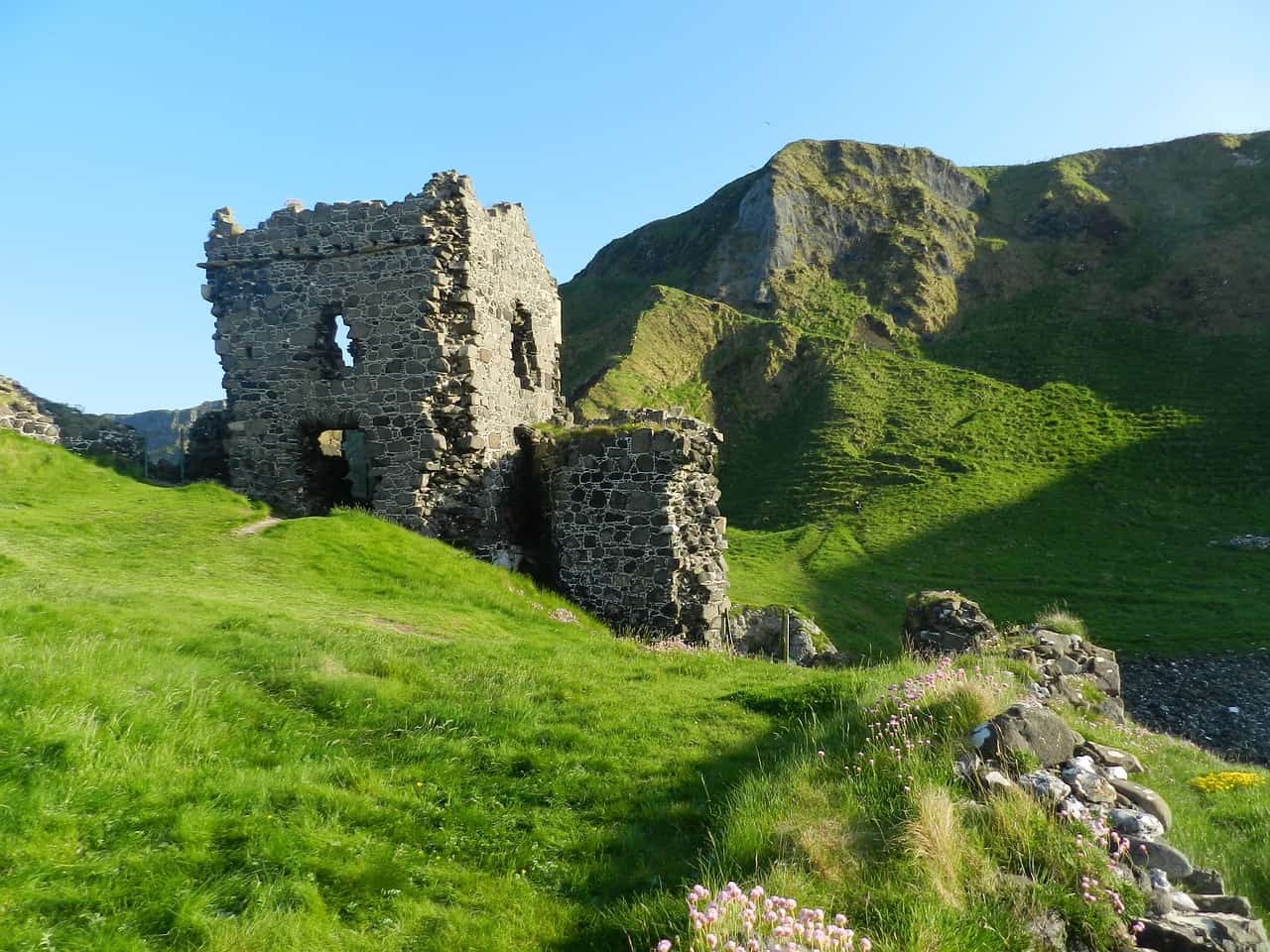
Nestled atop a rocky promontory overlooking the sea on the Antrim coast, Kinbane Castle (also called Kenbane or Kinbane Head Castle - “Kinbane” means “white head,” for the white limestone the ruin stands on) is a dramatic, lesser-known stop on the Causeway Coast, with sweeping views out to Rathlin Island.
History
Kinbane Castle was built in 1547 by Colla MacDonnell, elder brother of the famous Sorley Boy MacDonnell, to help control the sea route between the Scottish Isles and Antrim and land access to the Route. Unlike most MacDonnell strongholds, which came through conquest, Colla built Kinbane himself on a site he chose for its strategic position.
The castle withstood two English sieges - in 1551 and 1555, under the Lord Deputy of Ireland, Sir James Croft - sustaining cannon damage in the second before Colla had it rebuilt. Colla MacDonnell died at Kinbane Castle in 1558, after which it passed to the MacAlister family in recognition of their loyalty to the MacDonnells. It later came into the hands of the Earls of Antrim (the MacDonnell chiefs’ elevated title), served as a coastguard station during the 19th century, and was manned by the Home Guard during the Second World War. The south wall collapsed into the sea in the 1820s, and after the war, with a modern lighthouse built nearby, the castle was finally abandoned to the elements.
Built from local stone with a basalt base, the castle had walls nearly four feet thick in places, two floors, and a drawbridge, now lost. Today it’s a scheduled historic monument.
Legend
Local folklore ties the castle’s name to the legendary warrior Fionn MacCumhaill, said to have thrown a defeated rival’s crown into the sea near here - the inspiration, so the story goes, for “Kinbane,” or White Headland. The ruins are also said to be haunted by the ghost of a headless woman.
Visiting
Kinbane Castle is reached via a small, free car park around five miles west of Ballycastle, followed by a short but steep and uneven walk down to the ruins - take care near the cliffs, especially with children. The path down involves around 140 steps (estimates vary slightly depending on who’s counting, but that’s the figure most visitors converge on), so factor in the climb back up when you’re planning your visit, particularly if mobility is a concern. The site is free to visit, open daily from dawn to dusk, self-guided (no tours or visitor centre on site), and allows leashed pets. Most visits take 30 minutes to an hour.
Wildlife
The cliffs and sea stacks around Kinbane support choughs, guillemots, puffins, and razorbills, especially during breeding season, alongside wildflowers including saxifrages, thrift, sea campion, and anemones.
Nearby Attractions
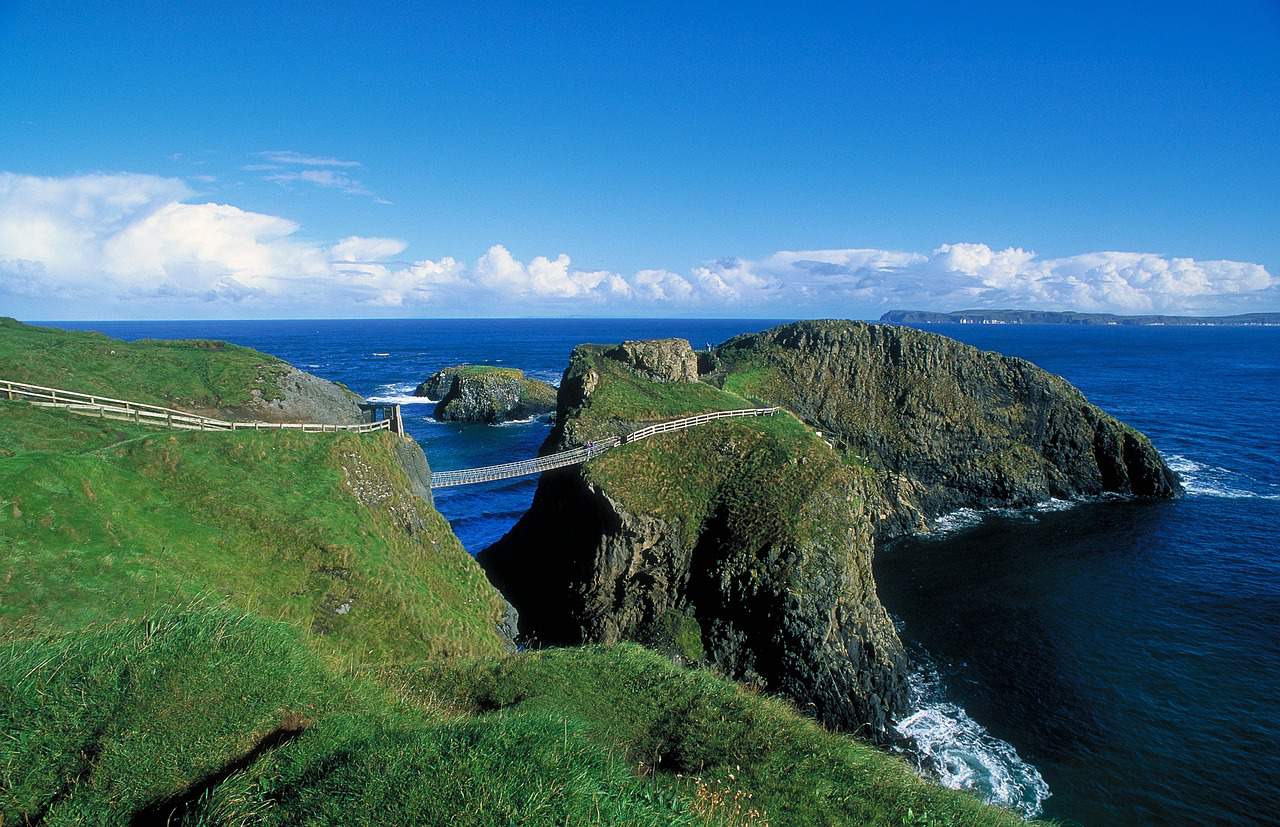
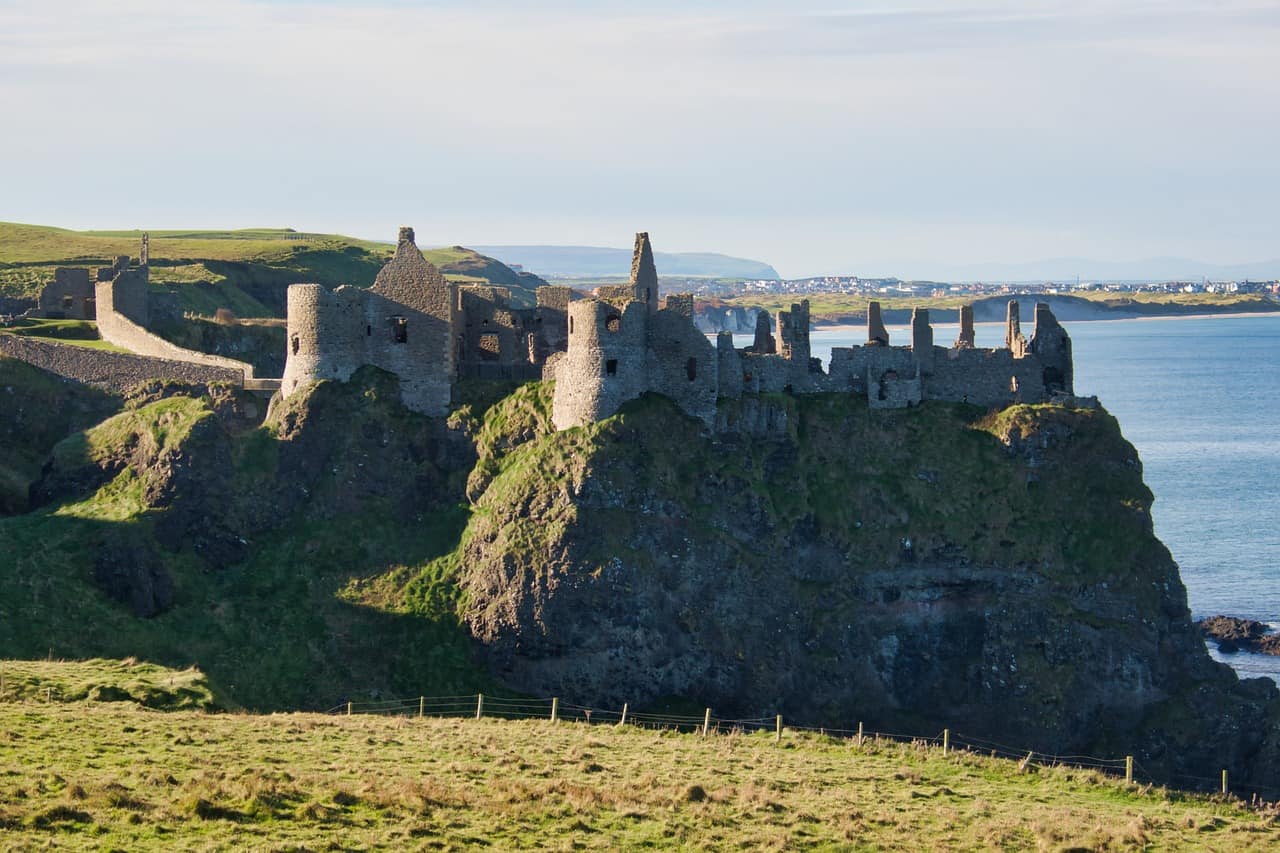
The Giant’s Causeway, Carrick-a-Rede Rope Bridge, Dunluce Castle, Dunseverick Castle, and the Iron Age promontory fort at Doonagreagh (Dunagregor) are all within reach along the Causeway Coast Way, which runs between Portstewart and Ballycastle.