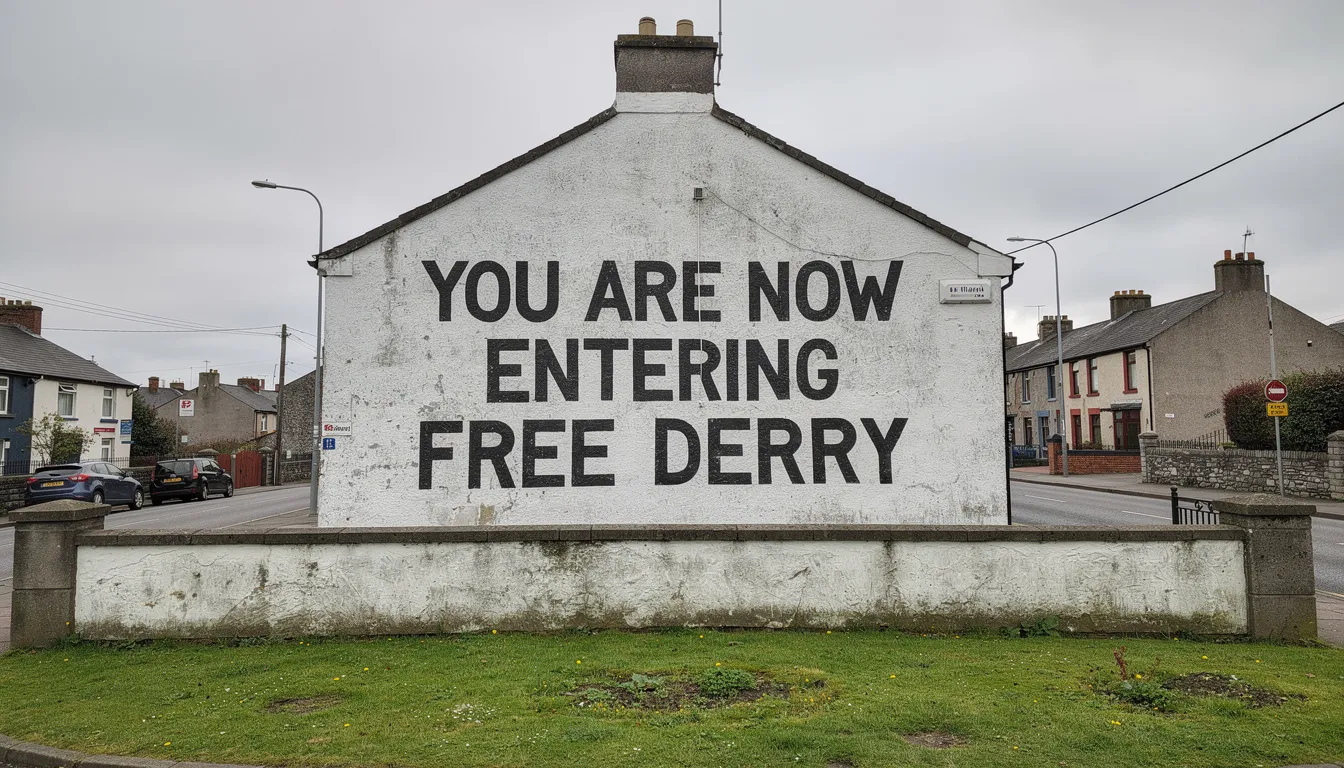
At the corner of Lecky Road in Derry’s Bogside, a single gable wall carries one of the most recognisable slogans in Irish history: “You Are Now Entering Free Derry.”
Origins
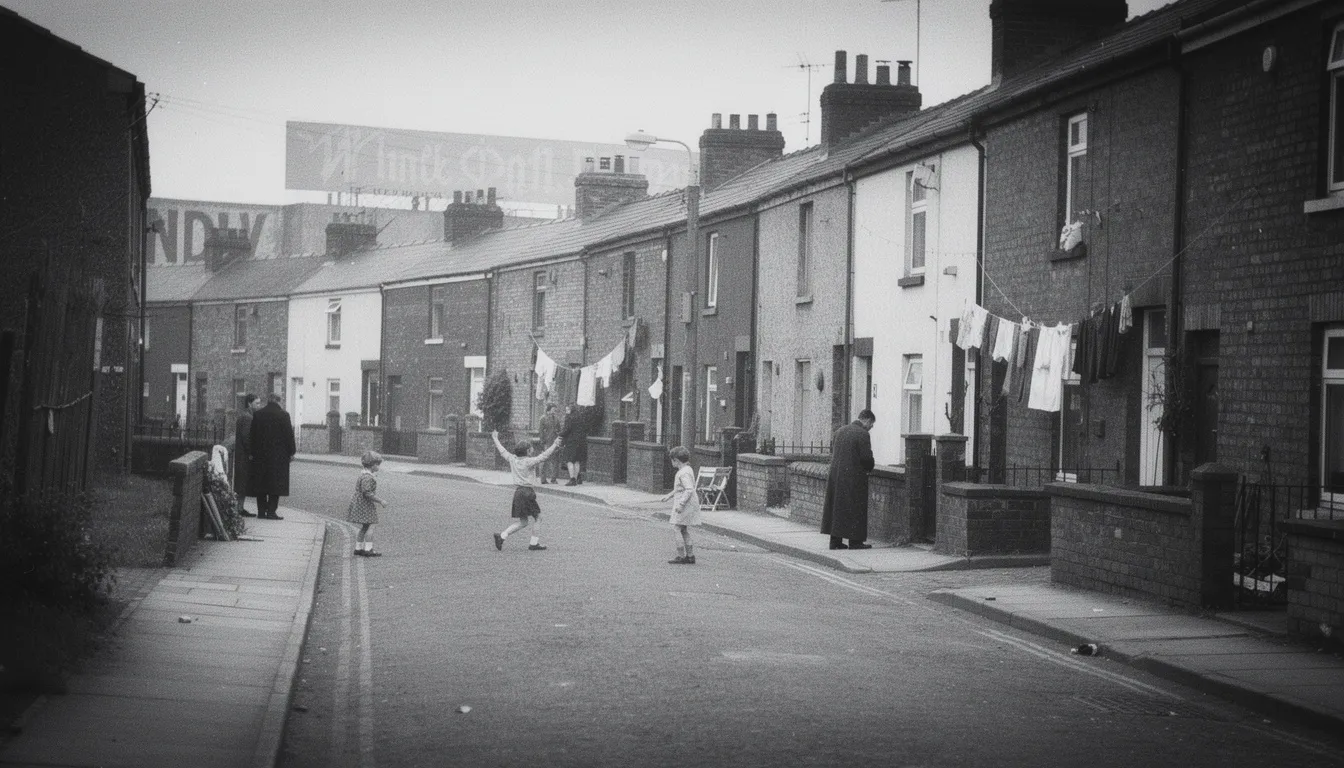
The slogan was first painted on 5 January 1969 by local activist Liam Hillen, one day after the Burntollet Bridge ambush of civil rights marchers by loyalist counter-protesters - an event that hardened the mood in Derry’s Catholic community. The slogan itself was inspired by “You Are Now Entering Free Berkeley,” associated with the Free Speech Movement at UC Berkeley in California. Later that year, local sign-writer John “Caker” Casey, known for his skill with a paintbrush, repainted the slogan more professionally - notably ahead of a visit by UK Home Secretary James Callaghan in August 1969 - producing the bold black lettering that remains iconic today. The wall is the sole surviving gable of what was once a row of terraced houses.
The Free Derry Autonomous Zone
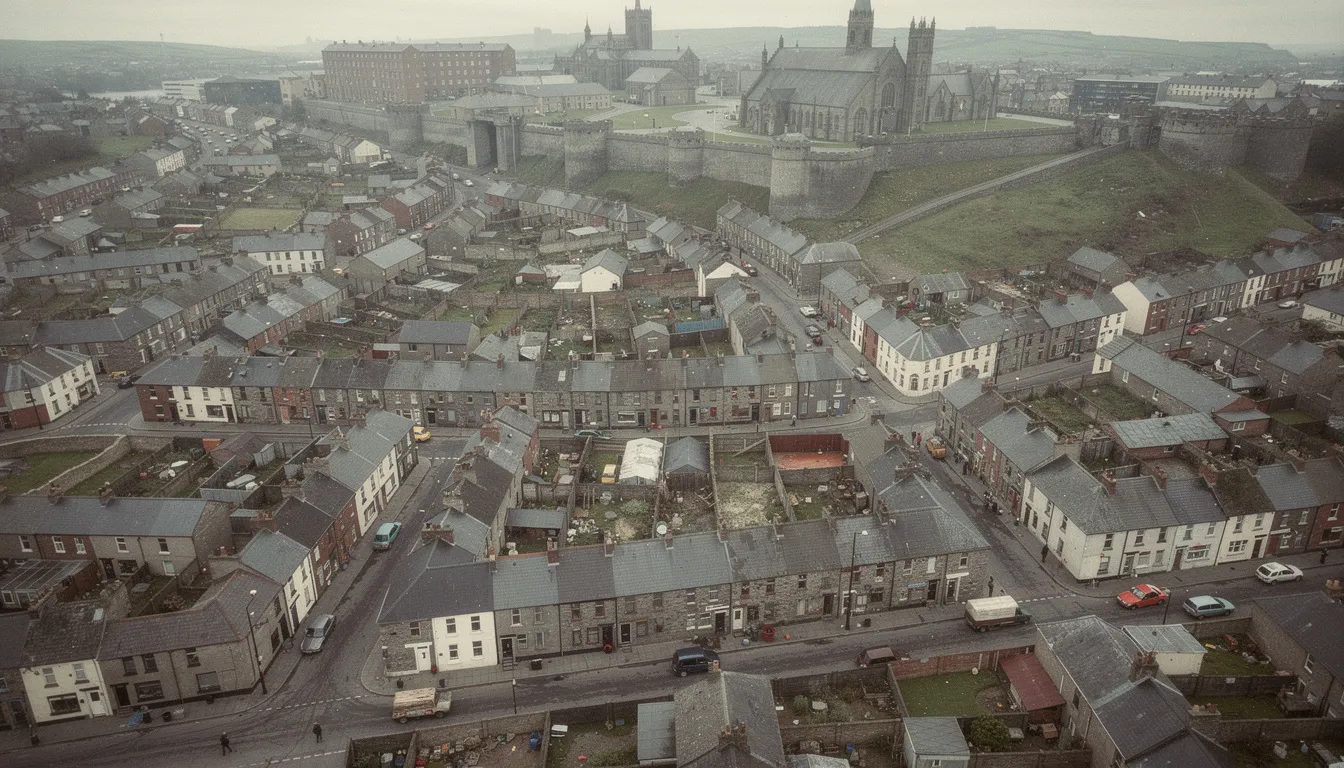
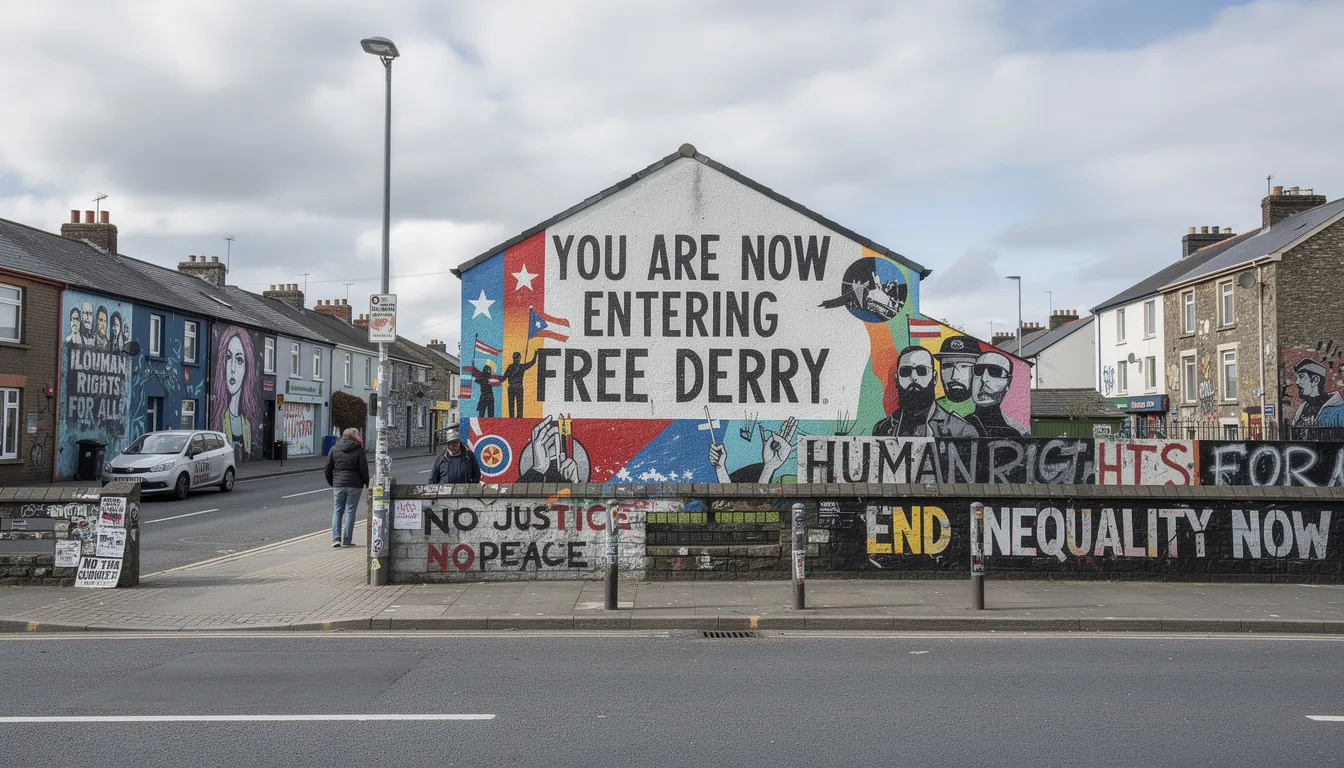
From 1969 to 1972, the Bogside and Creggan operated as a self-declared autonomous area, largely outside the control of Northern Ireland’s police and government, with residents organising their own patrols and informal community structures. This ended with Operation Motorman on 31 July 1972, when British troops moved in to dismantle no-go areas across Northern Ireland; the wall itself, however, survived.
Symbolism
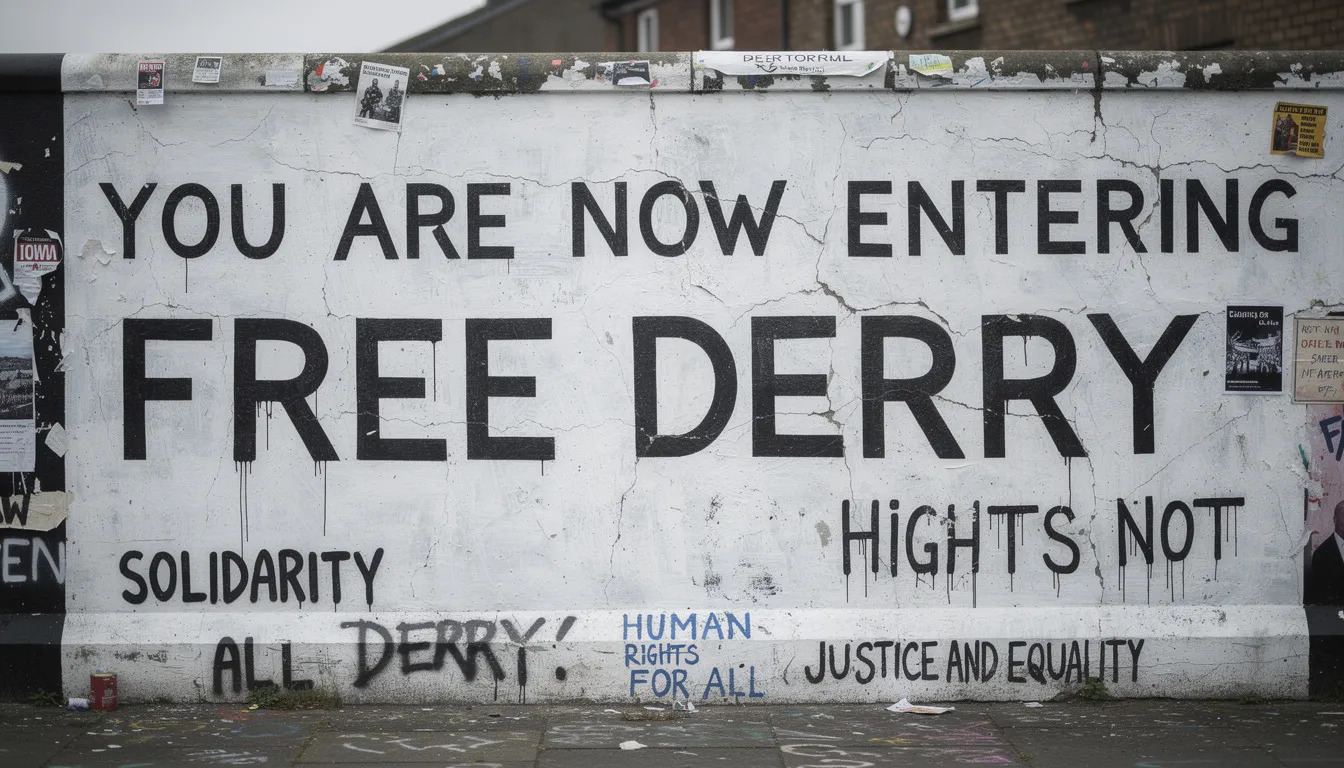
Beyond its local significance, the wall has become a recurring symbol of solidarity with international liberation and civil rights movements, regularly repainted over the decades to reflect current causes - in recent years, this has included messages of solidarity with Palestine alongside traditional republican imagery.
Visiting
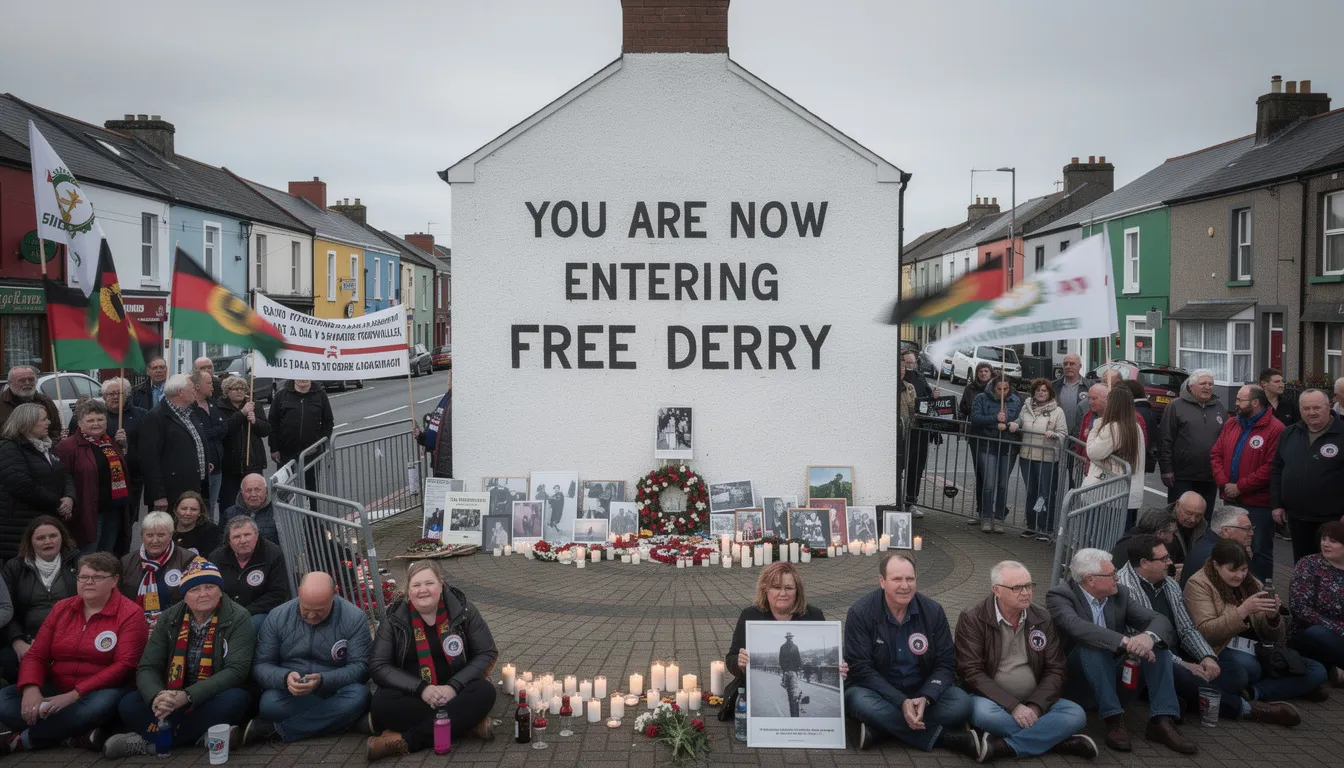
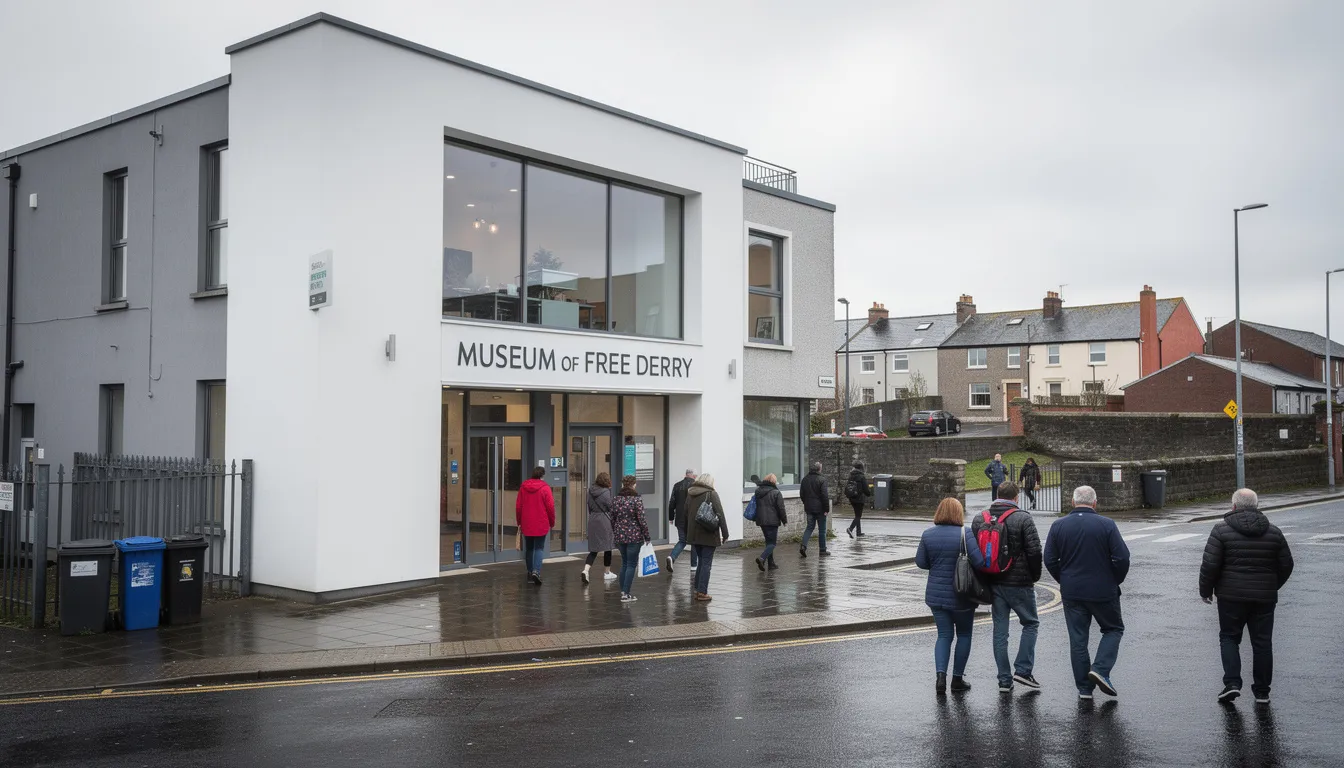
The wall sits at Free Derry Corner, alongside the Museum of Free Derry, which provides detailed context on the civil rights period, the autonomous zone, and Bloody Sunday. Guided tours of the Bogside typically take in the wall, the Bloody Sunday Memorial, and the area’s other murals - approaching the site with an awareness of its ongoing significance to the local community is worthwhile, much as with Belfast’s Shankill Road and Falls Road.