Belfast’s Maritime Mile, centred on Queen’s Road and Queen’s Island, is the heart of the city’s shipbuilding heritage - from historic docks to modern visitor attractions.
HMS Caroline
Berthed at Alexandra Dock, HMS Caroline is a First World War light cruiser and the last surviving ship from the Battle of Jutland (1916) - now a floating museum, open to visitors since 2016, covering her role in both World Wars and as a Royal Navy training ship.
Thompson Graving Dock and Pumphouse
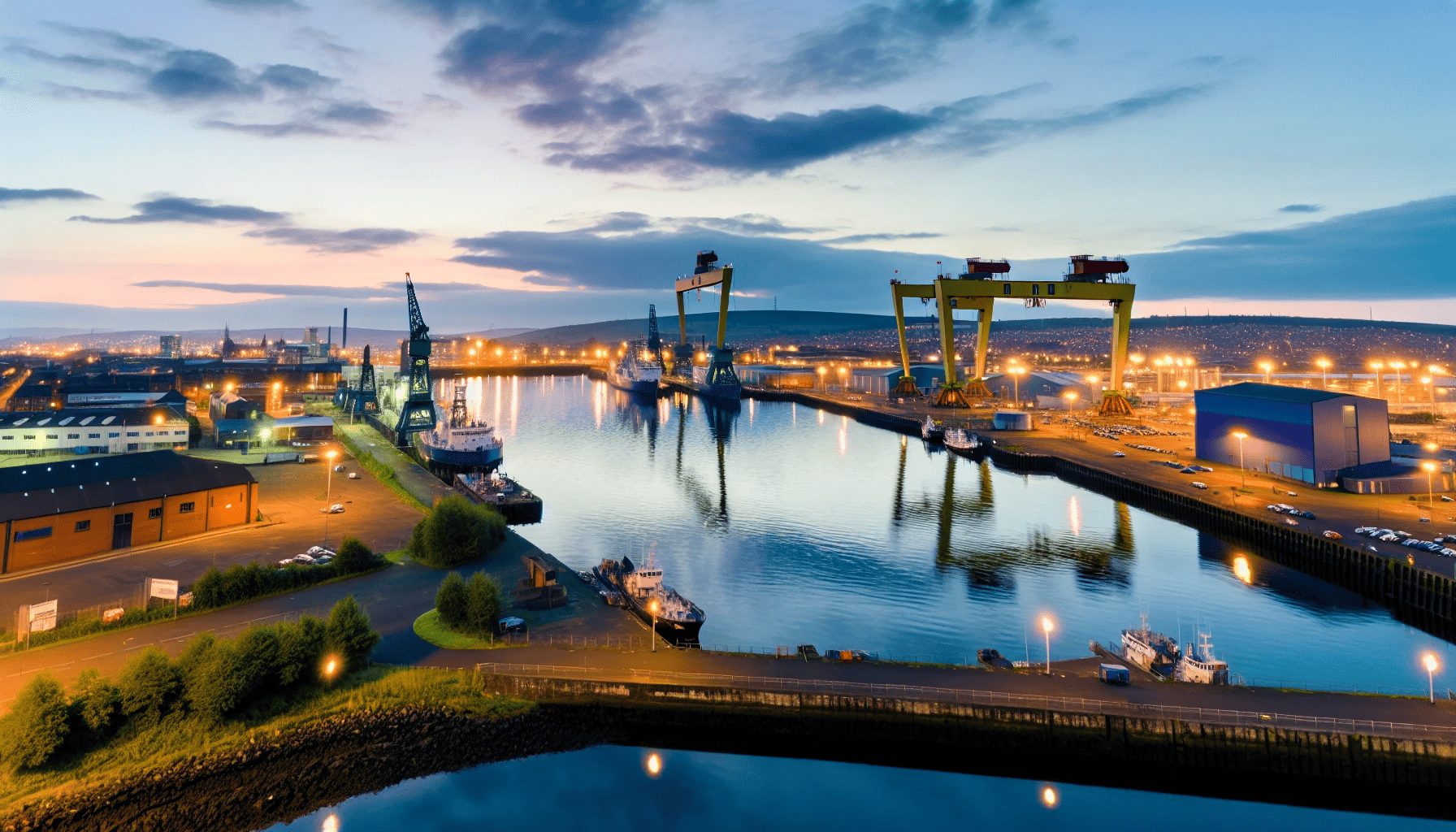
The dry dock where the Titanic was fitted out is Thompson Graving Dock, opened in 1911 as the largest graving dock in the world, built to accommodate both the Titanic and her sister ship Olympic. Its Pumphouse contained the powerful pumps - capable of draining 26 million gallons of water in 90 minutes - used to flood and drain the dock. The dock was the last place the Titanic touched dry land before her final voyage, and both dock and Pumphouse are now open to visitors as part of the Maritime Mile.
The Evolution of Queen’s Road and Queen’s Island
Queen’s Road was transformed from an underdeveloped area into a shipbuilding hub with the growth of Harland & Wolff, founded in 1861 by Edward Harland. Queen’s Island - reclaimed land dating to the Belfast Harbour Commissioners’ work from 1847 - was originally called “Dargan’s Island” after engineer William Dargan, renamed in honour of Queen Victoria’s 1849 visit to Belfast.
Shipbuilding Legacy
Harland & Wolff’s shipyards built the Titanic and her sister ships in the early 1900s, cementing Belfast’s reputation as a leading shipbuilding centre. The industry later declined but has seen a genuine recent revival, including Harland & Wolff securing a Royal Navy contract in recent years.
The Pump House Today
Once the operational heart of Harland & Wolff during Titanic’s construction, the historic Pump House - a fine example of late Victorian architecture - has been restored and now operates as Titanic Distillers, a working whiskey distillery, alongside a visitor centre and café, with daily guided tours.
The Titanic Hotel
Housed in the former Harland & Wolff Drawing Offices (where the Titanic’s plans were drawn), the five-star Titanic Hotel features Art Deco interiors and over 500 Titanic-related artefacts and artworks.
Getting There
Belfast Harbour has the longest deep-water quay in Ireland (around one kilometre) and is Northern Ireland’s largest cruise port, with over 250,000 visitors a year. From the harbour to the city centre is roughly a 20-minute bus journey.