Rising from the slopes of Cave Hill, Belfast Castle blends Victorian elegance with panoramic views across Belfast Lough. Located about four miles from Belfast city centre, it serves as both a gateway to Cave Hill Country Park and a venue for weddings, business events, and social occasions, with free admission year-round.
The Original Medieval Castle (1200s-1708)
The first Belfast Castle was built by Norman invaders in the early 1200s, likely under John de Courcy, on a site in what’s now Belfast city centre (roughly present-day Castle Street and Castlecourt), controlling a key crossing of the River Lagan. The castle changed hands repeatedly over the following centuries - captured by the O’Neill clan and rebuilt as an Irish tower house, attacked by Henry O’Neill in 1476. Sir Arthur Chichester, a key figure in the Plantation of Ulster, rebuilt it around 1611 as a more comfortable residence for English administrators. The medieval castle’s story ended in 1708, when a fire destroyed it completely - it was never rebuilt on that site, leaving only street names like Castle Place to mark the location.
The Victorian Castle (1867-Present)
After the 1708 fire, the Chichester family (by then the Marquesses of Donegall) chose not to rebuild in the increasingly crowded city centre, instead relocating to their deer park on Cave Hill. The current castle was built between 1867 and 1870 under the 3rd Marquess of Donegall, designed by John Lanyon (son of the noted Belfast architect Sir Charles Lanyon). Construction costs were substantial enough to need support from the Marquess’s son-in-law, Lord Ashley, who had married his daughter Lady Harriet Chichester and later became the 8th Earl of Shaftesbury.
The Scottish Baronial design - turrets, asymmetrical massing, ornate stonework in pink Scrabo sandstone - was built to make the most of its views across Belfast Lough and the surrounding countryside. The Shaftesbury family used it as their primary residence for decades before donating the castle and grounds to Belfast City Council in 1934, turning a private estate into a public amenity.
What to See and Do
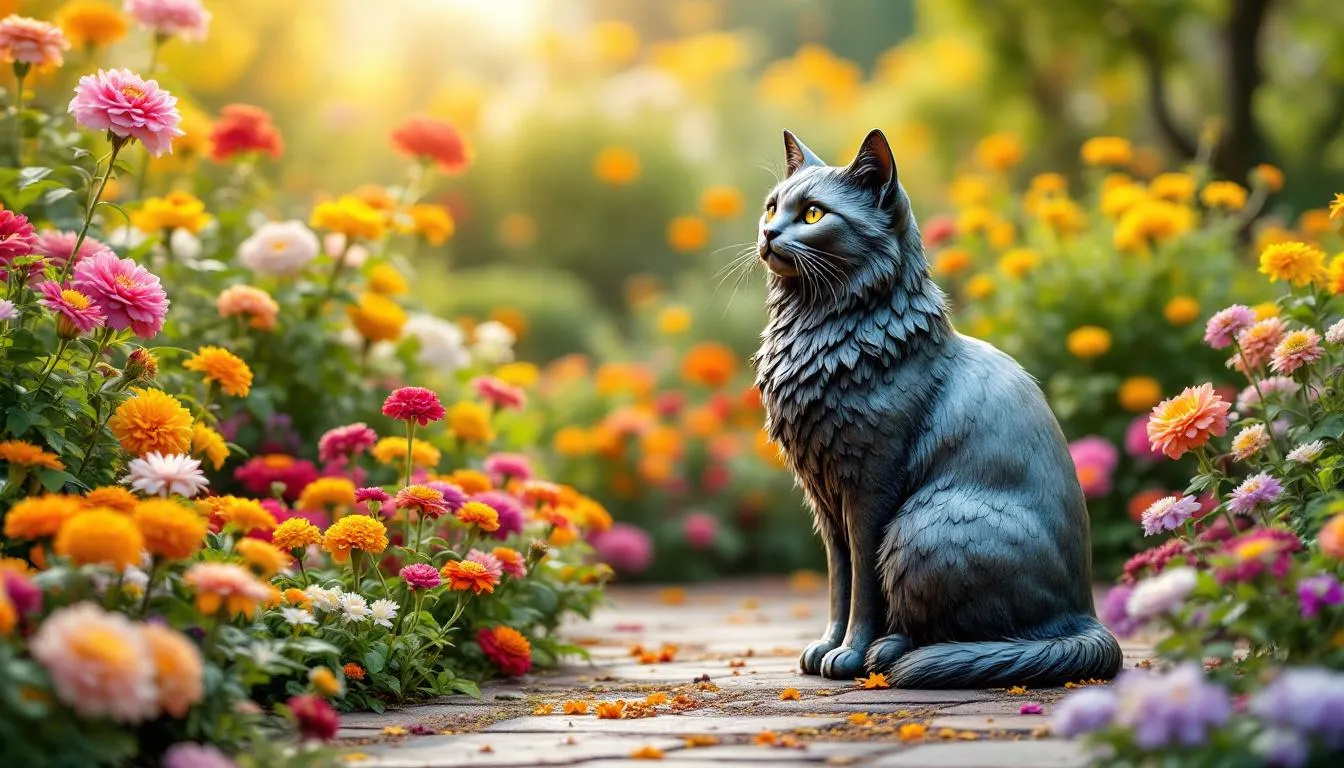
The Cat Garden is one of the castle’s best-loved features: nine cat sculptures, topiaries, and mosaics scattered through the grounds as an informal treasure hunt. Local legend holds that the castle will only prosper while a white cat lives within its walls - and a resident white cat is often genuinely spotted around the grounds today.
The serpentine stone staircase, added in 1894 by the 9th Earl of Shaftesbury as a tribute to his mother, curves along the garden façade. The Cave Hill Visitor Centre, in the castle’s lower level, covers the site’s history, the long-demolished Floral Hall, and local wildlife.
Dining: the Cellar Restaurant offers evening dining (advance booking recommended), and the more casual Castle Tavern serves coffee, light meals, and afternoon teas, with outdoor terrace seating (dog-friendly) in good weather.
Cave Hill Country Park, surrounding the castle, spans 750 acres of woodland and rocky outcrop, including the Cave Hill Trail past the Devil’s Punchbowl, prehistoric caves, and McArt’s Fort, plus Napoleon’s Nose - a rock outcrop with sweeping views over Belfast Lough, named for its profile. A children’s adventure playground and the Millennium Maze are also on site.
Visitor Information
Confirmed current opening hours: Sunday-Monday 9am-6pm, Tuesday-Saturday 9am-9pm. Admission to the castle, visitor centre, and grounds is free. Cave Hill Country Park itself opens earlier and closes later, with seasonal variation - check current times before an early or late visit. Private events (weddings, functions) can occasionally limit public access to parts of the castle.
Getting there: on the Antrim Road, about four miles/20 minutes from Belfast city centre by car, with free on-site parking. Metro bus routes run from the city centre to nearby stops. Belfast Zoo is about 10 minutes away, and many visitors combine the two.