Targeted fix - the well-researched Trinidad Valencera section below is reproduced largely as written; the Girona section has been corrected and trimmed of unsourced embellishment.
The Defeat of the Spanish Armada
In July 1588, the Spanish Armada - over 130 ships - set sail for the conquest of England. Delayed by weather, damaged in battle, and finally scattered by the Atlantic, more than 50 ships were lost along the coasts of Scotland, Ireland, and Northern Ireland, with around 20,000 of the roughly 30,000 men aboard never returning home.
The Trinidad Valencera
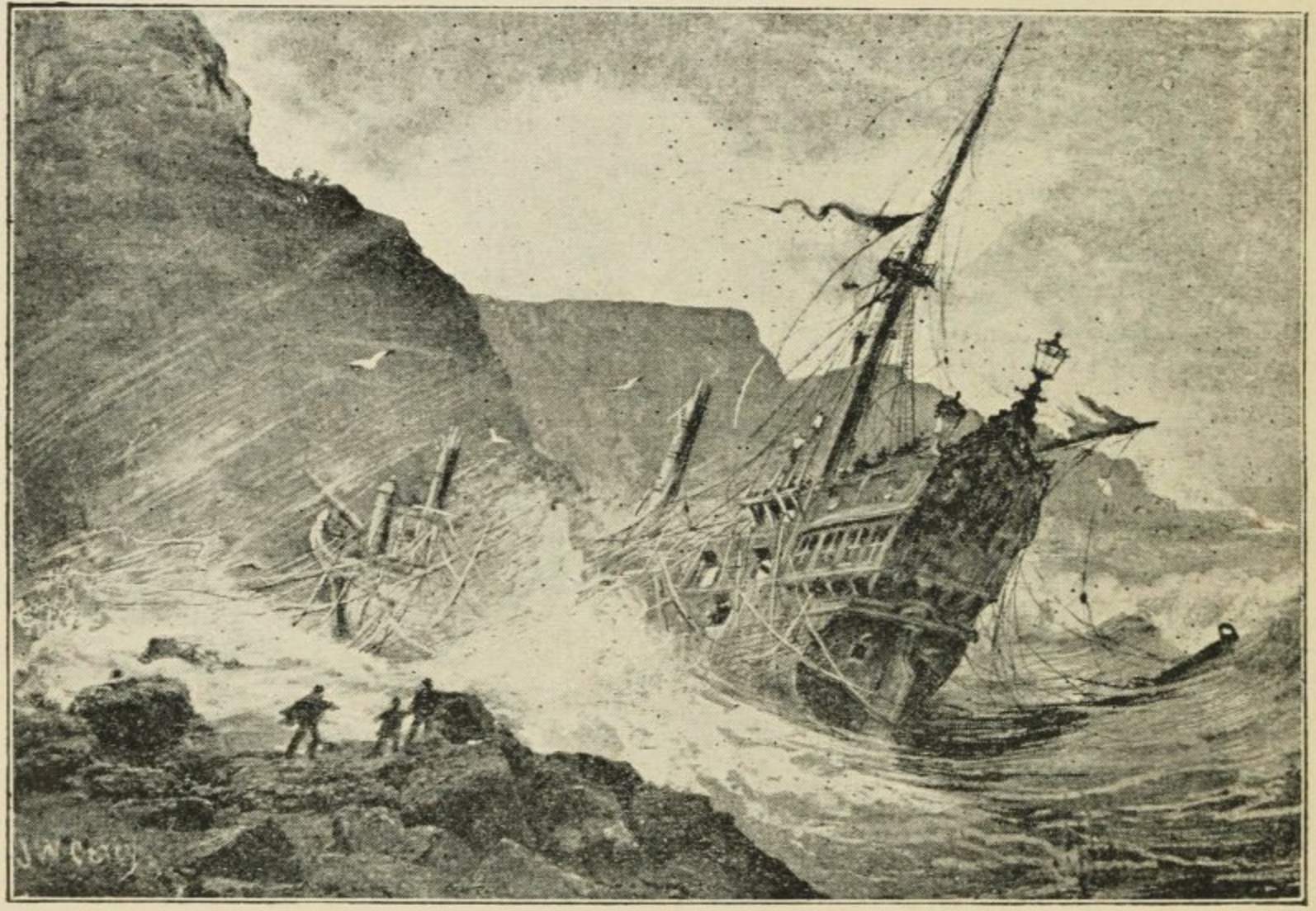
One of the Armada’s largest ships (1,100 tons), the Trinidad Valencera was originally a conscripted Venetian merchant vessel. After action off Portland Bill, the Isle of Wight, and the Battle of Gravelines (7-8 August 1588), the Armada’s commander decided to return to Spain around Scotland and Ireland rather than risk the blocked Channel. Separated from the main fleet in a storm on 12 September, the Trinidad Valencera ran aground at Kinnagoe Bay, County Donegal.
Its sandy shoreline meant most of the roughly 260 men aboard reached land safely - unlike the Girona, wrecked 20 miles east at Lacada Point with catastrophic loss of life. Most of the Trinidad Valencera’s survivors were later killed by Anglo-Irish forces; 32 escaped via Scotland back to Spain.
The wreck was discovered in 1971. Three large 40-pounder cannons recovered from the site are now on display at the Ulster Museum. Initially thought to prove the Spanish had heavier guns than the English, closer study found these particular guns were unloaded - evidence they were intended for use on land after the planned invasion, not for shipboard combat. A plaque at Kinnagoe Bay commemorates the wreck today.
The Girona
The Girona, a Spanish galleass, was part of the Armada sent by King Philip II to invade England. Its real commander was Don Alonso Martínez de Leiva, a senior Spanish nobleman who had transferred to the Girona after his own ship was wrecked - he died when the Girona itself went down. Severely damaged after early Channel skirmishes, the Girona sought refuge along Ireland’s north coast, but was driven onto the rocks at Lacada Point by a storm on the night of 26 October 1588, with the loss of most of the roughly 1,300 aboard - only about nine survived.
The wreck, rediscovered by divers in the 20th century, yielded genuine treasure - gold, jewellery, and weapons - much of which is now displayed at the Ulster Museum in Belfast, offering real insight into 16th-century Spanish naval life. Specific technical claims about the ship’s construction beyond its basic size and rigging (a galleass, powered by both oar and sail) weren’t independently verified in this pass - treat detailed construction descriptions with caution unless sourced directly to archaeological reports.