Substantial trim, not a line-by-line rewrite - the original ran to over 22,000 characters with a lot of repetition; this keeps the well-supported core and removes one unsubstantiated claim.
The Genetics of Red Hair
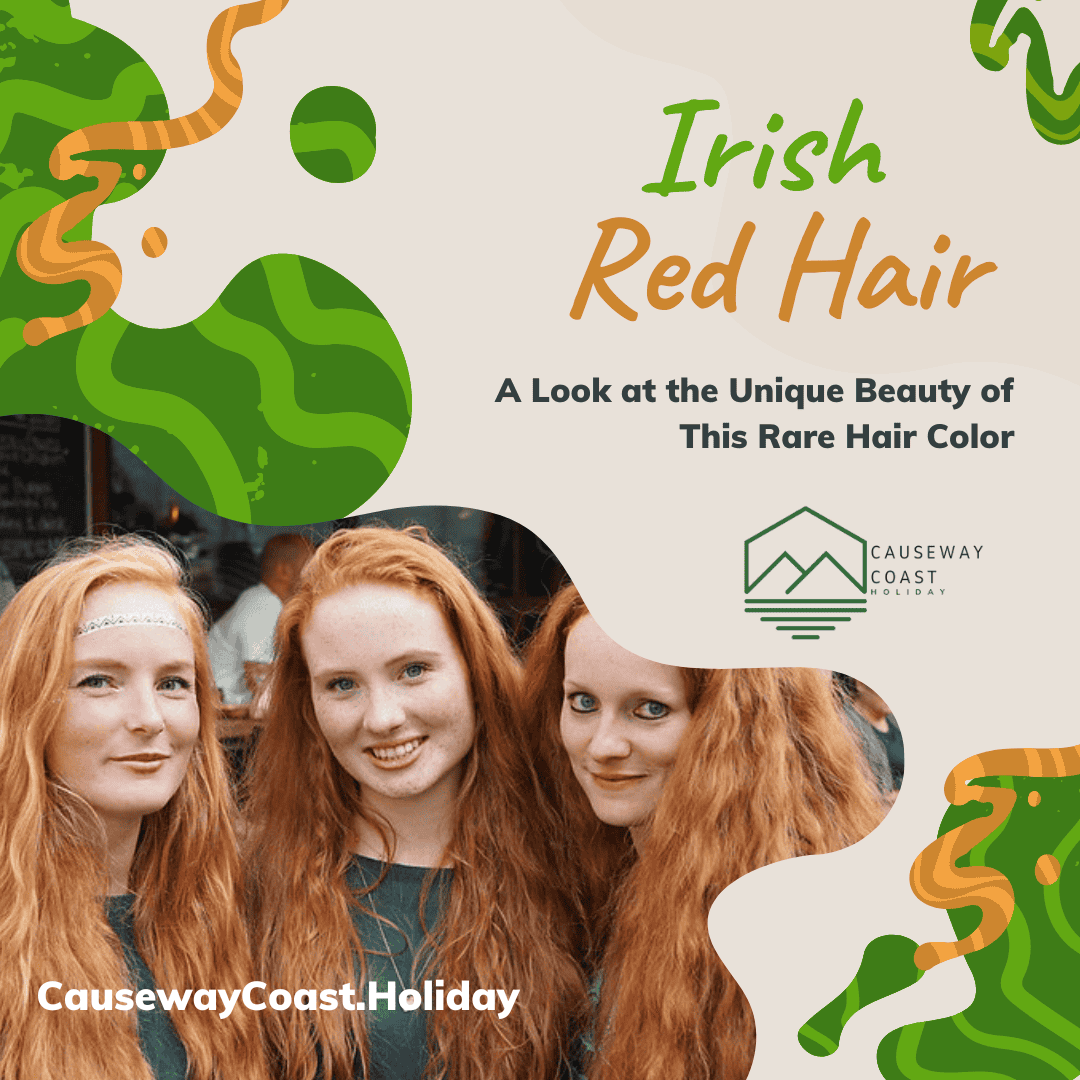
Red hair is a recessive trait, produced by specific variants of the MC1R gene - both parents need to carry the gene for a child to inherit red hair. MC1R variants increase pheomelanin (the reddish pigment) and reduce eumelanin (responsible for brown/black hair), which is also why redheads tend to have paler skin, more sun sensitivity, and a higher freckle tendency. Roughly 1-2% of the global population has naturally red hair, but Ireland has by far the highest concentration anywhere - around 10% of the Irish population, with Scotland close behind.
Why Ireland specifically? This remains a genuinely live area of research rather than settled fact. Leading theories include: the Celts and later Viking settlers carrying a higher frequency of the relevant gene variants into the Irish population through intermarriage over centuries; and Ireland’s low-sunlight climate potentially favouring the trait, since redheads produce vitamin D more efficiently in low light - a possible selective advantage in a place with limited sun. Neither theory is proven; both are reasonable, actively studied explanations, not certainties. Not every redhead in Ireland traces to Celtic or Viking ancestry specifically - the MC1R variants are present in various European populations more broadly.
Folklore and Cultural History
Red hair carries a long, genuinely mixed history in Irish folklore - at various points associated with magical powers, a fiery temperament, and connections to the Otherworld, but also, historically, subject to real superstition and discrimination (accusations of witchcraft being a notable, dark example). The god Lugh is traditionally depicted with red hair, tying the trait to solar and heroic imagery in Irish mythology.
Red hair has also long featured in Irish literature and art - James Joyce, for instance, often gave his female characters red hair - and modern Ireland has moved toward genuinely celebrating it, most visibly through the Irish Redhead Convention, held annually in County Cork since 2011, which draws visitors from around the world.
Health Considerations
Because MC1R variants reduce protective melanin, redheads are more prone to sunburn and have a higher skin cancer risk, making sun protection (SPF, shade, protective clothing) genuinely more important than for the general population. The same gene appears to affect vitamin D synthesis (more efficient in low light, but deficiency risk remains a real concern in less sunny climates) and has been linked in some research to altered pain sensitivity and anaesthesia requirements - an area of ongoing study rather than settled clinical guidance.
Famous Redheads Through History
Red hair turns up across recorded history well beyond Ireland: Queen Boudicca, leader of the Iceni against Roman occupation, was described by the historian Cassius Dio as having a great mass of tawny-red hair. Queen Elizabeth I of England was a well-documented redhead, and her reign made red hair fashionable at the English court. Achilles is described as red-haired in some ancient Greek sources, though this varies by text and tradition.
Ireland’s own association with red hair is less about specific named historical figures and more about the sheer, statistically real concentration of the trait in the population today - visible in everyday Irish life far more than in any single celebrated redhead.