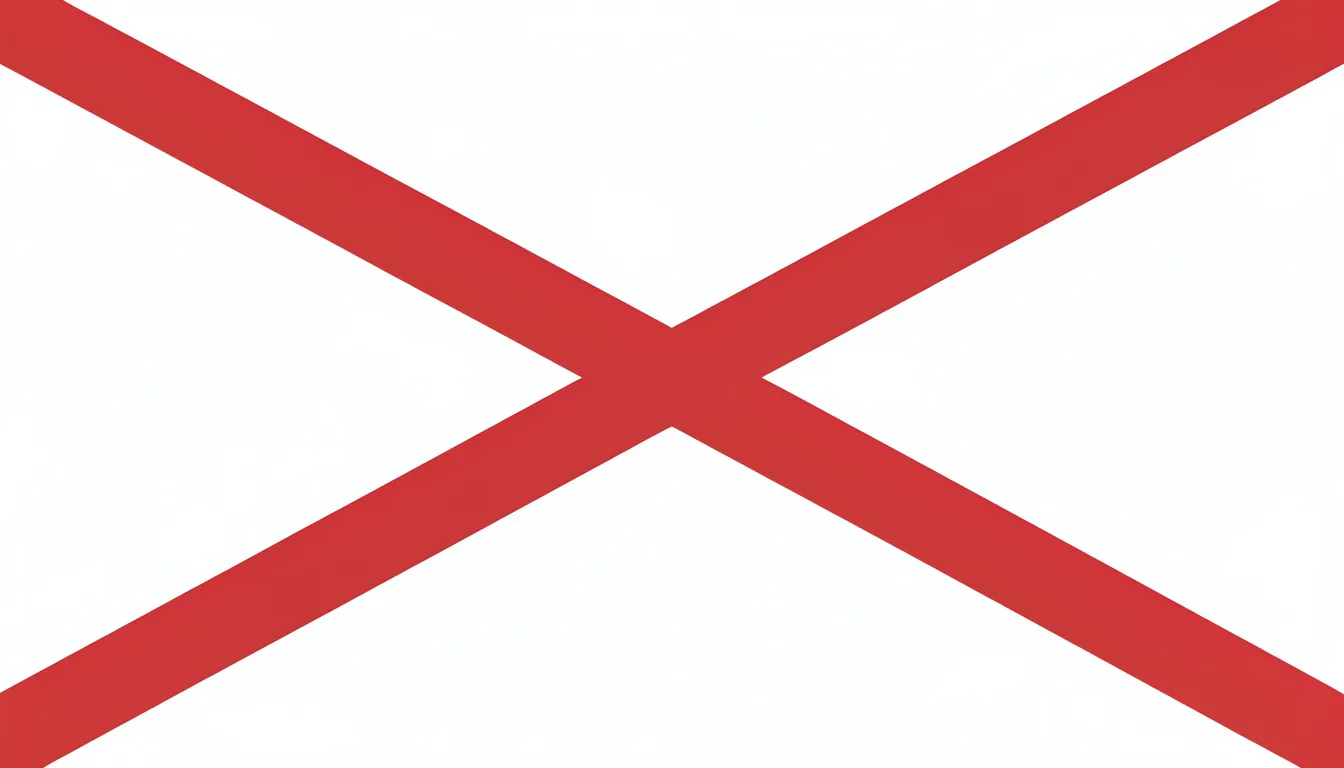
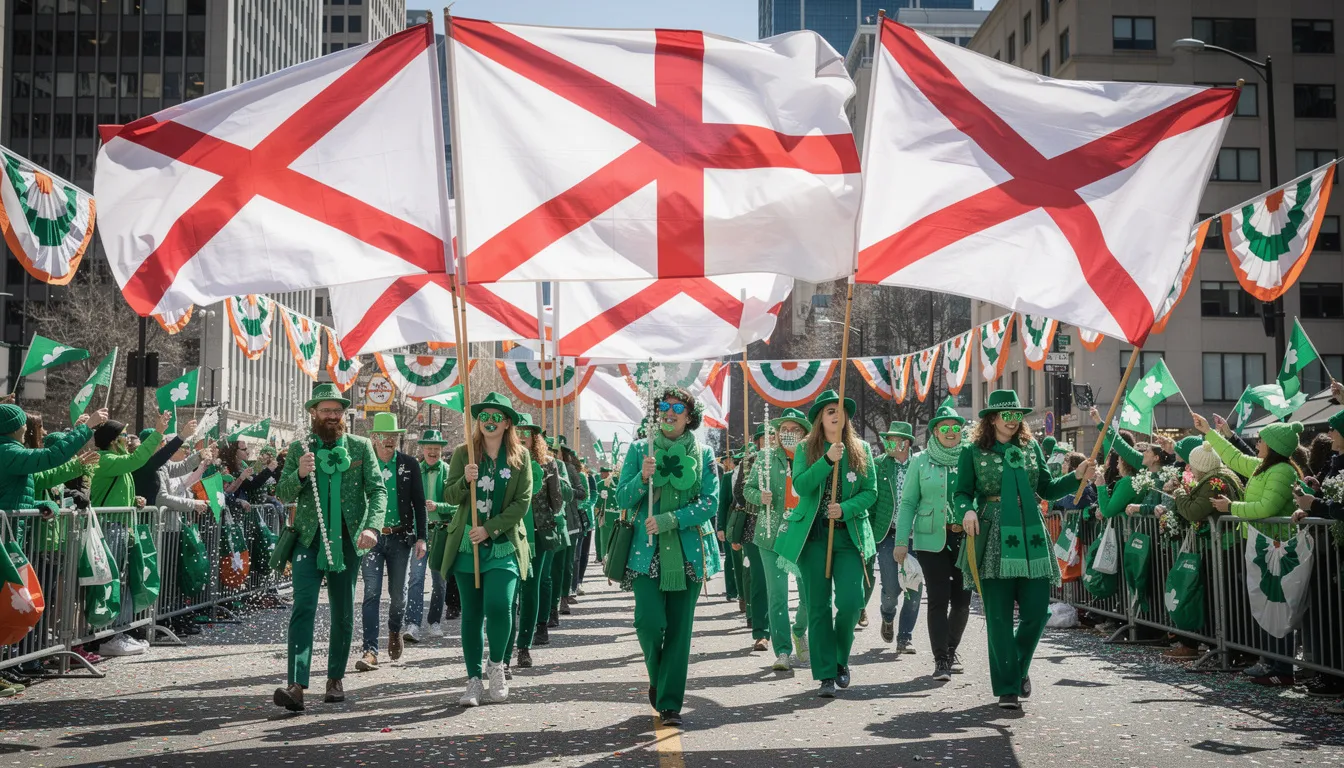
St Patrick’s Saltire - a red diagonal cross on a white background - is one of Ireland’s more contested heraldic symbols, with a documented history stretching back to the 18th century and disputed roots that may go further still.
Origins
The saltire was formally adopted in 1783 as the badge of the Illustrious Order of St Patrick, an Irish chivalric order. It was incorporated into the Union Flag following the 1801 Act of Union between Great Britain and Ireland, combining with St George’s Cross (England) and St Andrew’s Cross (Scotland) to form the flag’s modern design.
Its origins before 1783 are genuinely disputed among historians. Some trace it to the FitzGerald dynasty’s coat of arms; others point to earlier documented uses - Irish coins from around 1480, a 1576 map showing a red saltire on a ship (though its nationality is debated), and 1780s newspaper references to Irish shipping using a white flag with a red saltire and harp. European atlases from the late 17th and 18th centuries labelled a similar design as Ireland’s flag before the 1801 adoption, suggesting some pre-existing use, though the extent and consistency of that use before 1783 isn’t settled.
Contemporary Uses
The saltire appears in various institutional contexts today, including some regimental colours, university heraldry (Trinity College Dublin, Queen’s University Belfast), and municipal arms in several Irish towns and cities. The Irish Lights maritime service adopted it as an official flag in 1970.
A Contested Symbol in Northern Ireland

In Northern Ireland’s political context, the saltire occupies an unusual position: some have proposed it as a genuinely cross-community alternative to both the Irish tricolour (associated with Irish nationalism) and the Union Flag (associated with unionism), given its historically Irish roots combined with its place within the British flag. It has been used in some cross-community initiatives, including around St Patrick’s Day events in Downpatrick.
At the same time, reception is genuinely mixed on both sides - some nationalist voices have historically viewed it as a symbol imposed rather than authentically Irish, while some unionist voices have been wary of a symbol closely associated with Irish identity. This dual scepticism is itself part of the honest historical record, not a position this guide takes either way.
Related Irish Symbols
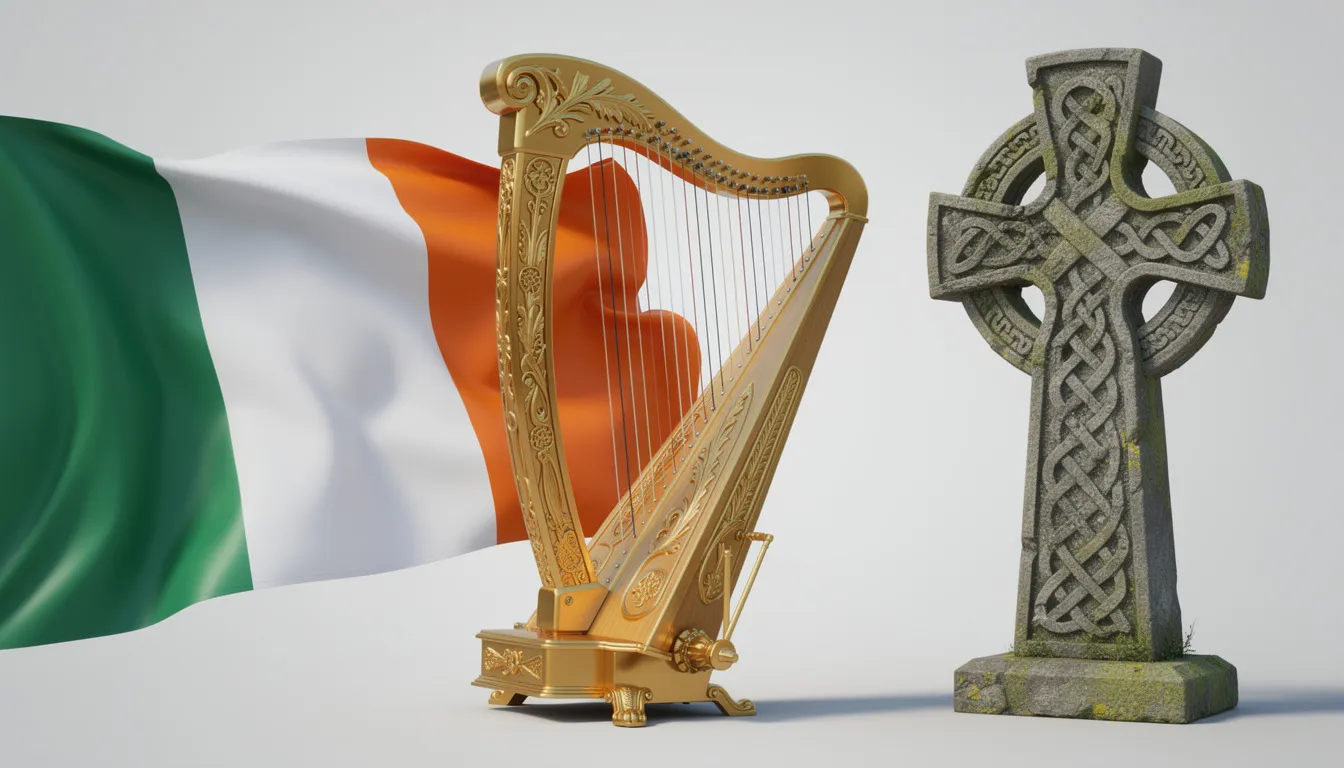
The gold harp on blue is Ireland’s older, largely uncontested heraldic symbol, predating the saltire and still the official emblem of the Irish state. The Irish tricolour (green, white, orange) is the Republic of Ireland’s national flag, adopted in the 19th century, with its colours traditionally read as representing Catholic Ireland, peace, and Protestant Ireland respectively.
Frequently Asked Questions
What does St Patrick’s Saltire look like? A red diagonal (X-shaped) cross on a white background.
Is it part of the Union Flag? Yes - it was incorporated after the 1801 Act of Union, combined with the crosses of St George and St Andrew.
Is it a universally accepted Irish symbol? No - its status is genuinely contested, viewed differently by different communities and historians, rather than settled fact.