

St Patrick, Ireland’s patron saint, is central to the country’s conversion to Christianity and remains a global symbol of Irish identity, celebrated every March 17th.
Early Life and Captivity

Born to a wealthy Romano-British family in the late 4th century - his father Calpurnius a deacon, his grandfather Potitus a priest - Patrick was captured by Irish raiders at 16 and enslaved, traditionally said to have herded sheep on the slopes of Slemish Mountain in County Antrim for six years. It was during this captivity that his Christian faith deepened.
Escape and Return

After six years, Patrick escaped, walking some 200 miles to the coast before finding passage back to Britain. There he pursued theological study for over a decade before a vision called him back to Ireland as a missionary - a calling reflected in his prayer “St Patrick’s Breastplate.”
The Mission
Patrick’s approach to conversion leaned on adapting existing pagan symbols and practices rather than rejecting them outright - most famously using the three-leafed shamrock to explain the Holy Trinity. According to tradition (not historically verifiable, but a long-standing part of his legend), he founded around 365 churches and monasteries and baptised more than 120,000 people, laying the groundwork for a network of monasteries that would go on to preserve Irish language, literature, and art for centuries.
Legends
The shamrock-as-Trinity story and the legend of Patrick driving snakes into the sea (post-glacial Ireland never had native snakes - the “snakes” are traditionally read as a symbol for paganism) are both folklore rather than documented history, though both remain central to how Patrick is remembered.
Writings
Patrick’s own Confessio, a spiritual autobiography, and his Letter to Coroticus, condemning the kidnapping and killing of Irish Christians by a British warlord’s soldiers, are the only writings reliably attributed to him and offer the most direct window into his life and beliefs.
Sainthood
St Patrick is recognised as a saint through popular acclamation rather than formal Vatican canonisation - a process that didn’t yet exist in his lifetime, since formal canonisation only became standard practice from the 12th–13th centuries onward. This doesn’t mean he’s “not really” a saint or was ever stripped of the title; saints recognised before the formal process (a category that includes most of the earliest Christian saints) are simply venerated under an older, equally valid tradition. He is also informally regarded as a patron of engineers, linked to a legend about introducing arch construction to Irish builders.
St Patrick’s Day
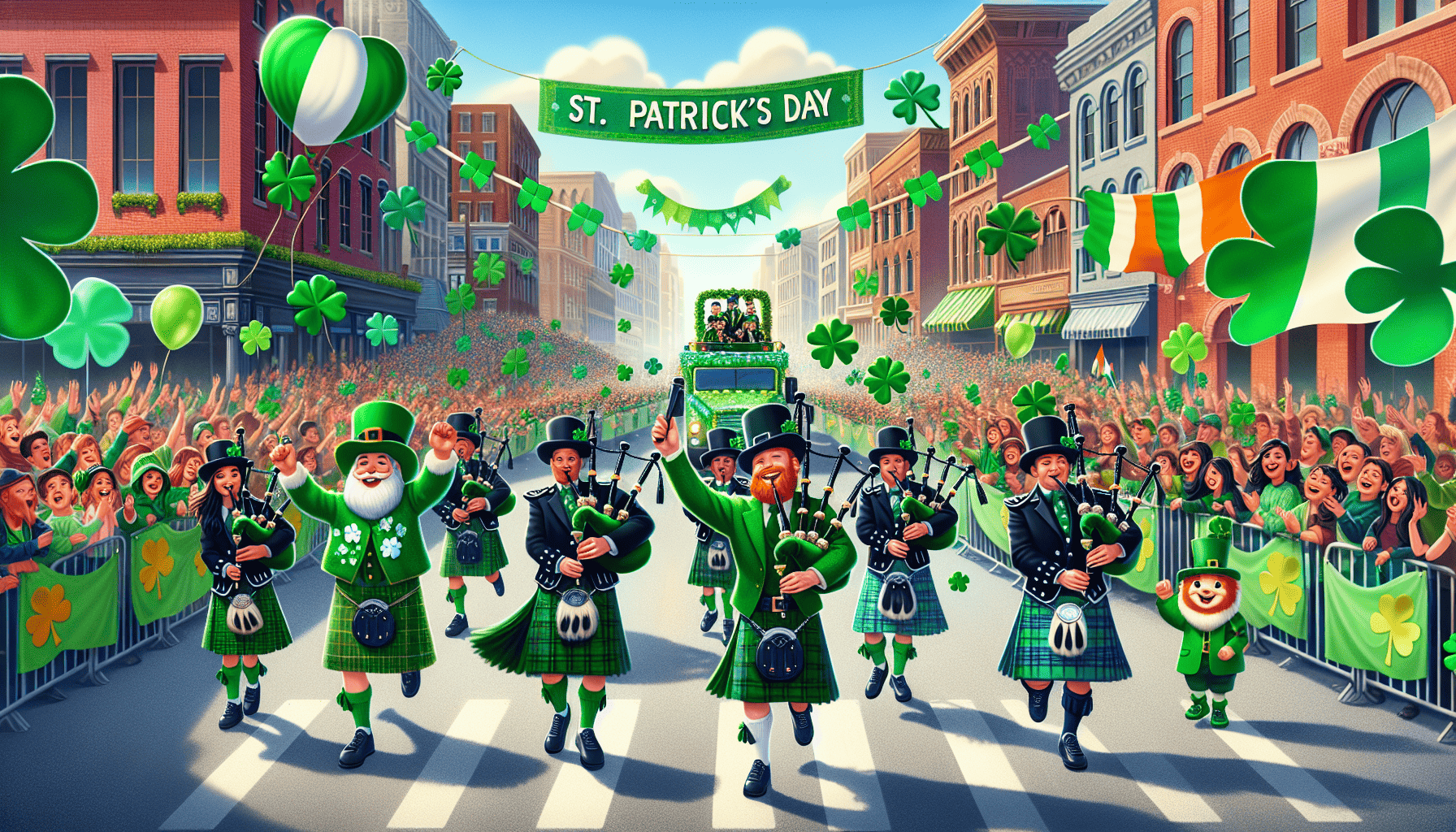
Celebrated globally on March 17th, St Patrick’s Day marks Patrick’s role in bringing Christianity to Ireland and has become a broader celebration of Irish heritage worldwide. Dublin’s parade dates back to 1931 and has grown into a multi-day festival of food, music, and fireworks. Wearing green is tied to Ireland’s “Emerald Isle” nickname and has since taken on its own folklore about warding off pinches from leprechauns.
Places Associated with St Patrick
St Patrick’s Cathedral in Dublin, the Church of Ireland’s national cathedral, and St Patrick’s Cathedral in New York (construction begun 1858), a landmark of Irish-American Catholic heritage, both carry his name and continue to serve as focal points for St Patrick’s Day commemorations.