
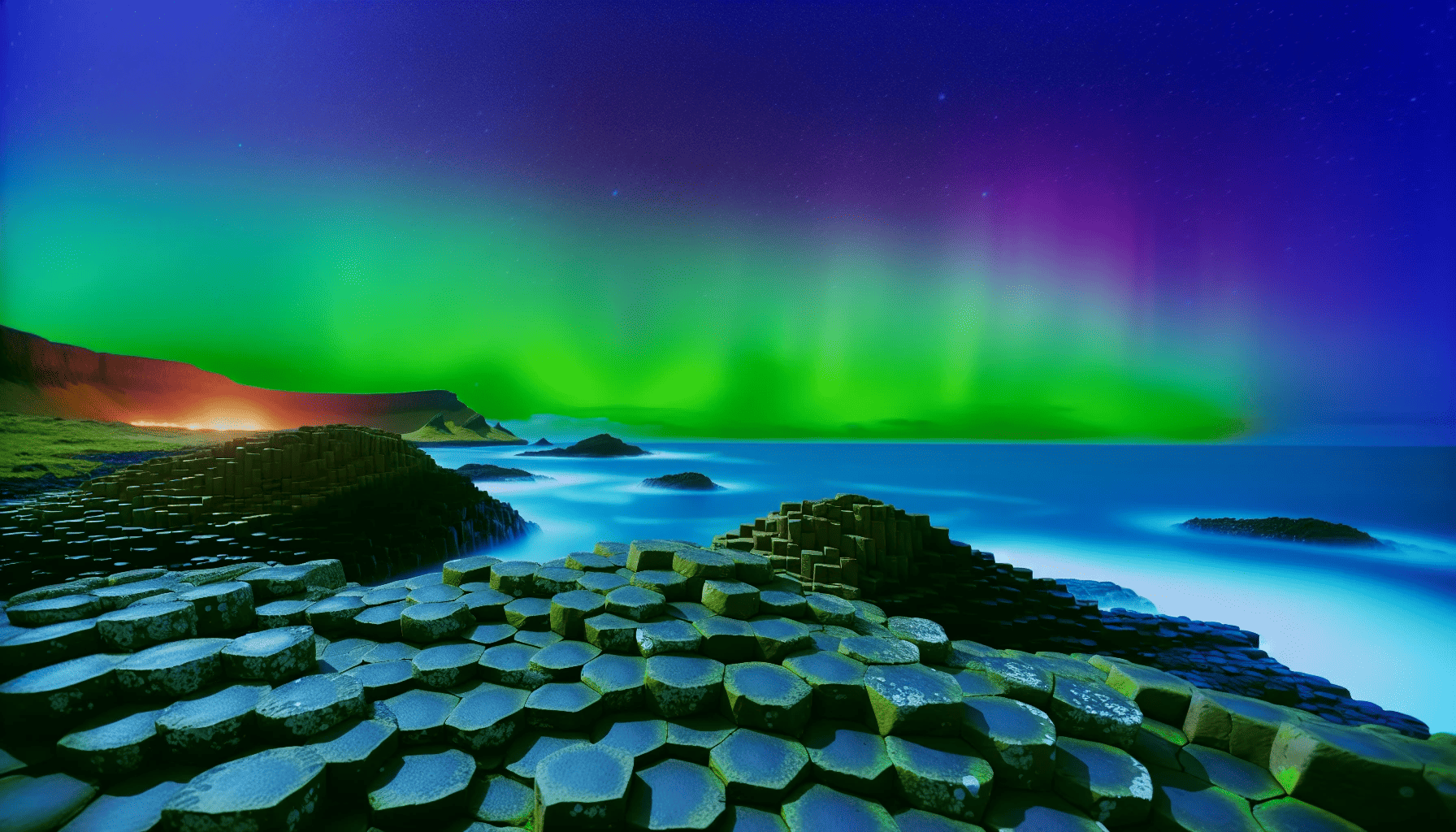
Northern Ireland’s dark, low-light-pollution coastline offers genuine opportunities to see the aurora borealis during strong geomagnetic activity, particularly along the north coast.
Understanding the Aurora
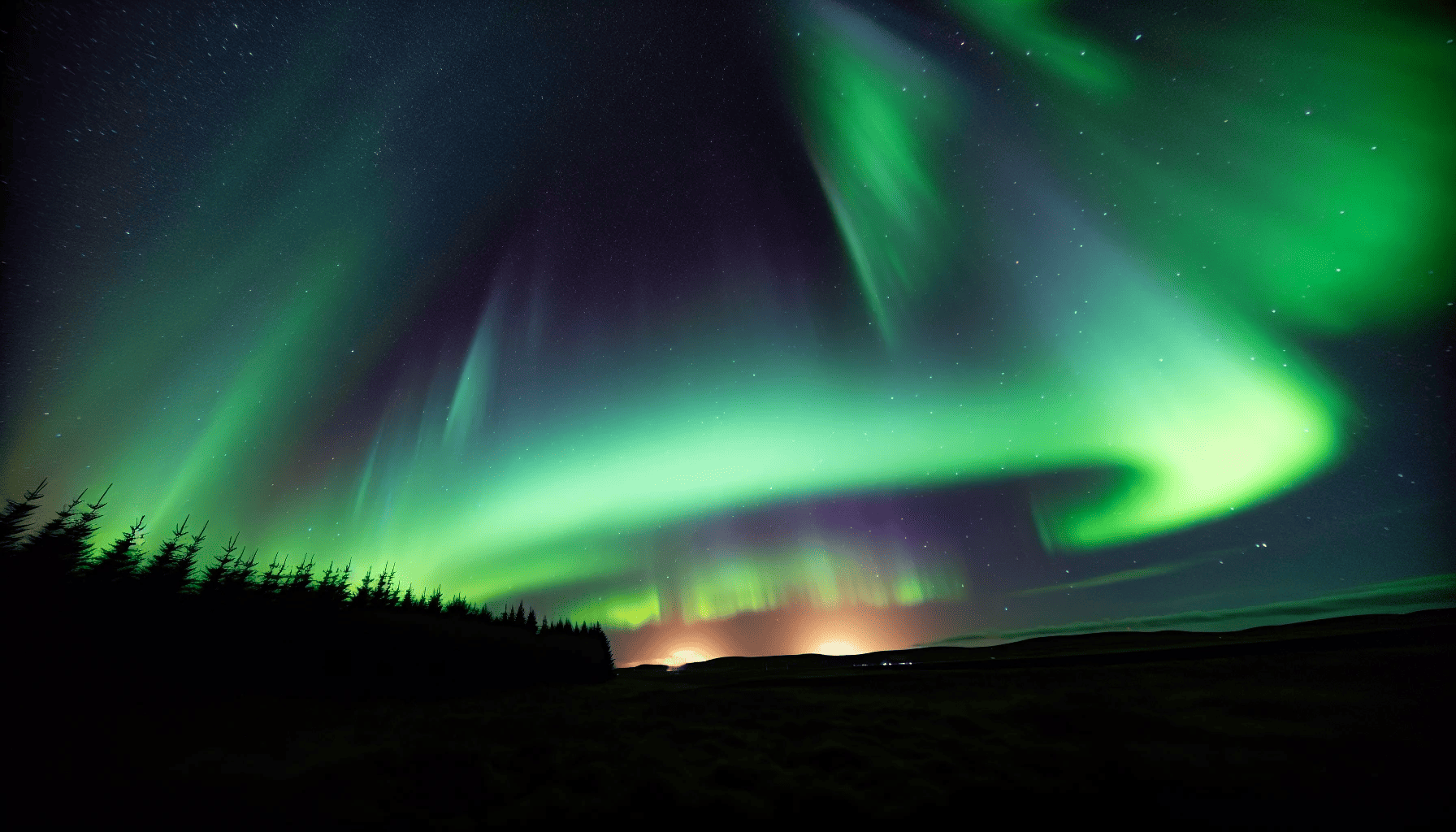
The aurora borealis occurs when charged particles from the sun, carried on solar winds, interact with Earth’s magnetic field and collide with upper-atmosphere gases - releasing light in colours from pale green to pink, red, yellow, blue, and violet, depending on which gas and at what altitude. Large geomagnetic storms (from coronal mass ejections) push the aurora zone further south, which is what makes sightings possible as far south as Northern Ireland.
Ideal Viewing Conditions
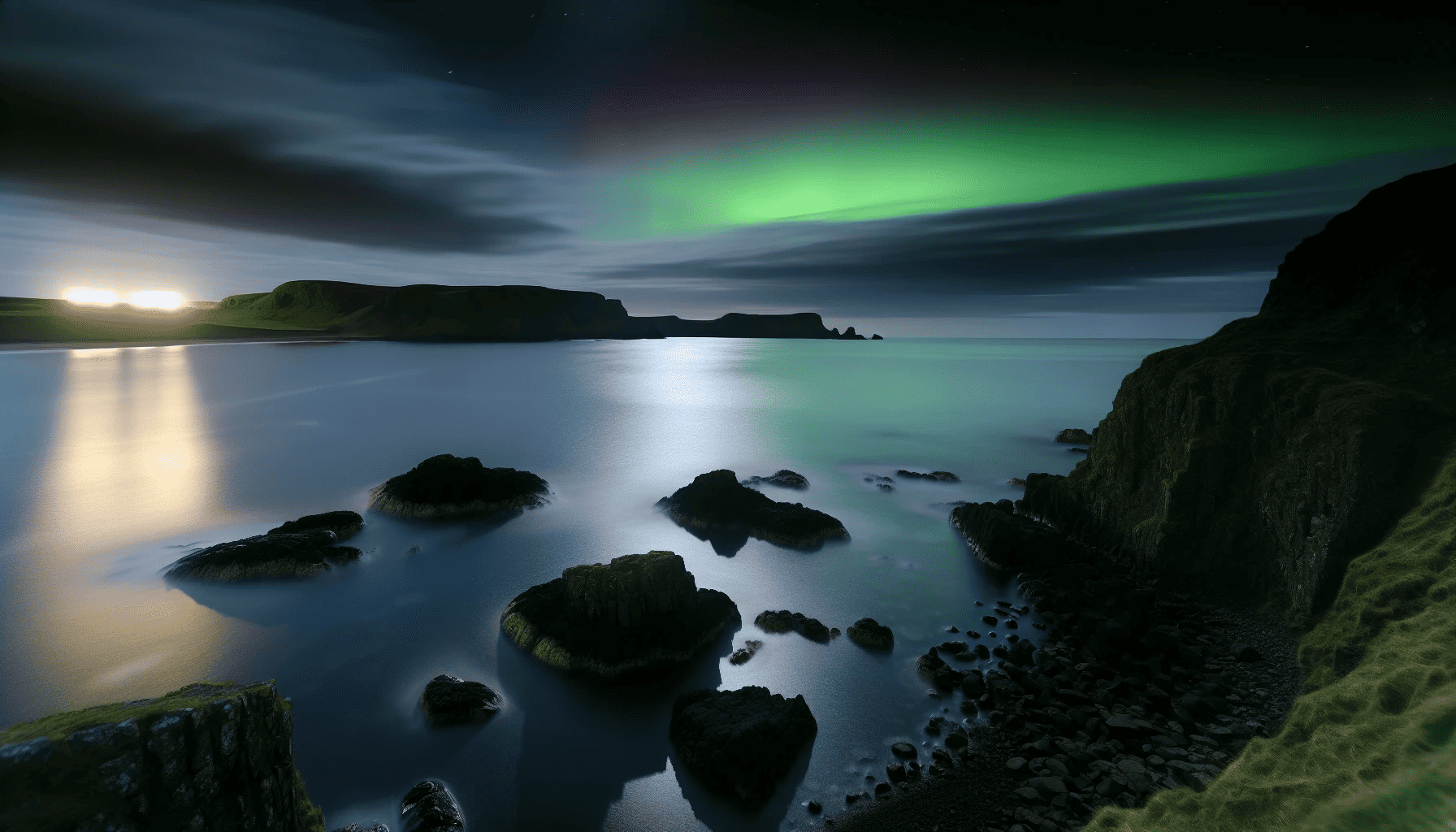
Clear, dark skies are essential - cloud cover blocks the display, and moonlight washes it out. Met Éireann’s website provides cloud-cover updates every 15 minutes, useful for planning. Low light pollution matters just as much - rural spots along the north coast, away from towns, give the best results.
Prime Locations in Northern Ireland
Giant’s Causeway: its remote north-coast location and minimal light pollution make it a genuine aurora-viewing spot, with the lighthouse area and Ballyhillin Beach among the best vantage points.
The Antrim Coast more broadly: the stretch running from Portrush and the Causeway Coast east toward Ballycastle, Cushendall, and Cushendun offers multiple dark, low-light-pollution spots with clear views north over the sea - Fair Head, Murlough Bay, and Torr Head among them.
Rathlin Island: around 2.5 miles off the north Antrim coast at its closest crossing, reachable by ferry from Ballycastle, with minimal light pollution and unobstructed sea views.
Mourne Mountains: elevated, dark, and offering clear sightlines to the northern horizon - a real alternative to the north coast for aurora-chasing.
Best Times
Peak season generally runs through the autumn and winter months, when nights are longest and darkest - exact windows vary by source and by year’s solar activity, so treat any specific month range as a guide rather than a guarantee. Optimal hours are typically late evening through the small hours, when skies are darkest and solar activity forecasts are most reliable.
Tracking Tools
Aurora forecast websites and apps (tracking real-time solar activity and geomagnetic indices) are the most reliable planning tool - check current geomagnetic (Kp) index forecasts rather than relying on a fixed calendar. Weather and astronomy social media accounts covering Northern Ireland conditions can also help with short-notice sighting alerts.
Photography Tips
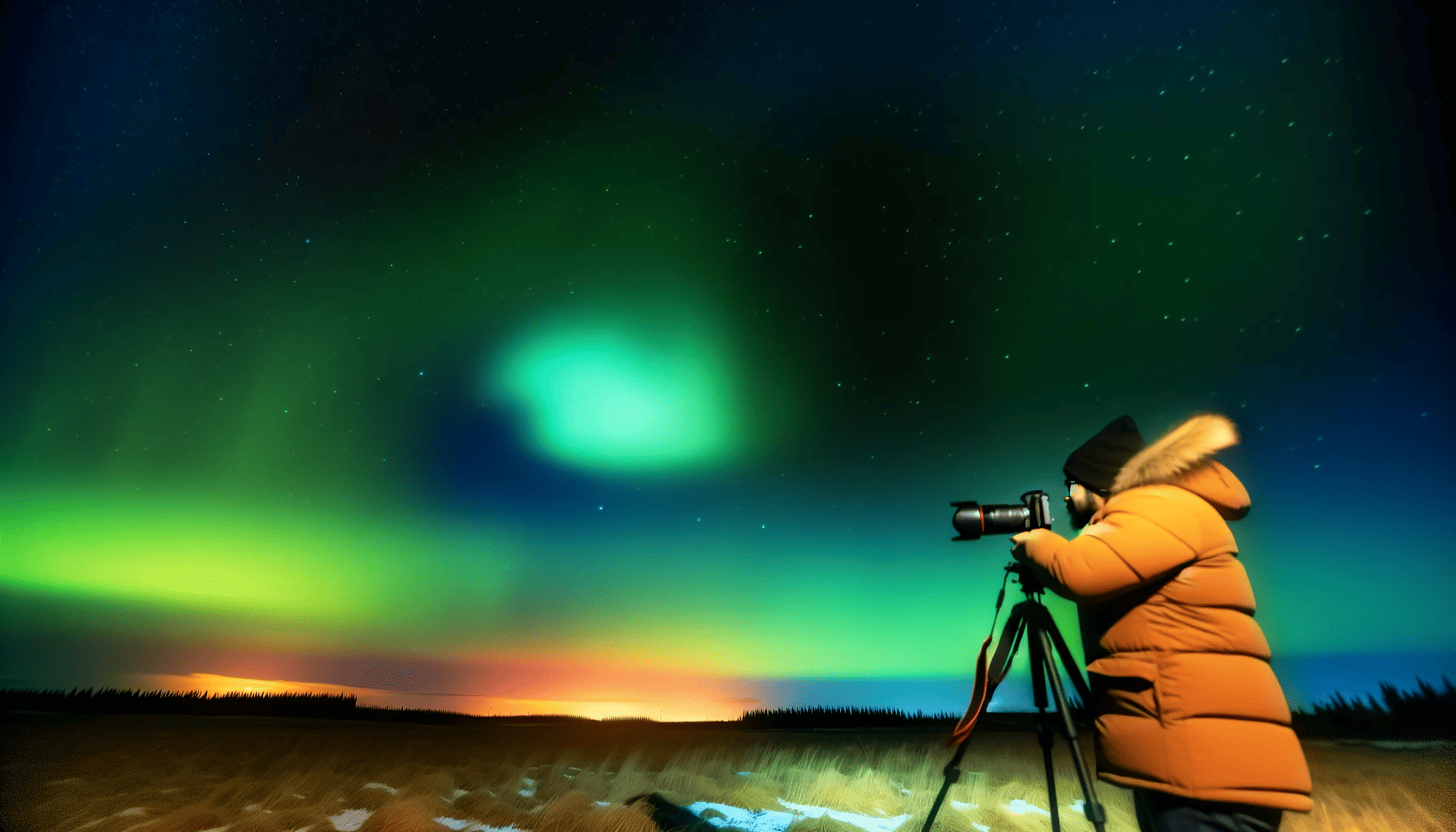
Use manual camera mode: a wide aperture (f/2.8-f/4), high ISO (starting around 800, adjusted to conditions), and a long-but-controlled exposure (generally under 10 seconds to avoid star trails). A tripod is essential for the stability long exposures require; a wide-angle lens helps capture more of the sky. Bring spare batteries - cold weather drains them fast, and lithium batteries perform better in low temperatures than standard alkaline ones.