
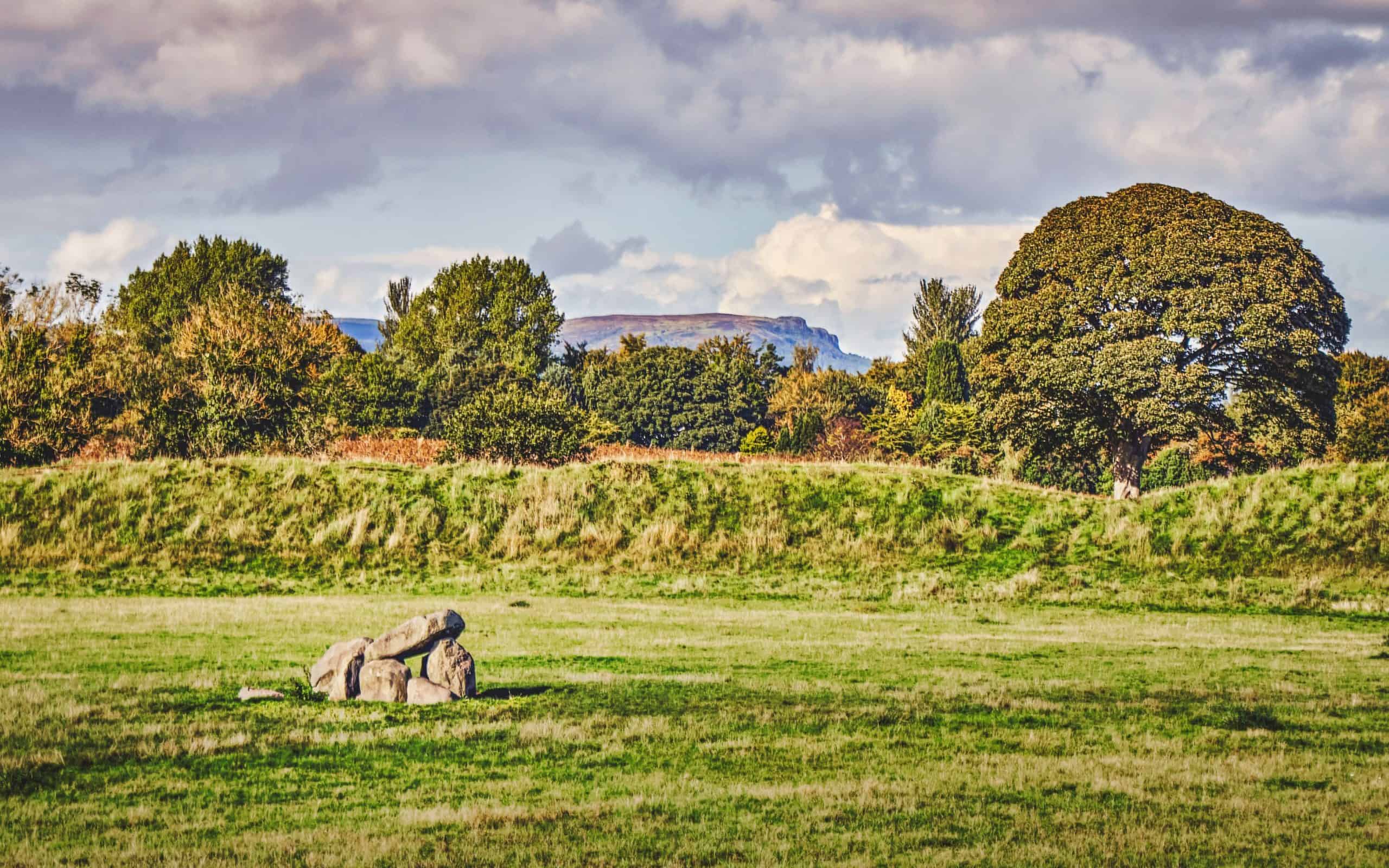
Northern Ireland has surviving examples of all four main types of Irish megalithic tomb, built by Neolithic communities several thousand years ago.
Court Tombs
Typically aligned north-south, with an open entrance courtyard leading to a stone- or earth-covered gallery. Creggandevesky, in County Tyrone, is a notable example.
Portal Tombs (Dolmens)
Single-chamber tombs formed from upright stones supporting a large horizontal capstone - the most recognisable tomb type. Legananny, in County Down (on the route between Banbridge and Newcastle), sits on a hill with sweeping countryside views. Slidderyford (near Newcastle), Tirnoney (County Antrim), and Ballylumford (Islandmagee) are other examples.
Wedge Tombs
A distinctly Irish Neolithic tomb type, with over 500 surviving examples across Ireland, named for their chamber narrowing at one end. Loughmacrory, near Omagh in County Tyrone, is a good example.
Passage Tombs
Developed from simpler dolmen designs, with a passage leading to a central chamber. The best-known example, Newgrange, is actually located in County Meath in the Republic of Ireland - a short drive from the Northern Ireland border (see this site’s dedicated Newgrange guide for full detail).
Early Settlement
Excavations at sites like Mount Sandel (County Londonderry) and Curran (County Antrim) point to early hunter-gatherer communities who also worked metal, producing gold and bronze ornaments found within these tombs.