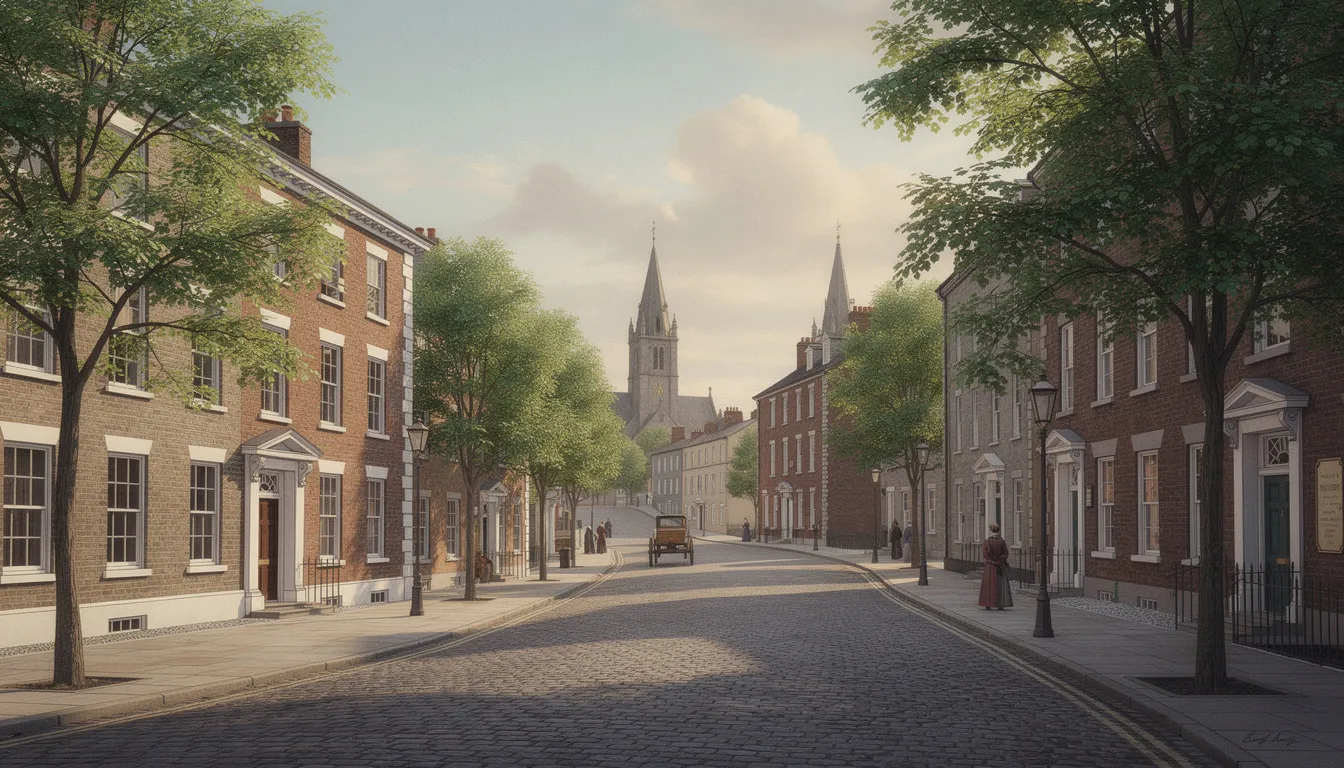
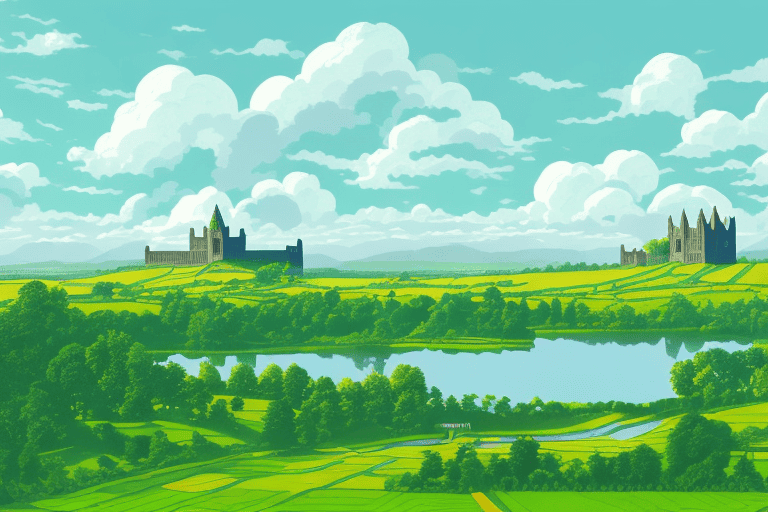
County Armagh, in the south of Northern Ireland, is known as the “Orchard County” for its apple orchards, and combines ancient history with rolling countryside and a lively cultural scene.
History
Armagh City has been Ireland’s ecclesiastical capital for over 1,500 years. The region’s ancient past centres on Navan Fort (Emain Macha), traditionally regarded as the seat of the kings of Ulster and, according to legend, founded sometime in the mid-first millennium BC - though the one part of its chronology with real archaeological backing is a large timber structure at its centre, dendrochronologically dated to around 95 BC. The medieval period brought conflict between Gaelic Irish and Anglo-Norman forces, reflected in ruins like Creggan Church. More recently, the 1795 Battle of the Diamond near Loughgall and the Troubles (late 1960s–1990s) both left their mark, though Armagh today is associated more with reconciliation efforts than conflict.
Geography
The county’s rolling hills and valleys include Slieve Gullion, its highest peak, and the surrounding Ring of Gullion, an Area of Outstanding Natural Beauty with waymarked trails. Lough Neagh, the largest freshwater lake in the British Isles, borders the county to the north.
Navan Fort
Two miles west of Armagh City, Navan Fort is a large earthwork - a flat-topped mound around 240 metres across, ringed by a substantial ditch and embankment. Within it once stood a four-ring timber structure, later deliberately burned and covered over to form the mound seen today. In legend, it was the seat of King Conchobar Mac Nessa and setting for much of the Ulster Cycle, including the tales of the hero Cúchulainn. The nearby Navan Centre offers context for visitors.
Armagh Observatory and Planetarium
Founded in 1790 by Archbishop Richard Robinson, Armagh Observatory remains an active research institution, home to around 25 astronomers. The adjoining Armagh Planetarium, opened in 1968, makes astronomy accessible with a digital theatre and hands-on exhibits, including outdoor rocket-launching demonstrations for children (weather permitting).
Cathedrals
Armagh City has two cathedrals dedicated to St Patrick: the Church of Ireland’s Gothic Revival cathedral and the Catholic cathedral, built in the Romanesque Revival style.
The Argory
A National Trust property near Moy, The Argory dates from around 1820, with its current interior reflecting later Victorian-era updates. Highlights include a working 1824 cabinet barrel organ, stable and carriage displays, and 320 acres of grounds.
Culture and Food
County Armagh has a strong traditional music scene (the Armagh Pipers Club among its notable institutions) and is known for its apple orchards - look out for Armagh cider and Bramley apple pie - alongside classic Irish fare like stew, soda bread, and the Ulster Fry.
Visiting
Summer (June–August) offers the best weather; autumn brings the apple harvest and good foliage. The county is well served by road, with buses connecting the main towns, and Armagh City itself is walkable.