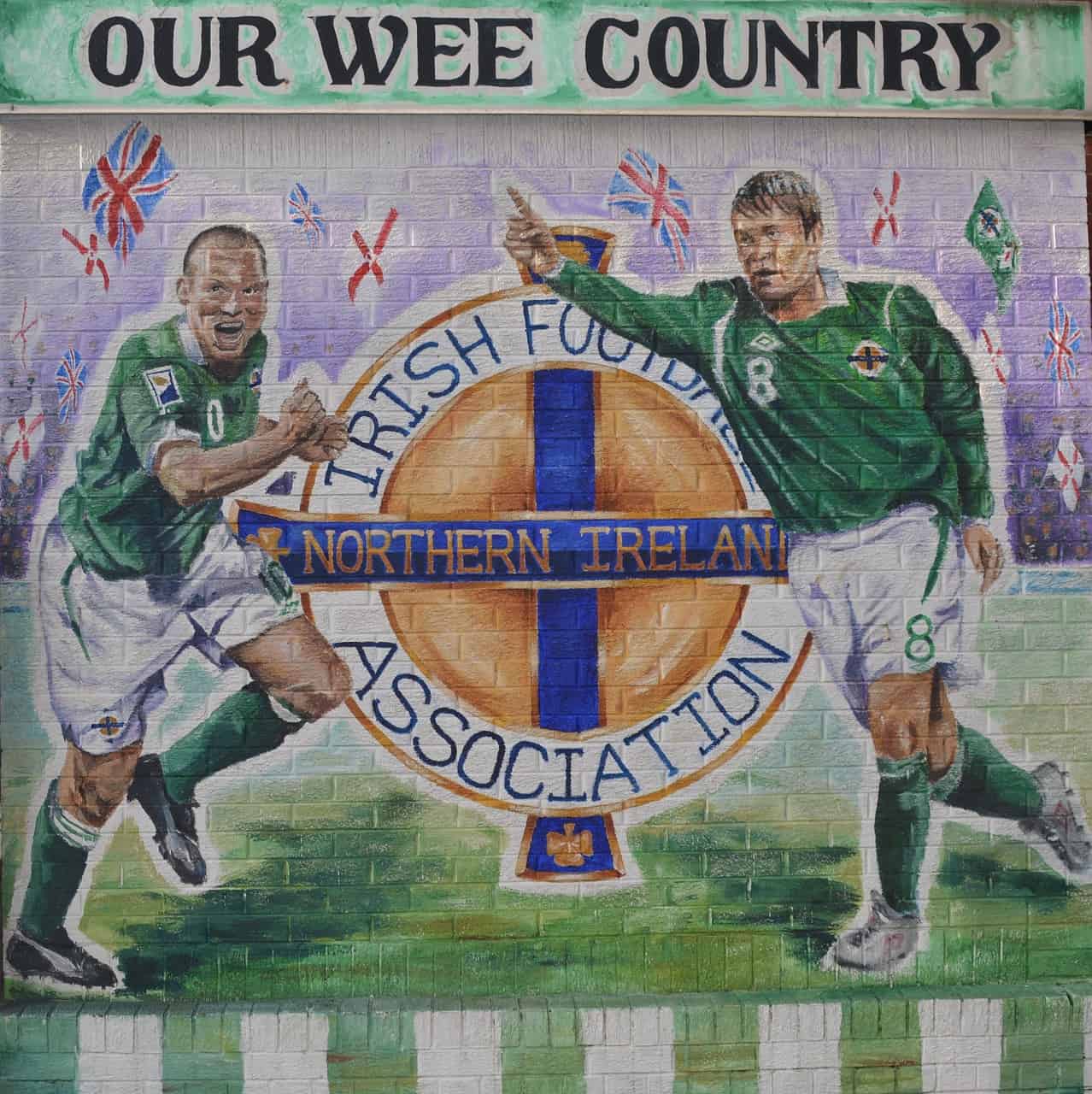
Belfast’s political murals are a genuine, powerful part of the city’s story - not a curated tourist attraction, but real community expression that’s evolved over more than half a century. Working-class areas of Belfast and Derry are known for these murals, which reflect community identity, history, and political allegiance, and have drawn international attention for how directly they engage with the region’s history.
Historical Context
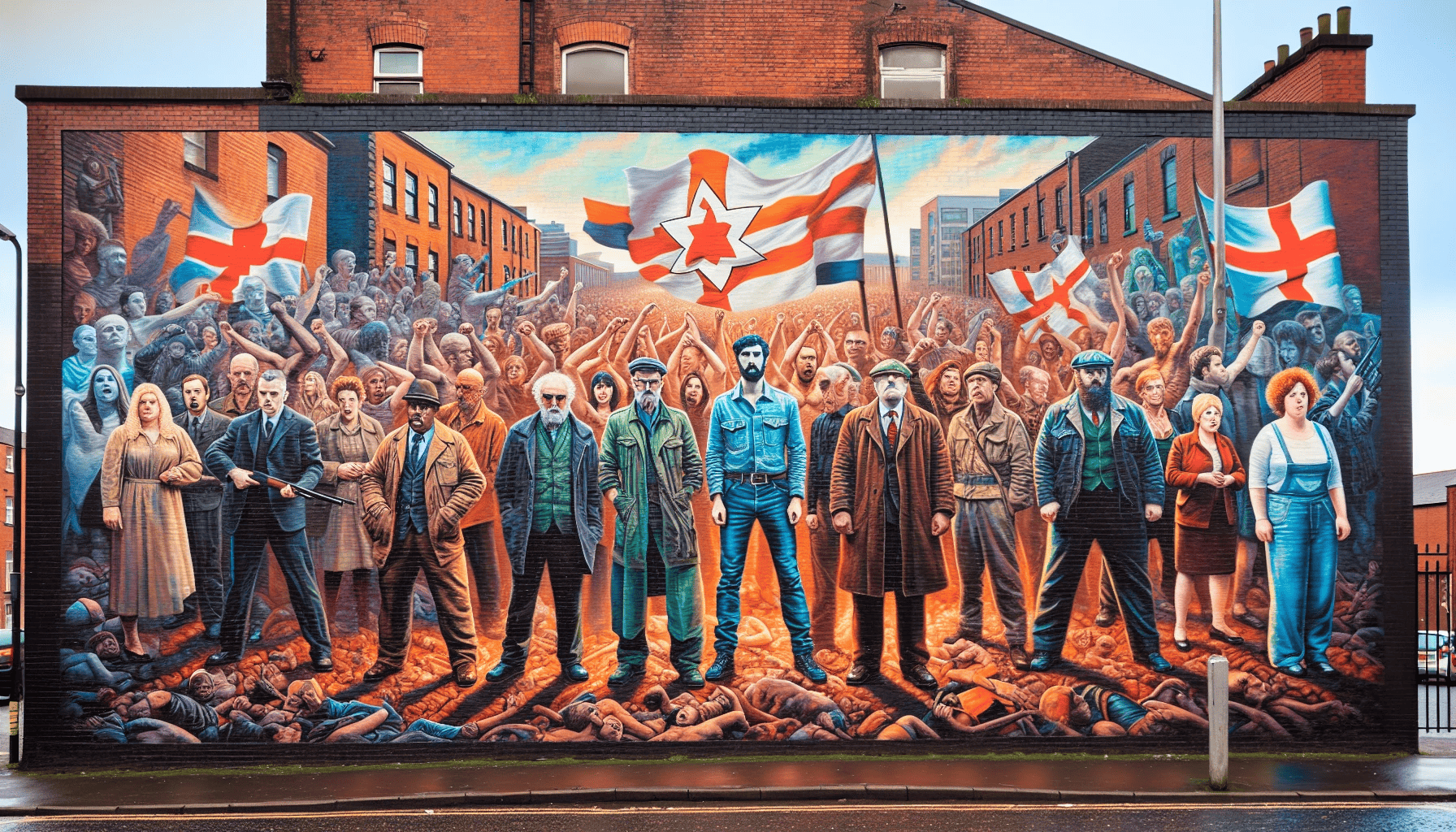
Northern Ireland’s mural tradition is rooted in the conflict known as the Troubles, which ran from the late 1960s to the 1998 Good Friday Agreement - a period of sectarian and political violence between republican/nationalist and loyalist/unionist communities, and British state forces. This is a distinct, later conflict from the 1916 Easter Rising and the 1919-21 Irish War of Independence, which happened before Northern Ireland existed at all: Northern Ireland was created by the 1921 partition of Ireland, following the Anglo-Irish Treaty. The murals reflect the Troubles era and its aftermath specifically, not the earlier independence struggle, even where they invoke earlier Irish history and symbolism.
Republican mural painting, in the form recognisable today, emerged in the late 1970s, coinciding with an active IRA campaign - themes of resistance and revolutionary symbolism became common, including murals drawing parallels between the nationalist cause and international struggles, such as South Africa’s anti-apartheid movement (the Nelson Mandela mural is a well-known example).
There are an estimated 300 “quality” murals across Belfast by one commonly cited 2014 count, though more recent mural-documentation projects put the fuller total closer to 700, with roughly a third in excellent condition - the range reflects different counting methods (quality/maintained murals versus every mural recorded) rather than one being simply wrong.
Since the 1998 Good Friday Agreement ended the Troubles, many murals have shifted role - from purely political statements toward tools for community dialogue and reconciliation, even as older murals depicting paramilitary history and iconography remain in place.
Murals on the Falls Road
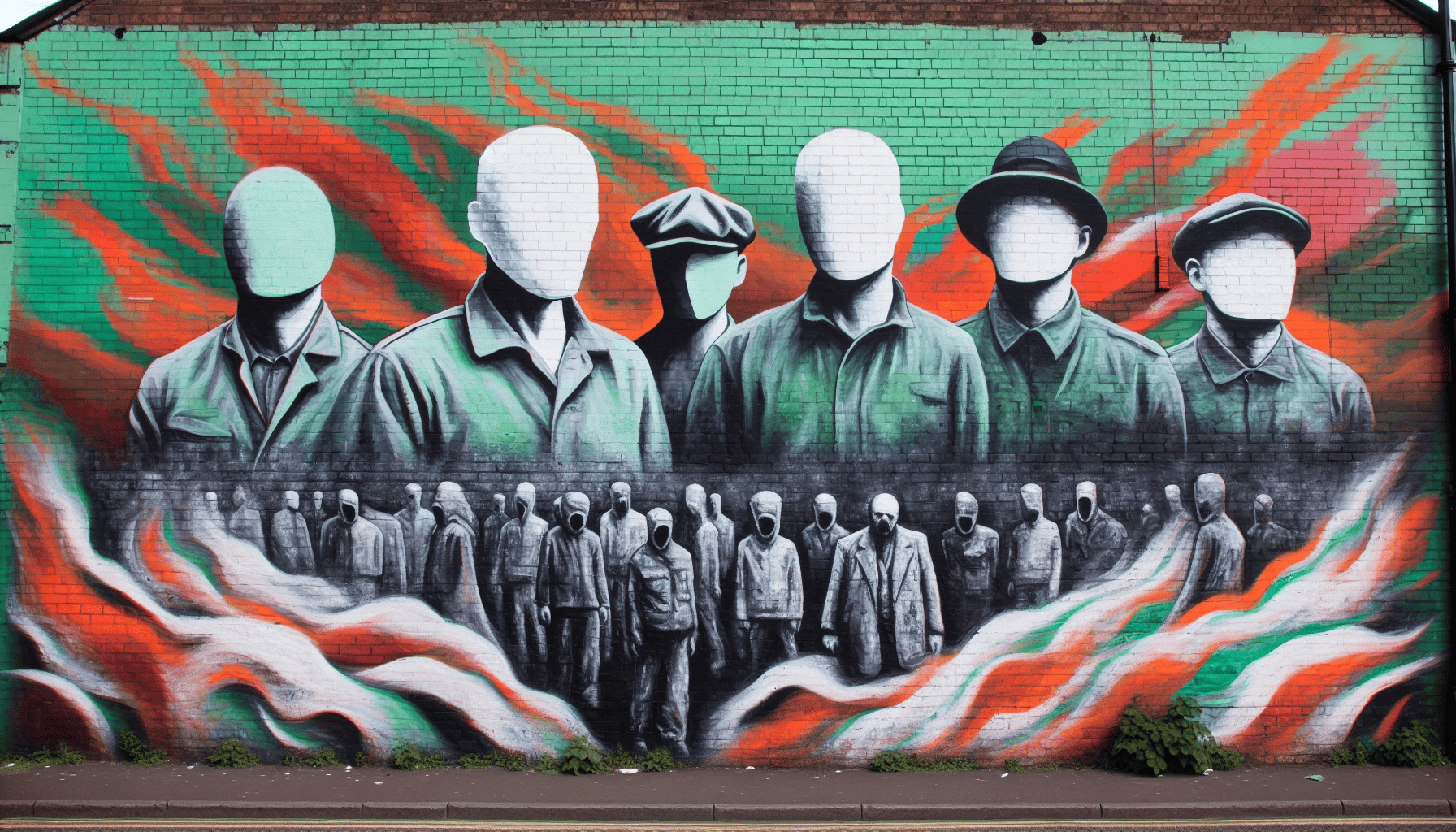
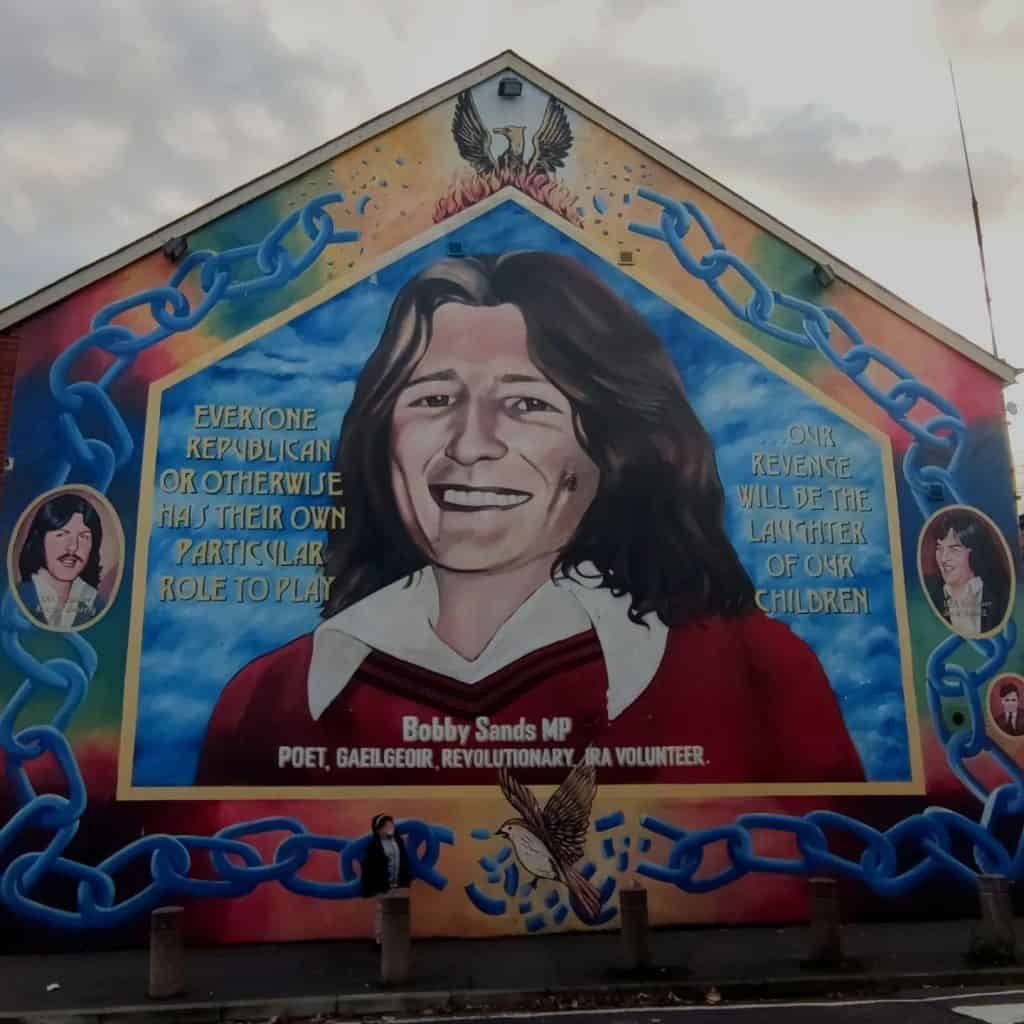
The Falls Road, a predominantly nationalist area, has some of Belfast’s best-known murals - depicting key moments and figures in Irish history, hunger strikers, and international solidarity themes including support for Palestinian and Basque causes. The most famous is the Bobby Sands mural, on the side wall of Sinn Féin’s Falls Road office - Sands was an IRA volunteer who died on hunger strike in prison in 1981, and his mural remains one of the most widely recognised images of the Republican movement.
A note on visiting: these are real community murals in residential areas, not a museum exhibit - be respectful of the neighbourhoods you’re walking or driving through, and consider a guided black taxi tour if you want context and local insight rather than just photographs.