
Targeted fix only - the long list of further named wrecks below wasn’t independently re-verified in full this pass; treat it as a starting reference.
The Causeway Coast is renowned not just for its scenery but for the maritime history beneath its waters - thousands of historic ship and aircraft wrecks, reflecting centuries of trade, exploration, and conflict along a strategically important stretch of coast. Northern Ireland’s Historic Environment Division, working with the Marine and Fisheries Division, maintains a database of these wrecks (compiled from historical sources, UK Hydrographic Office data, sport-diver reports, and marine surveys), viewable via the Historic Environment Map Viewer.
Why So Many Wrecks?
Ireland’s North Atlantic position brings harsh weather and rough seas; a rocky, complex coastline adds navigational hazard; centuries of trade, fishing, naval activity, and - during both World Wars - military conflict, all combined with a strong local shipbuilding tradition (notably Belfast’s Harland & Wolff) to put a lot of ships in these waters over a long period.
The Wreck of La Girona
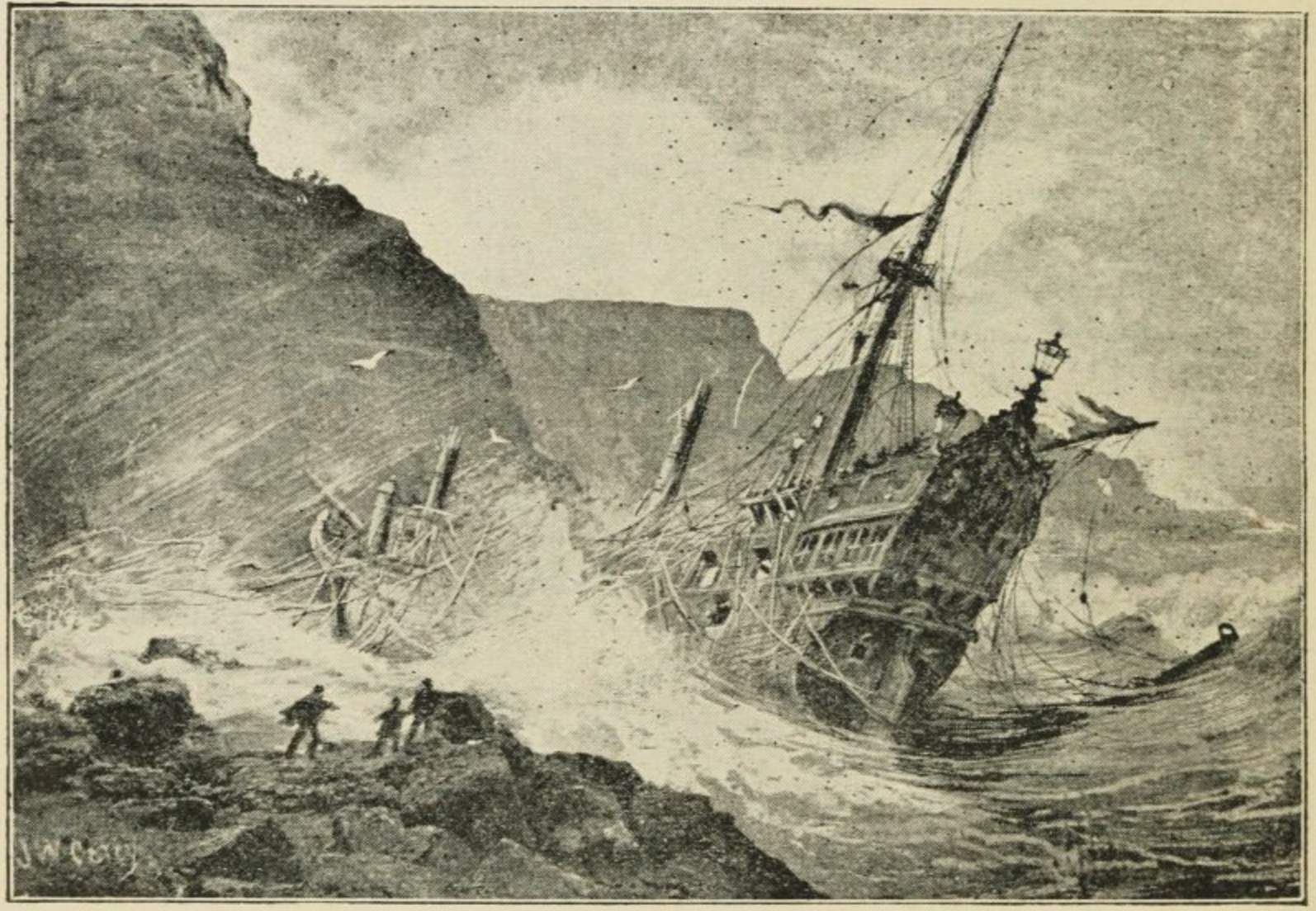
The most famous wreck on this stretch of coast: the Spanish Armada galleass Girona, wrecked at Lacada Point on the night of 26 October 1588, commanded by Don Alonso Martínez de Leiva, a senior Spanish nobleman who died in the sinking. Separated from the retreating Armada fleet by bad weather, the Girona was driven onto the rocks near Lacada Point; of roughly 1,300 aboard, only about nine survived. Recovered treasure from the wreck is on display at the Ulster Museum in Belfast.
The Sinking of HMS Drake
HMS Drake, a British warship, was torpedoed by a German U-boat off Rathlin Island in 1917, during the First World War, with the loss of crew lives - the wreck remains a popular dive site today, and a memorial to those lost. (See this project’s dedicated note on HMS Drake for further detail not independently re-verified in this pass.)
The RMS Titanic
Built in Belfast, the Titanic sank on its maiden voyage in 1912 after striking an iceberg, with over 1,500 lives lost. The wreck was discovered in 1985 by a team led by Robert Ballard, more than 12,000 feet below the Atlantic’s surface - a landmark moment in underwater exploration, and still the subject of ongoing research.
Other Named Wrecks (Not Independently Re-verified This Pass)
The original article lists a further set of historically significant wrecks around Northern Ireland’s coast, spanning both World Wars and earlier: SS Great Britain (grounded 1846, Dundrum Bay), SS Justicia (1918, off Donegal), HMS Audacious (1914, mined off Donegal), SS Empire Heritage (1944, off Malin Head), HMS Laurentic (1917, off Donegal, over 350 lives lost), the SS Gairsoppa (1941, one of the deepest wrecks ever salvaged, carrying silver bullion), and around 15 further named vessels including MV Princess Victoria (1953) and MV Derbyshire (1980). Dates, locations, and details for this longer list weren’t individually re-verified in this pass - a real candidate for a dedicated future fact-check given the volume of specific claims involved.
Conservation, Access, and Diving
Many of these wrecks are legally protected - designated scheduled monuments under heritage legislation, with diving and salvage activity requiring appropriate licensing and any finds required to be reported. Northern Ireland’s Historic Environment Division provides guidance for divers, educators, and the public via its Map Viewer and related resources.