
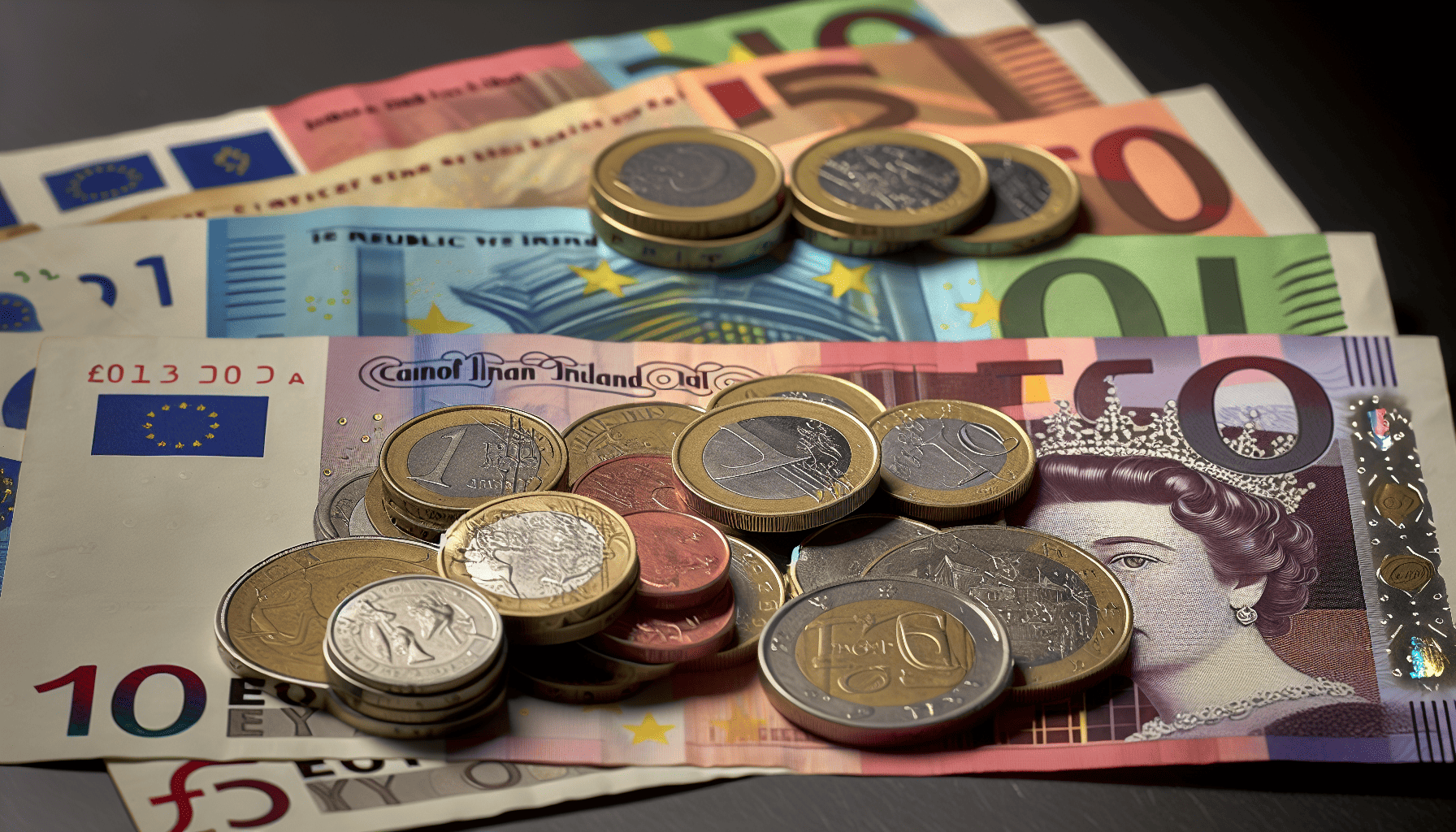
Ireland has two currencies in play: the euro (€) in the Republic of Ireland, reflecting its EU membership, and pound sterling (£) in Northern Ireland, as part of the UK. In border regions, some businesses accept both, but don’t count on it everywhere - carry the right currency for wherever you’re headed.
Republic of Ireland: The Euro
Irish euro coins come in eight denominations (1c to €2), each with a national side featuring the Celtic harp, issue year, and “Éire.” Euro banknotes are uniform across the eurozone in seven denominations, from €5 to €500 - though the €500 note was discontinued from new issuance across the Eurosystem in 2019 (existing notes remain legal tender, but you’re very unlikely to encounter one in circulation). Ireland has also issued commemorative €2 coins marking occasions like the 50th anniversary of the Treaty of Rome (2007) and the centenary of the Proclamation of the Irish Republic (2016).
Northern Ireland: Pound Sterling
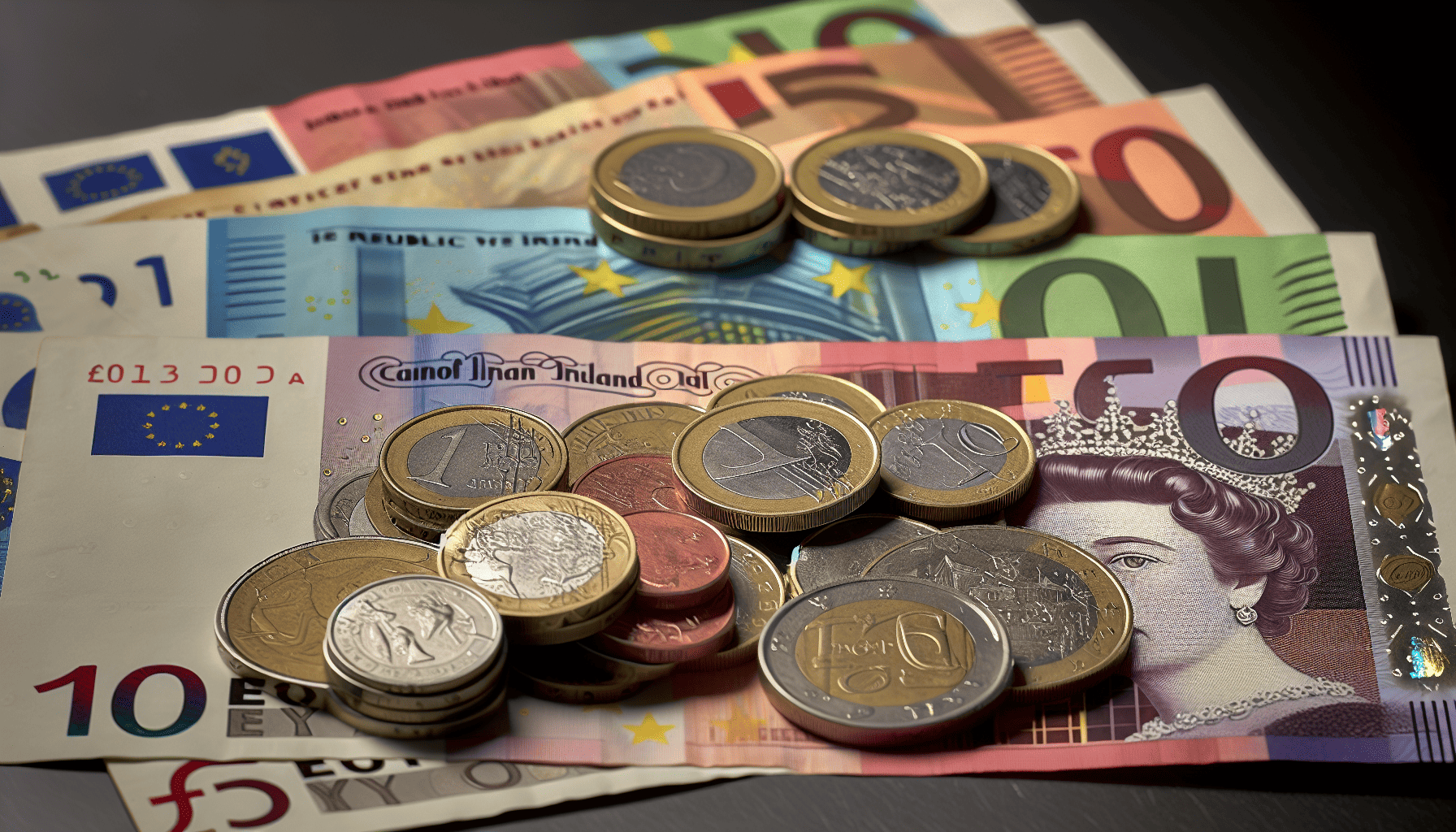
Northern Ireland uses pound sterling, in notes (£5 to £100, including notes issued by local Northern Ireland banks alongside the Bank of England) and coins (1p to £2). The current £1 and £2 coins are both 12-sided/bimetallic in design, both notable security features against counterfeiting. The Irish pound (punt) was the Republic’s currency before it adopted the euro in 1999 (replacing cash in 2002) - it’s no longer usable anywhere.
Currency Conversion Tips
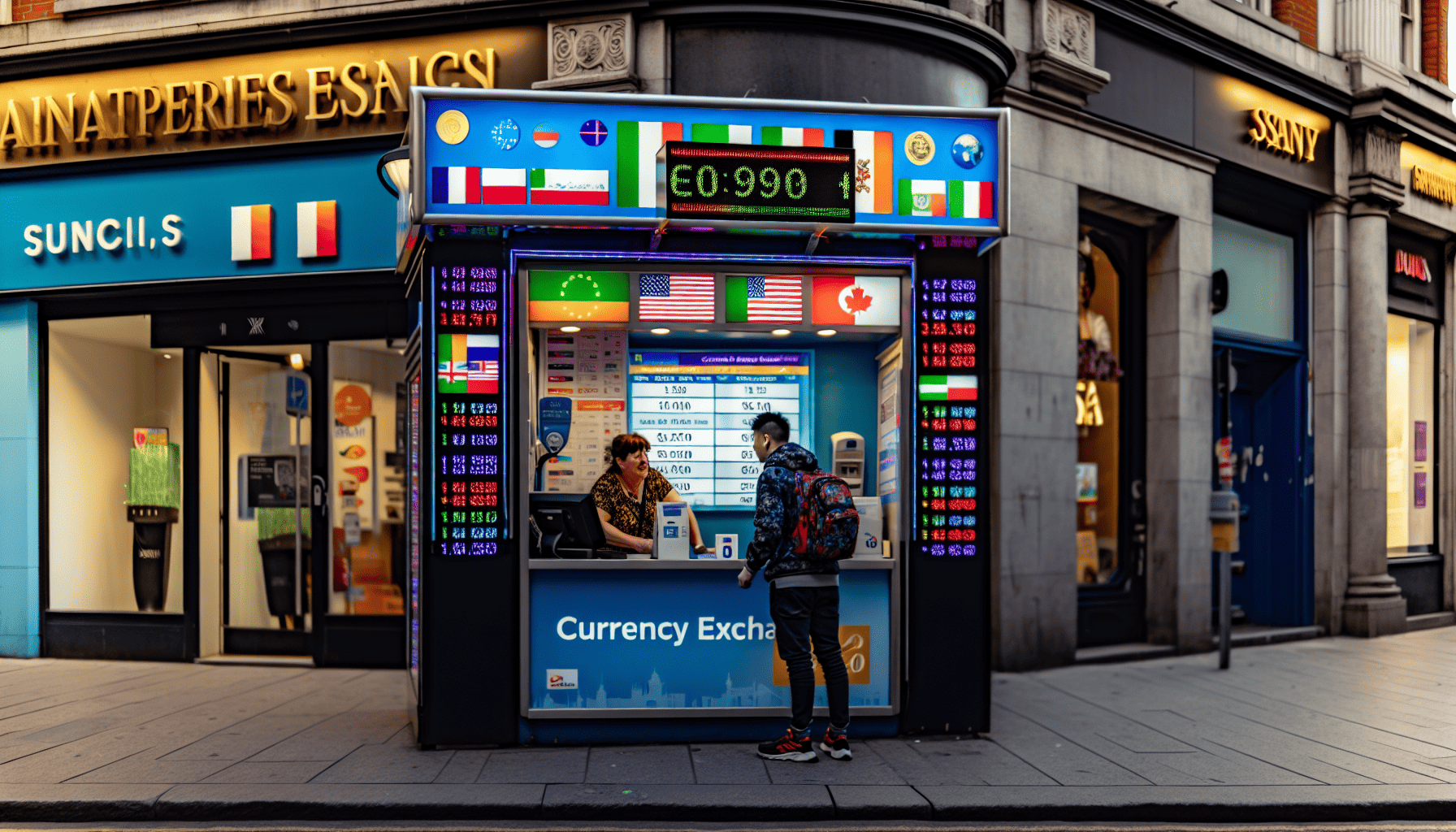

Exchange money before travelling where possible, to avoid the higher rates and fees common at airport kiosks. Cards and ATM withdrawals often beat cash exchange rates - decline any “Dynamic Currency Conversion” offer at the till or ATM and opt to be charged in the local currency instead. If bringing cash, a small amount for immediate needs on arrival, topped up locally, tends to work out better than buying a large sum in advance.
ATMs
ATMs (“cashpoints”) are widely available even in small towns, though less common in remote areas. Check with your bank about withdrawal fees and transaction limits before you go, and use a debit card where possible to avoid the higher fees often charged on credit card cash withdrawals.
Cards
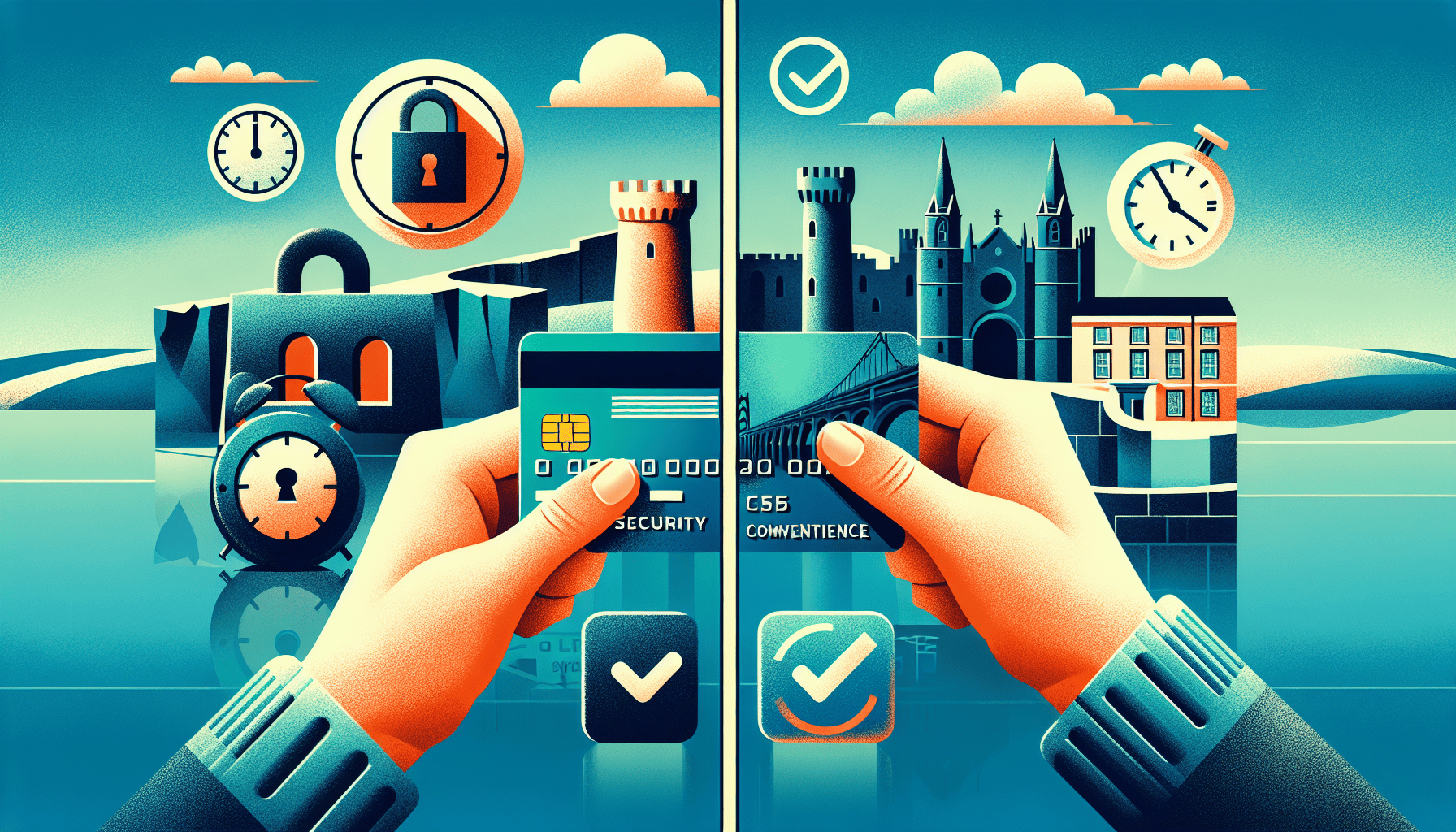
Visa and Mastercard are widely accepted across Ireland; American Express and Diners Club less so. Notify your bank of your travel plans beforehand, and consider carrying a backup card from a different bank. Chip-and-PIN is standard.
Cash vs Cards
Cash works everywhere and is especially useful in rural areas and smaller establishments where card systems can be patchy; cards make it easier to track spending and are simpler to protect if lost or stolen. Carrying both, in reasonable amounts, is the practical approach.
Budgeting

Daily costs vary widely with season and travel style - expect a noticeable jump during peak summer months. Any specific daily-budget figure will drift with inflation and exchange rates, so treat published estimates as a rough starting point rather than a current price, and check current accommodation, food, and activity costs closer to your travel dates. Ways to cut costs include hostels or budget hotels, self-catering, public transport over taxis, smaller rental cars, heritage/attraction passes, group tours, and travelling in the shoulder season.
Tipping
Ireland doesn’t have a strong mandatory tipping culture. In restaurants, check the bill for an included service charge (common in larger cities, especially for bigger groups) before adding anything extra; if none is included, 10–15% for good service is typical. Tipping in pubs isn’t the norm, though rounding up or leaving small change is common. Tipping taxi drivers and tour guides is optional and at your discretion.
VAT Refunds
Non-EU visitors can reclaim VAT on goods (not services - hotel stays, meals, and car hire don’t qualify) taken out of the EU under the Retail Export Scheme. Get a VAT refund form at the point of purchase, keep your receipts, and have goods available for inspection and the form stamped by customs before you leave the EU. Specific minimum-purchase thresholds and high-value goods procedures weren’t independently re-verified this pass - check current requirements before relying on them.
Frequently Asked Questions
Is the Irish pound the same as the British pound? No - the Republic of Ireland used its own Irish pound until adopting the euro; Northern Ireland uses British pound sterling as part of the UK.
How much should I tip in restaurants and pubs? 10–15% in restaurants if no service charge is included; tipping in pubs is uncommon, though rounding up is appreciated.