Derry, on the River Foyle in the northwest, is Northern Ireland’s second city - a compact, walkable place where centuries of history sit alongside a lively modern cultural scene.
History
Derry’s history stretches back to the 6th century, when St Columba founded a monastic settlement here (the name “Derry” comes from the Irish doire, meaning oak grove). In 1613, the City of London’s guilds took on the city’s development under the Plantation of Ulster, extending its name to Londonderry - the origin of the dual naming still used today. Colloquially, “Derry” is the more common everyday name; “Londonderry” remains the city’s official and legal name.
The City Walls
Built between 1613 and 1619, Derry’s remarkably intact city walls encircle the historic centre, earning the city its nickname “the Maiden City” for never having been breached despite several sieges - most notably the 105-day Siege of Derry (1688–89), when thirteen Apprentice Boys shut the gates against Jacobite forces under King James II. The original four gates - Bishop’s, Shipquay, Ferryquay, and Butcher’s - were later joined by New Gate (1789), Castle Gate (1803), and Magazine Gate (1865).
St Columb’s Cathedral
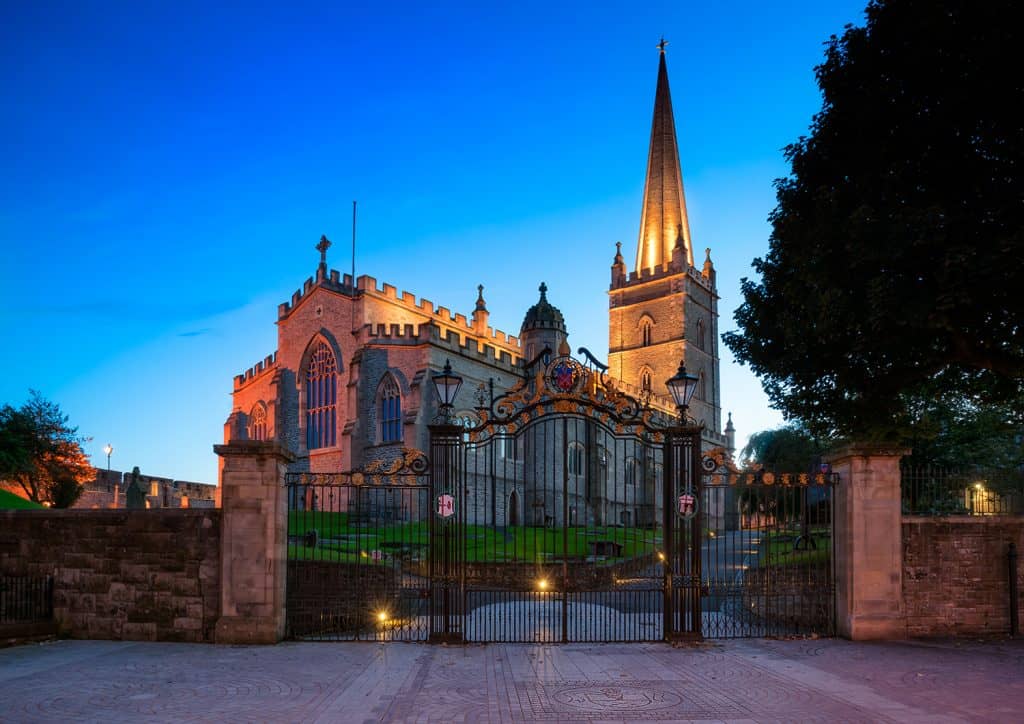
Derry’s oldest surviving building, St Columb’s Cathedral dates to 1633 and holds the distinction of being the first cathedral built for the Anglican church anywhere after the Reformation.
The Bogside Murals
The Bogside’s murals are among Derry’s best-known sights, depicting the area’s role in the Troubles and civil rights movement - including the Free Derry Corner (its “You Are Now Entering Free Derry” slogan first painted by local activist Liam Hillen on 5 January 1969, then repainted more professionally later that year by sign-writer John “Caker” Casey, producing the bold black lettering that remains iconic today) and a memorial to the victims of Bloody Sunday (1972). The murals collectively serve as a powerful, sobering record of the city’s recent history.
The Peace Bridge
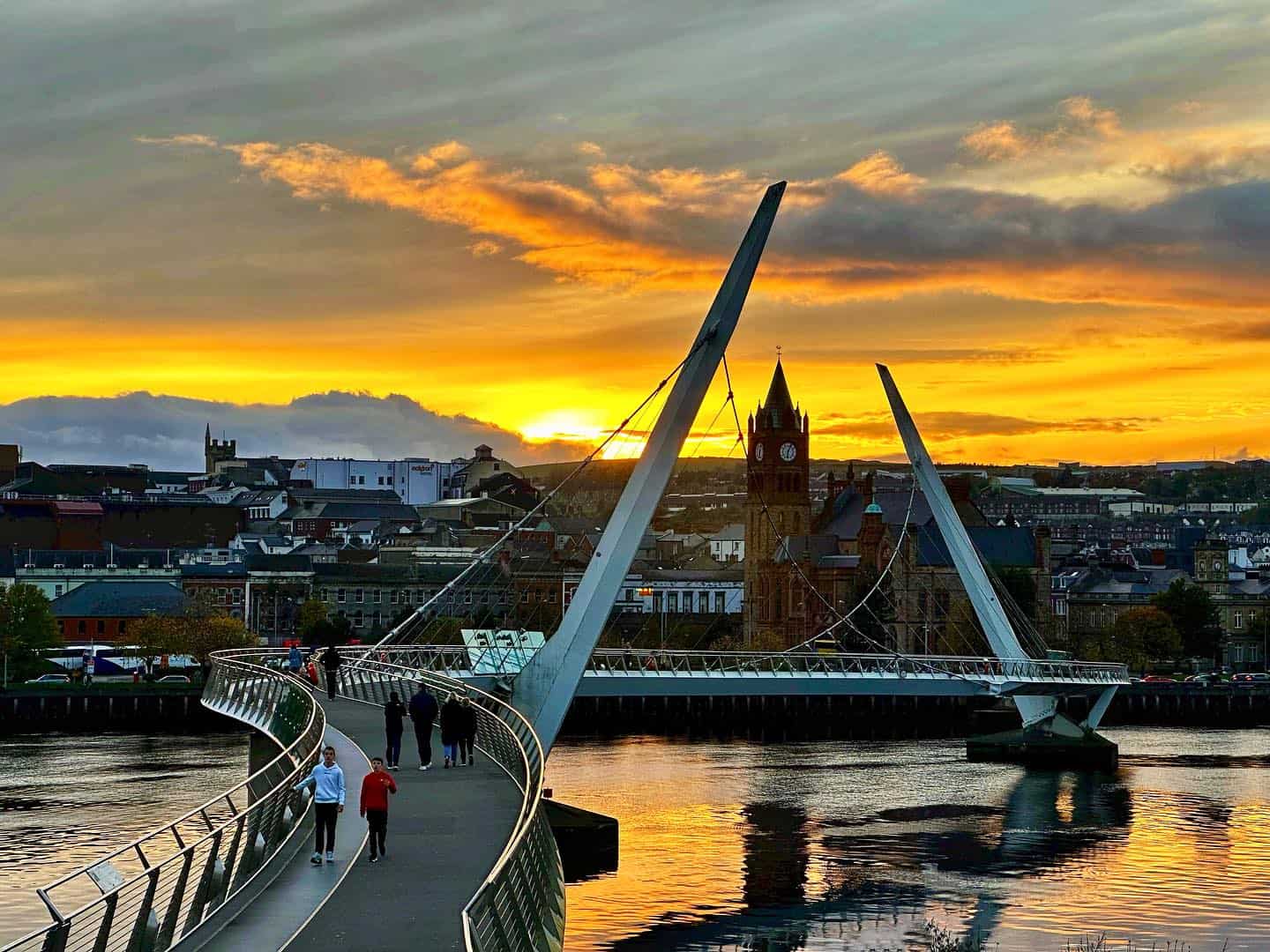
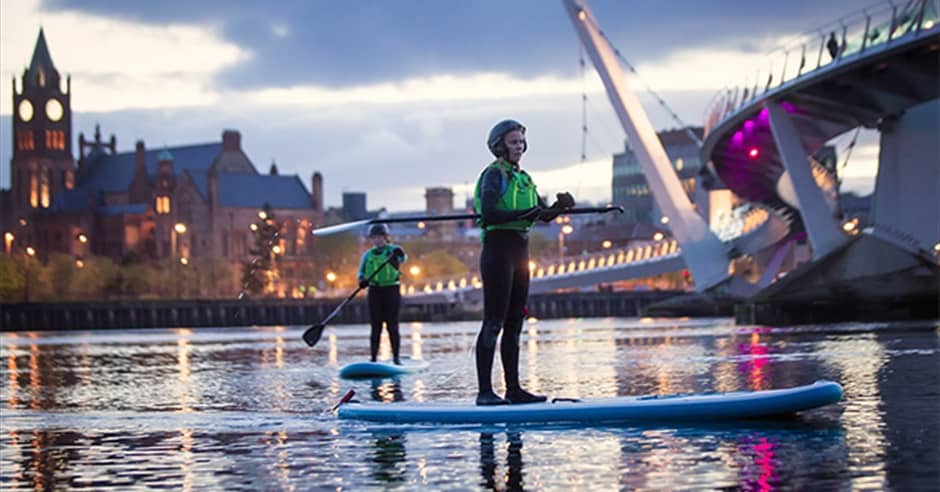
Linking the mostly Protestant Waterside to the mostly Nationalist Bogside across the River Foyle, the Peace Bridge is a modern symbol of the city’s reconciliation, with Ebrington Square nearby hosting concerts and events.
Museums
The Tower Museum covers the city’s story alongside an exhibition on the Spanish Armada wreck La Trinidad Valencera; the Free Derry Museum focuses on the Battle of the Bogside, Bloody Sunday, and Operation Motorman; and the Siege Museum covers the 1688-89 siege in detail.
Derry Girls
The hit Channel 4 comedy, set in 1990s Derry during the Troubles, has become a genuine pop culture draw - fans can visit the Derry Girls mural on Orchard Street and a dedicated exhibition at the Tower Museum.
Getting There and Around
Derry is served by City of Derry Airport, train connections to Belfast and Dublin, and a walkable city centre with a hop-on hop-off bus for wider exploring. It also sits at the junction of the Causeway Coastal Route and the Wild Atlantic Way, making it a natural base for exploring both.
Frequently Asked Questions
Should I call it Derry or Londonderry? Both names are in everyday use - “Derry” is the more common colloquial name, while “Londonderry” remains the official, legal name. Signage and usage often reflect both.
What are Derry’s most popular attractions? The city walls, the Bloody Sunday Memorial, the Bogside murals, the Peace Bridge, and the Derry Girls mural are all high on most visitors’ lists.