Bangor, on the southern shore of Belfast Lough in County Down, blends over 1,500 years of history with its modern role as a marina town and seaside city, home to one of Northern Ireland’s largest marinas and, since 2022, one of its six cities.
City Status
In May 2022, Bangor was awarded city status as part of Queen Elizabeth II’s Platinum Jubilee civic honours, becoming Northern Ireland’s sixth city alongside Belfast, Derry~Londonderry, Armagh, Lisburn, and Newry.
Name and History
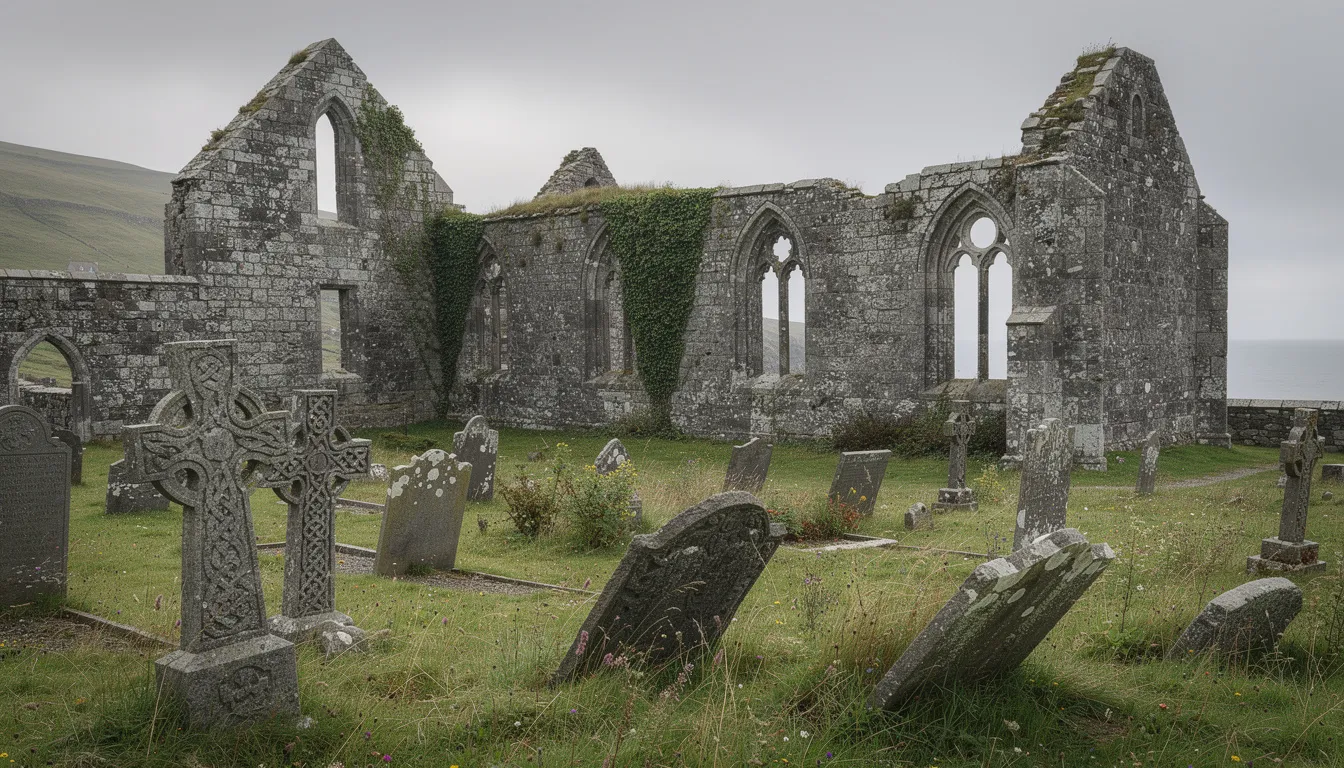
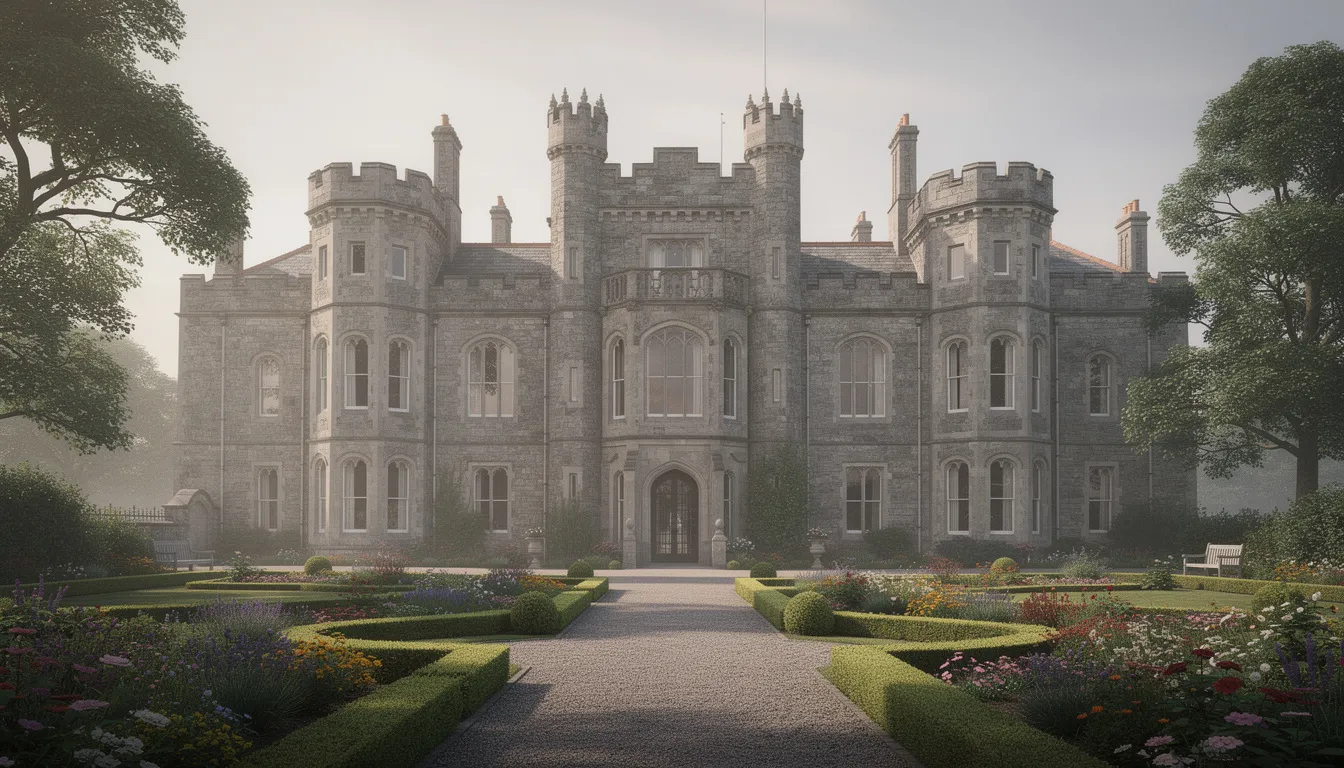
The town’s name comes from the Irish Beannchar, referring to the shape of Bangor Bay’s coastline. Bangor Abbey, founded around 555 AD by St Comgall, became one of early medieval Europe’s most significant centres of learning, its monks working as missionaries and scholars across the continent. The abbey produced the Bangor Antiphonary, a liturgical manuscript still held in Milan’s Ambrosian Library. Vikings sacked Bangor in 824 AD; St Malachy later rebuilt the abbey in the 12th century, with remnants of his stone church surviving today.
Bangor’s modern development began under the Plantation of Ulster: King James VI and I granted it borough status in 1612, following land grants to Sir James Hamilton. The Old Custom House, completed in 1637, reflected its growing importance as a port. The arrival of the Belfast and County Down Railway in 1865 opened Bangor to Victorian day-trippers, cementing its role as a seaside resort. During the Second World War, Bangor served as an Allied base; its marina’s north pier was renamed Eisenhower Pier in 2005 in recognition of General Eisenhower’s wartime use of the facility.
Bangor has been twinned with Bregenz (Austria), Prüm (Germany), and Virginia Beach (US) since 1973.
Top Attractions
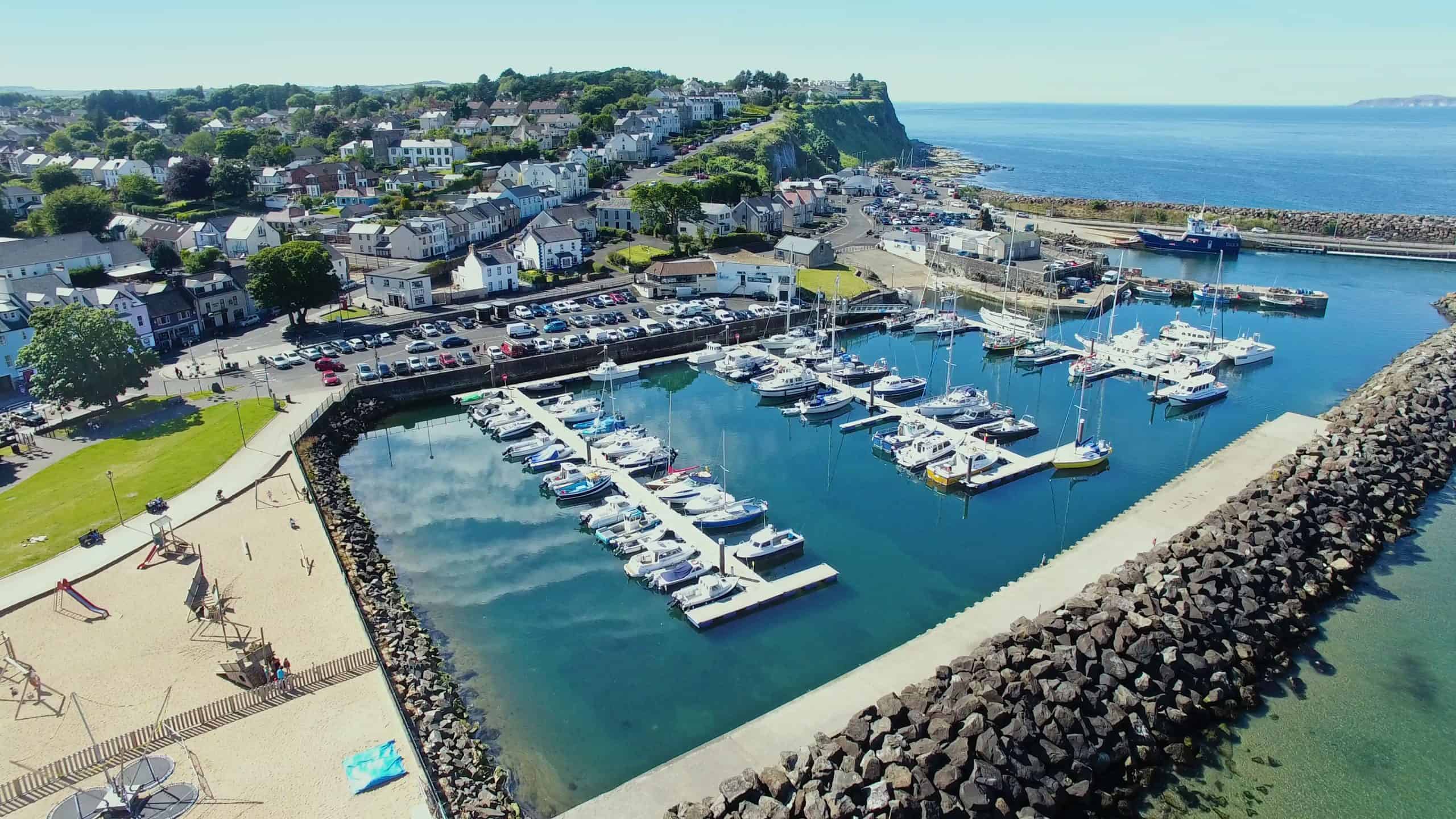
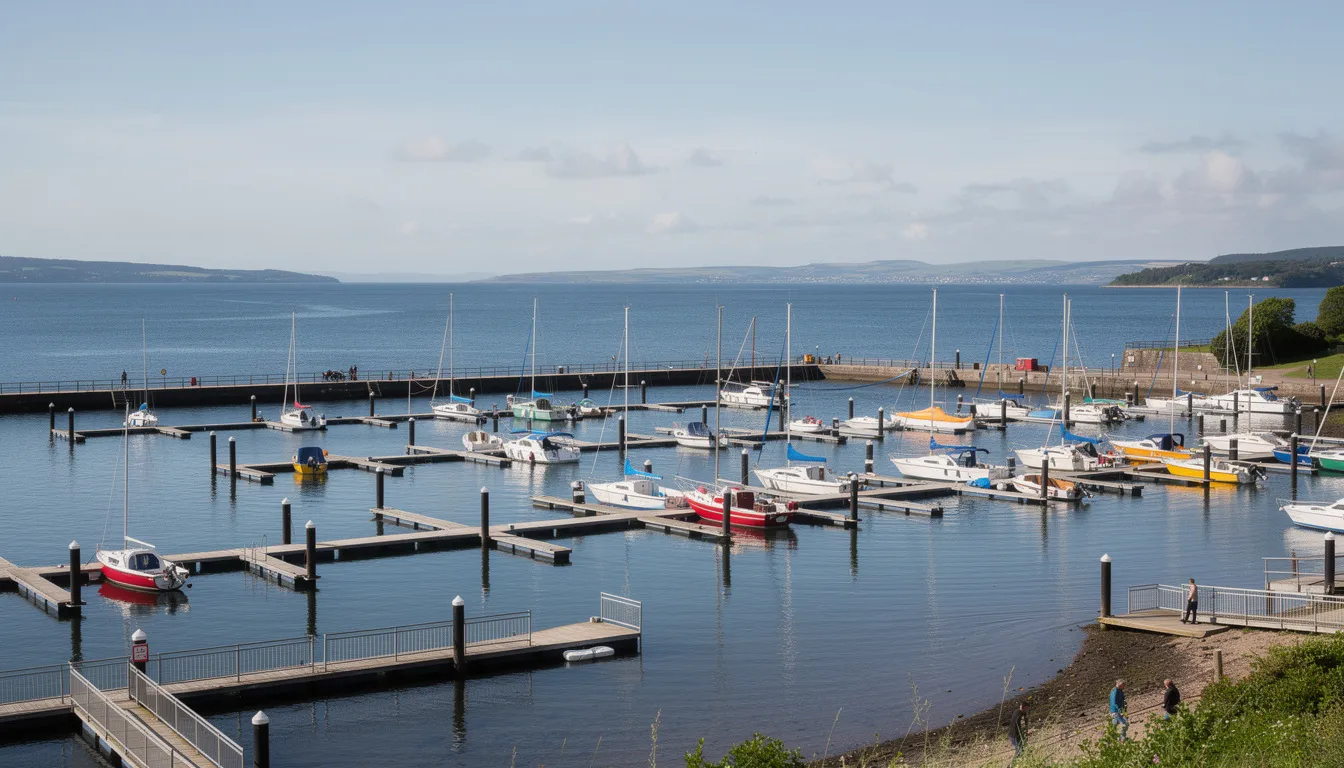
Bangor Marina, Northern Ireland’s largest, holds Blue Flag status and hosts the Royal Ulster Yacht Club. Bangor Castle, completed in 1852, now houses Ards and North Down Borough Council, with tours of its interior and access to the restored Victorian walled garden in Castle Park. Bangor Abbey remains an active parish church, with a memorial to Titanic assistant surgeon John Edward Simpson. North Down Museum covers local history from the Bronze Age onward, including Viking-era finds from Ballyholme Beach. Pickie Fun Park offers mini golf, a splash pad, and the Pickie Puffer train. The Clandeboye Estate, the largest remaining single landholding in the area, and Bangor Old Custom House are also notable nearby sights.
Outdoor Activities
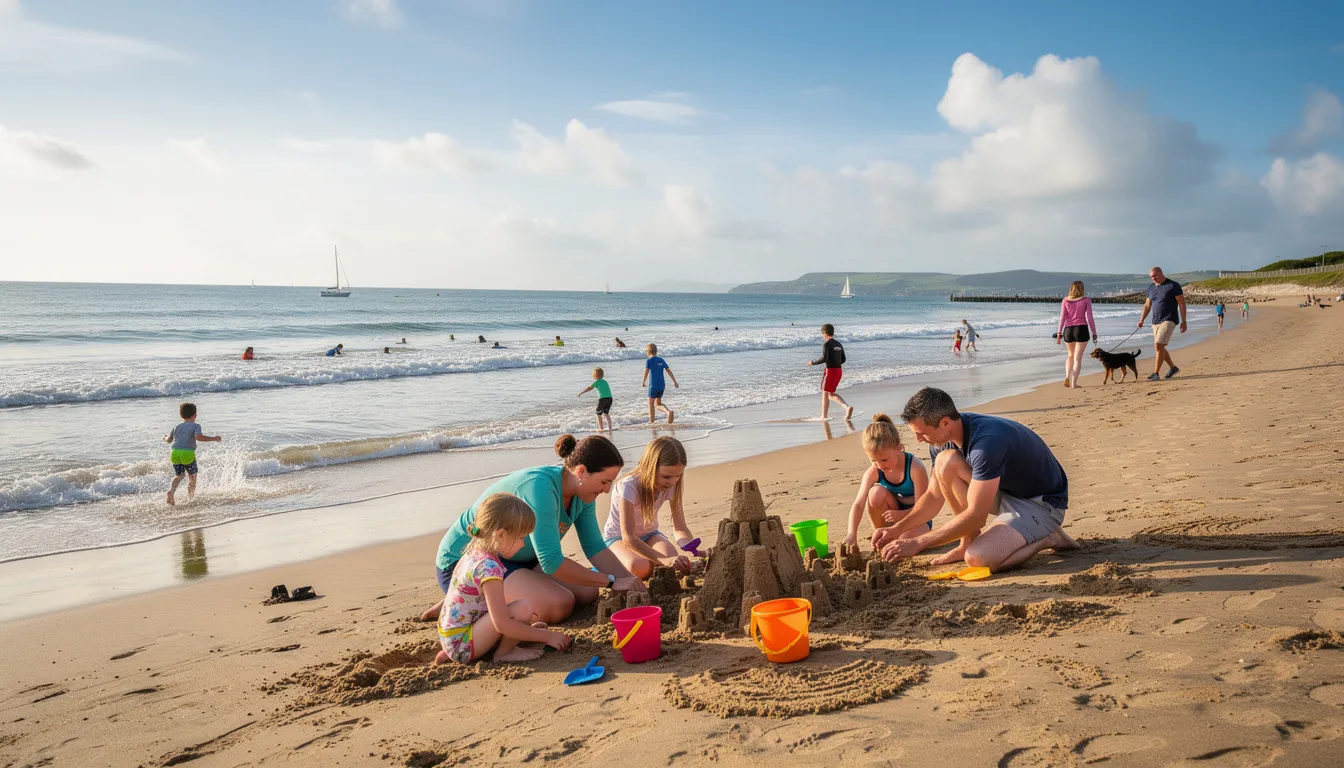
The North Down Coastal Path runs 16 miles from Holywood through Bangor to Orlock Point. Ballyholme Beach, over a mile of Blue Flag sand, and Crawfordsburn Country Park, with woodland and coastal walks, are both close by.
Food and Dining
Options range from waterfront seafood at the Guillemot Kitchen Café to Italian at Little Wing Pizzeria and traditional pub fare at Donegan’s.
Notable People
Bangor’s cultural exports include Snow Patrol’s Gary Lightbody, singer-songwriter Foy Vance, members of Two Door Cinema Club, novelist Colin Bateman, broadcaster Zoe Salmon, Paralympic skier Kelly Gallagher, and actress Niamh Perry.
Today
Now a popular seaside resort and commuter town for Greater Belfast, with a population of around 60,000, Bangor is well connected to Belfast by direct rail, and to the wider world via George Best Belfast City Airport, close to central Belfast itself.
Getting There
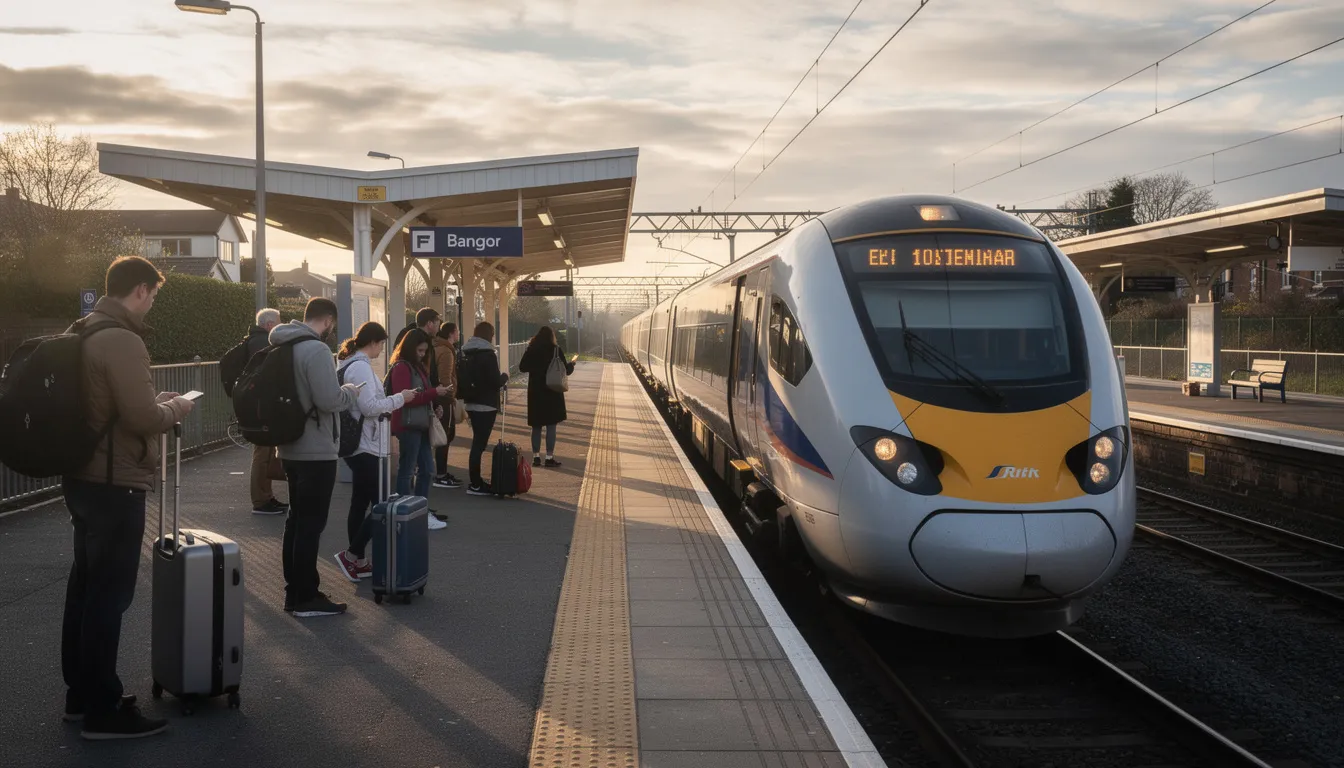
Bangor is around 13 miles east of Belfast, roughly 30 minutes by car via the A2 coastal route or 30 minutes by direct train from Belfast Central. Both Belfast International and George Best Belfast City airports are within 45 minutes’ drive.
Beyond Bangor
The Ards Peninsula, Mount Stewart House and Gardens, Strangford Lough, Castle Espie Wetland Centre, the Ulster Folk Museum, Nendrum Monastic Site, and Scrabo Tower are all within easy reach, making Bangor a practical base for exploring wider County Down.